If you’re seeking flexible space division for meetings, training, or coworking areas, a folding partition wall can transform a single room into multiple functional zones. These products create private spaces, improve acoustics, and offer easy storage for busy offices. The following five options are selected for versatility, ease of use, and durability. They’re best for small to mid-size conference rooms, shared offices, classrooms, and reception areas that need quick reconfiguration.
| Product | Best For | Key Benefit |
|---|---|---|
| Rantila Indoor Room Divider | Medium to large rooms | Sturdy frame with water-proof fabric |
| Paper Room Divider Wall Folding Accordion (WOHNZA) | Temporary setups | Ultra-thin, highly flexible, eco-friendly |
| RANTILA 3 Panel Room Divider | Freestanding panels | Flexible, easy to move and store |
| Room Divider 6FT 4 Panel (JVVMNJLK) | Wheeled mobility | Locking wheels, adjustable panels |
| HELLOPAPO Folding Paper Partitions | Portable, quick setups | Tool-free modular design |
Rantila Indoor Room Divider For Private Spaces

Best for creating a private nook in a shared room, this divider uses a strong metal frame and high-density polyethylene fabric. The water-resistant fabric supports light privacy without complete enclosure, making it suitable for visual separation in conference prep areas or open office zones. The blockable visual line helps reduce distractions while maintaining an airy feel.
Who it’s best for: teams needing a sturdy, semi-private backdrop during meetings or presentations. Why selected: combination of durability and water-resistant fabric supports frequent reconfiguration in busy offices. Caution: heavier when fully assembled, so plan storage space accordingly.
Paper Room Divider Wall Folding Accordion (WOHNZA)
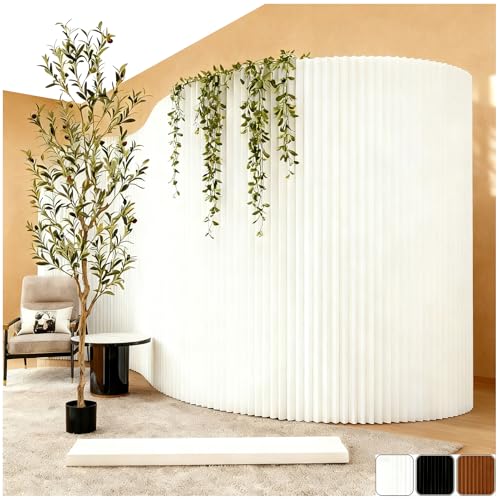
Best for flexible layouts where a lightweight, eco-conscious partition is desirable. This divider uses recyclable kraft paper with a honeycomb interior to balance privacy and openness. It subtly softens rooms with filtered light, making it ideal for reception areas or open-concept conference spaces that require temporary, reusable sections.
Who it’s best for: eco-minded offices needing a low-profile, adjustable divider. Why selected: ultra-thin folding design stores easily and offers substantial configurability. Caution: not ideal for high-traffic areas or where rigid structure is required.
Rantila 3 Panel Room Divider

Best for flexible, multi-directional room shaping in offices or classrooms. This freestanding, three-panel design expands up to a wide width and folds easily for storage. The fabric is UV-protected and water-resistant, while the steel frame adds durability for daily use in busy spaces.
Who it’s best for: offices needing a lightweight, maneuverable divider that can adapt to different room shapes. Why selected: good balance between portability and stability. Caution: base width limits placement in very narrow corridors.
Room Divider 6FT 4 Panel With Lockable Wheels

Best for spaces requiring quick, mobile privacy with stable positioning. This divider uses a polyester fabric panel, a robust metal frame, and thickened feet for stability. Lockable wheels allow smooth relocation, and the panels can be reconfigured to suit different room layouts. A good pick for dynamic conference environments.
Who it’s best for: teams that reconfigure layouts often and need to move partitions without lifting. Why selected: combines mobility with a stable ground stance. Caution: wheels may collect dust; regular cleaning helps maintain quiet operation.
HELLOPAPO Folding Paper Partitions

Best for quick, tool-free space redesigns in offices, studios, or pop-up events. This folding paper divider features adjustable shapes and space-saving storage. The panels can bend to form curves or straight walls, and their opacity provides effective privacy with light control, making them useful for temporary meeting zones or photo backdrops.
Who it’s best for: event spaces and busy offices needing rapid, tool-free configuration. Why selected: high configurability and easy storage. Caution: not ideal for ultra-heavy usage where rigid dividers are required.
Buying Guide: Key Considerations for Conference Room Folding Partitions
- Room size and configuration: Choose panels that fold or stack to fit your storage space and travel through doorways without disassembly.
- Privacy vs. openness: Consider opacity and light control. Some options blur vision while retaining ambient light, others offer stronger visual blocks.
- Frame and fabric durability: Look for metal or reinforced frames and water-resistant, tear-proof fabrics for daily use in busy offices.
- Mobility and stability: If you need to move partitions frequently, prioritize locking wheels and wide feet for stability. For static layouts, lighter designs may suffice.
- Storage and assembly: Tool-free designs save setup time. Ultra-thin models store under beds or in closets, while larger, multi-panel layouts may require dedicated storage space.
- Aesthetics: Choose colors and finishes that complement your office decor and can double as presentation backgrounds if needed.
- Acoustic impact: Some panels offer lightweight noise absorption; consider this if privacy is a primary goal in conference areas.
Frequently Asked Questions
- What is the best folding partition for a small conference room?
- Do these partitions improve privacy in meetings?
- Can I move partitions by myself?
- Are these partitions durable for daily office use?
- How do I store multi-panel partitions when not in use?
- Do these partitions affect acoustics?
Look for a compact, multi-panel design that folds flat for storage and offers easy repositioning to create separate zones.
Yes, most products provide visual privacy and some light noise reduction, depending on fabric density and panel height.
Many models include wheels or lightweight panels designed for solo handling, though larger setups may require assistance.
Durability varies by frame material and fabric; look for steel or aluminum frames with water-resistant fabric for longer lifespans.
Choose ultra-thin or fold-flat models that tuck away; some designs offer stacking or compact folding to minimize storage space.
Some fabric panels can slightly dampen ambient noise, but they are not substitutes for dedicated acoustic treatments in large conference rooms.