If you’re painting a wooden garage floor, you want a durable, one-coat or few-coat finish that resists wear, moisture, and tire marks. The top picks below are chosen for their strong epoxy or acrylic formulas, interior/exterior versatility, and ease of application on porous surfaces. They’re best for wood or wood-substrate garages when proper surface prep is followed. The table summarizes key details to compare at a glance.
| Product | Best For | Finish | Notes |
|---|---|---|---|
| KILZ 1-Part Epoxy Concrete & Garage Floor Paint | Wood garages needing durable coating | Satin | Ideal for concrete but listed as versatile for porous surfaces with prep |
| Rust-Oleum EpoxyShield Gloss Gray Garage Floor Coating Kit | Heavy-duty wooden floors needing quick walk-on | Gloss | 5X stronger than 1-part epoxy |
| YOA Professional Concrete Garage Floor Paint | Indoor/outdoor wood-supported garages | Semi-gloss | Ready-to-use single component |
| SENVEN Acrylic Concrete & Garage Floor Paint Beige White | Wood garages needing a satin finish | Satin | Professional-grade coverage |
| Rust-Oleum RockSolid Polycuramine | Heavy-demand wood garages with traffic | Gloss | High-strength, two-part system |
KILZ 1-Part Epoxy Concrete & Garage Floor Paint

Product overview: KILZ’s 1-Part Epoxy Floor Paint is a satin-finish coating designed to resist hot tire pickup, scuffing, cracking, peeling, and fading. It’s marketed for interior and exterior horizontal surfaces, making it versatile for garages with wood subfloors or wooden overlays after proper sealing. The formula offers durable protection for concrete-like surfaces and is chosen for its long-lasting appearance. Best for buyers who want a single-component epoxy option with easy application and a satin look. Limitations include the need for proper surface preparation and suitability primarily for flat, horizontal areas.
Who it’s best for: Homeowners seeking a durable, one-part epoxy option for wooden garage floors that have a smooth, flat surface and can tolerate satin finishes. It’s also suitable for basements or porches if the surface is prepared.
Why selected: It combines epoxy performance with simplified application, reducing mixing errors and curing time common to multi-part systems. The satin finish helps hide minor inconsistencies more readily than high-gloss coatings.
Caution: Not designed for vertical surfaces or areas exposed to hydrostatic pressure or forklift traffic. Ensure the wood surface is properly sealed and primed to maximize adhesion and longevity.
Rust-Oleum EpoxyShield Gloss Gray Garage Floor Coating Kit
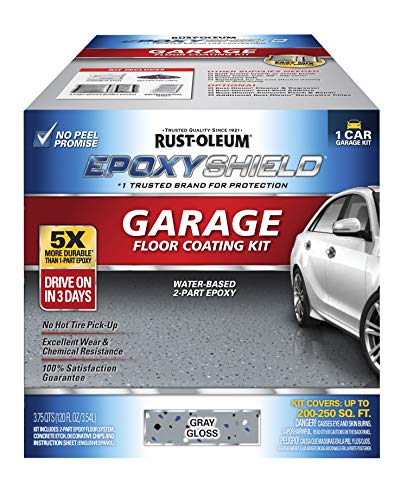
Product overview: This two-part epoxy kit claims 5X greater strength than typical 1-part epoxy. It’s designed for garage floors and other horizontal concrete surfaces, offering a glossy finish that can enhance visibility on wood substrates with proper prep. It’s noted for walk-on readiness in 1–2 days and vehicle-ready status in about 3 days, helping homeowners plan projects efficiently.
Who it’s best for: Those needing a robust, quick-to-cure solution that can tolerate frequent traffic, including wooden floor sections where a glossy aesthetic is desired. This kit is better for garages with higher wear expectations.
Why selected: The superior strength relative to standard epoxy makes it appealing for wooden garage floors that may see tire marks or dragging tools, provided the surface is well-prepared and sealed first.
Caution: Because it’s a two-part system, precise mixing and ventilation are important. Follow the manufacturer’s instructions for adhesion to wood subfloors, and note that gloss finishes can highlight surface imperfections.
YOA Professional Concrete Garage Floor Paint
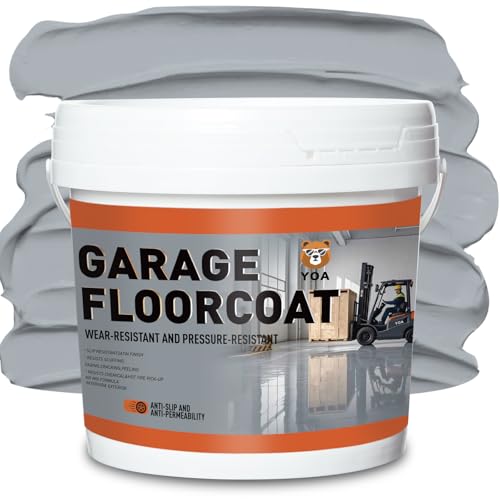
Product overview: YO A’s paint is a ready-to-use, single-component coating designed for both indoor and outdoor use. It’s described as durable with scratch resistance, available in Smoke Gray, and suitable for garages, basements, and other spaces, including wood-supported surfaces with appropriate prep. The coating claims coverage of up to 120 square feet per gallon, dependent on surface condition and thickness.
Who it’s best for: Buyers who want a simple, no-mix solution for wooden garage floors where a semi-gloss or low-sheen finish is acceptable and project simplicity is prioritized.
Why selected: The ready-to-use format reduces prep complexity and eliminates mixing errors, useful for DIYers working with wood floors that require a consistent, even coat.
Caution: Actual coverage depends on surface texture; rough or barely prepared wood can reduce coverage, necessitating additional coats or material.
SENVEN Acrylic Concrete & Garage Floor Paint

Product overview: SENVEN’s 1-part acrylic floor paint emphasizes durability with resistance to hot tire pickup, scuffing, cracking, peeling, and fading. It’s marketed as suitable for indoor and outdoor horizontal surfaces and targets concrete-like substrates, including basements and garages. It covers up to 120 square feet per gallon with a satin finish, offering a balance between appearance and practicality for wood floors after sealing.
Who it’s best for: Buyers seeking a satin-finish option that pairs reasonable durability with ease of application, especially when preparing wooden garage floors that require a gentler sheen than high-gloss epoxy.
Why selected: The satin finish helps minimize the appearance of small surface imperfections on wood, while the acrylic formula tends to be more forgiving with humidity during cure.
Caution: Not intended for vertical surfaces or areas with hydrostatic pressure. Proper sealing of wood substrate is advised to optimize adhesion and longevity.
Rust-Oleum RockSolid Polycuramine Glow
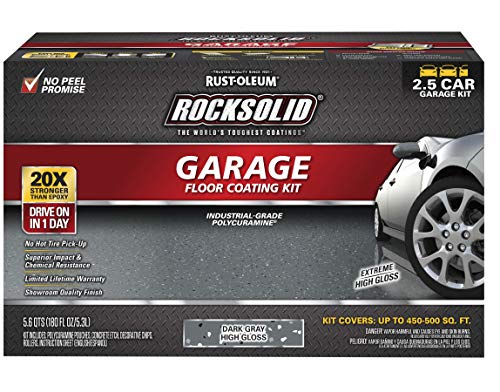
Product overview: The RockSolid Polycuramine coating is a potent, self-leveling system described as 20X stronger than epoxy, designed for interior concrete surfaces including garages. It comes in a two-part system packaged for easy use and promises quick walk-on and vehicle-ready times. It provides a glossy finish and is suitable for high-traffic wood garages with strong performance needs.
Who it’s best for: Homeowners with heavy use wooden garages who want a high-strength, durable floor coating that can handle vehicle traffic and equipment without frequent re-coats.
Why selected: The high-strength polycuramine blend offers robust resistance to wear and abrasion, which is beneficial for wooden floors that endure wheels, ladders, and tools.
Caution: It’s a two-part system requiring careful mixing and ventilation. Adequate surface preparation is essential for adhesion on wood.
Buying Guide
- Surface preparation: Wood floors must be clean, dry, and sealed. Sanding, filling gaps, and applying a compatible primer improves adhesion and longevity for any garage floor paint on wood.
- Vehicle and foot traffic: For higher traffic or vehicle use, choose a product labeled for heavy-duty wear, such as polycuramine or higher-grade epoxy, rather than light acrylic coatings.
- Finish preference: Glossy finishes look sharper but highlight imperfections; satin or semi-gloss can better hide minor flaws on wood while still appearing polished.
- Ventilation and cure time: Two-part systems require correct mixing ratios and adequate ventilation. Plan application when temperatures and humidity are within recommended ranges to prevent tackiness or poor curing.
- Coverage and thickness: Wood substrates can absorb coatings differently. Expect slightly higher material use on rough or porous wood. Be prepared for additional coats if necessary.
- Safety and VOCs: Some products have low VOCs or water-based formulas, which are preferable for indoor garages. Check local regulations if you’re sensitive to fumes.
FAQ
Can I use concrete floor paint on a wood garage floor?
Yes, with proper surface preparation, sealing, and a compatible primer. Expect that wood may require more coats or different topcoats to achieve durability comparable to concrete surfaces.
Which finish is best for wood floors in a garage?
Satin or semi-gloss finishes balance durability with a forgiving appearance, while glossy finishes offer more shine but can highlight flaws.
How long before I can park a vehicle on the coating?
Most products specify walk-on times within 1–2 days and vehicle-ready times within 3–24 hours, depending on the product and environmental conditions.
Do I need a primer for wood before painting?
Primers or sealers formulated for wood improve adhesion and help prevent moisture penetration, especially when coating over wood subfloors or plywood.
Which product is best for high-traffic garages?
Two-part systems like polycuramine coatings typically offer the strongest durability and abrasion resistance for heavy-use garages on wood floors.