Answering the common buyer question, these stainless steel cable rails deliver durable, low-maintenance railing solutions for indoor and outdoor projects. They’re best for homeowners and contractors seeking corrosion-resistant, strong, and visually sleek handrail systems. The top picks cover varied lengths, diameters, and strand constructions to fit different posts, spans, and load requirements. Use this guide to compare 1/8″, 3/16″, and 5/32″ cables across marine-grade options, and pick the setup that aligns with your deck, balcony, or stair railing goals.
Summary Table of Selected Products
- CELYND Stainless Steel Cable for Railing – 500FT 1/8″ T316 — Marine-grade 1/8″ cable, 7×7 construction, ideal for outdoor decks and indoor railings.
- BLIKA 500FT 3/16″ Cable, T304 — Versatile 7×19 construction, good for modern railings, indoor/outdoor use, affordable option.
- TGPRDT 1000FT 3/16″ Stainless Steel Cable — Long reel, 7×19, suited for large projects and repeated tensioning.
- VEVOR Stainless Steel Cable Railing 1/8″ x 500ft — 1×19 construction, 316 marine-grade, smooth handling, high breaking strength.
- Atlantis RailEasy C0978-4500 Railing Cable (5/32″) — 5/32″ 1×19 marine-grade cable, designed for Atlantis fittings and larger spans.
CELYND: 500FT 1/8″ T316 Cable For Railing

Material and construction: Premium T316 stainless steel, designed for outdoor and coastal environments. The 7×7 strand construction provides a sturdy balance of strength and flexibility. This cable’s rated breaking strength is 1800 pounds with a safe tension around 260 pounds, making it suitable for most deck railing and handrail applications. Best for: outdoor decks and indoor stair rails where a robust, corrosion-resistant line is needed. Limitation: longer runs may require careful tensioning to maintain uniform sag.
BLIKA: 500FT 3/16″ Stainless Steel Cable

Material and construction: 3/16″ diameter, 7×19 construction, 304 stainless steel. It offers a flexible yet strong core with good corrosion resistance for general railing projects. Best for: romance of a contemporary, clean look with easy tensioning for indoor or outdoor rails. Limitation: 304 steel is typically less resistant to salt spray than 316 stainless steel, so coastal installations may benefit from 316 substitutes.
TGPRDT: 1000FT 3/16″ Stainless Steel Cable

Material and construction: 3/16″ diameter, 7×19 stainless steel with a marine-grade profile. This long reel is suited for large deck projects, stair rails, and installations requiring extended runs. Best for: builders handling bigger spans or multiple railing sections, where fewer splices are preferable. Limitation: longer reels require careful unspooling and storage to prevent kinks.
VEVOR: 1/8″ x 500ft Stainless Steel Cable

Material and construction: 316 marine-grade stainless steel, 1×19 construction for good flexibility and strong core. This option delivers a balance of corrosion resistance and ease of handling, suitable for most railing projects. Best for: coastal or humid climates where extra resistance to rust matters. Limitation: 1×19 construction can be less flexible than some 7×19 cables in extreme bending situations.
Atlantis RailEasy C0978-4500: 5/32″ Railing Cable
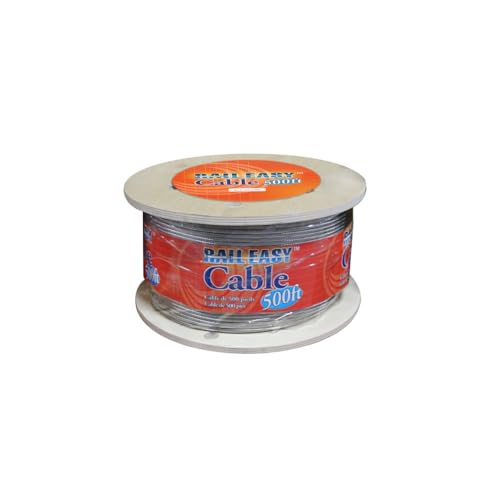
Material and construction: 5/32″ 1×19 Marine Grade 316L stainless steel cable. The larger diameter provides higher tensile strength, suitable for longer spans and higher load requirements. Best for: installations using Atlantis fittings or projects needing a stronger railing line for wider balustrades. Limitation: larger diameter may require compatible fittings and more robust posts.
Buying Guide
What cable diameter should I choose? For standard residential railing, 1/8″ and 3/16″ are common. Use 1/8″ for lighter loads or shorter spans, and 3/16″ for longer runs or higher tension. 5/32″ offers extra strength for large decks or high-traffic areas, but ensure fittings and posts accommodate the larger size.
Which stainless steel grade is best? For coastal or saltwater exposure, marine-grade 316/316L (like T316 or 316L) is preferred due to superior corrosion resistance. 304 stainless (as in some BLIKA options) is adequate in milder environments but may require more care in harsh salt air zones.
What strand construction matters? 7×19 is highly flexible and forgiving for bending around posts and corners, making it ideal for railing runs. 1×19 is stiffer but offers a strong, straight core—often used where long, straight sections are needed and fewer bends occur.
How important is length? Longer reels reduce the number of connections and splices, which can improve visual continuity. However, ensure you have proper tools for cutting and crimping and that your tensioning method aligns with the chosen hardware.
What about fittings compatibility? Some products are designed to pair with specific railing systems or fittings. Verify that your posts, end fittings, and cam or swage hardware are compatible with your selected cable size and grade to avoid rework.
Frequently Asked Questions
- What cable diameter is typically best for deck railings? The common choices are 1/8″, 3/16″, and 5/32″. For most residential decks, 1/8″ or 3/16″ is sufficient, while 5/32″ suits larger spans or higher-load areas.
- Is 316 stainless steel necessary for outdoor use? For coastal or salt-air environments, 316 or 316L offers better corrosion resistance than 304. In milder climates, 304 can be acceptable, but maintenance is still important.
- Why choose 7×19 over 1×19 cable? 7×19 cables are more flexible and easier to install around bends and posts, making them a common choice for railing projects.
- Do I need professional installation? While many DIYers install cable railings, proper tensioning and post alignment are critical for safety. Use the correct tools and follow manufacturer guidelines.
- What maintenance is required? Regular rinsing in salty or humid environments helps prevent corrosion. Inspect end fittings and tension periodically to prevent loosening over time.
- Can I mix cable diameters on the same railing? It’s generally better to maintain a consistent diameter for uniform load distribution and aesthetics, unless a specific design requires variation.