When choosing basement wall coatings, prioritize products that protect masonry while resisting moisture and odors. This guide highlights five top picks for block walls, each suited to different needs—from heavy-duty waterproofing to quick-drying primers. Homeowners with moisture problems will find options that seal leaks, while renovators seeking a clean finish can opt for interior paints that also block water intrusion. The top picks balance performance, ease of application, and surface compatibility to help you decide which coating best fits your basement project and climate conditions.
Summary table of chosen products:
| Product | Best For | Main Benefit |
|---|---|---|
| Ames Block & Wall Liquid Rubber Waterproofer | Heavy-duty waterproofing | Elastomeric, fills cracks up to 1/8″, high elongation |
| KILZ Basement and Masonry Waterproofing Paint | Interior/exterior protection | Nanotechnology water barrier, alkali resistant |
| Ames Block & Wall Liquid Rubber Multi-Purpose Coating | Concrete sealing and general waterproofing | Versatile sealer with durable white finish |
| INSL-X WaterBlock Acrylic Masonry | Fast-drying basement walls | Water-based, high alkali resistance |
| Zinsser WaterTite / Zinsser Block Filler | Damp-proofing and surface prep | Direct-to-damp primer; fills and primes |
Ames Block & Wall Liquid Rubber Waterproofer, 5 Gal

Ames Block & Wall Liquid Rubber Waterproofer is a thick, elastomeric coating designed for concrete, cinder block, and ICF surfaces. It fills cracks up to 1/8 inch and offers up to 1800% elongation, making it flexible enough to move with underlying masonry. The coating is suitable for sprayer, roller, or brush application and is designed to mitigate moisture intrusion in basements and foundations. Best for: homeowners needing a robust waterproofing layer on masonry walls that still requires manageable application. Limitation: may require multiple coats for severe seepage and compatible primers to ensure adhesion on very porous surfaces.
KILZ Basement and Masonry Waterproofing Paint

KILZ Basement and Masonry Waterproofing Paint combines a water barrier with a nanotechnology-enhanced finish to block water pressure up to 12 PSI. It is suitable for interior and exterior masonry, including basement walls, stucco, brick, and concrete blocks. The product is not intended for active leaks or floors. Best for: those seeking a paint-and-waterproofing solution that provides a durable, low-odor surface and good alkali resistance. Limitation: not recommended for walls with ongoing leaks or active water intrusion that requires structural sealing.
Ames Block & Wall Liquid Rubber (1 Gallon)
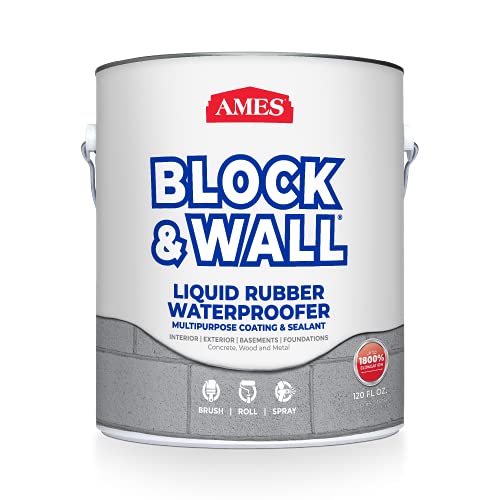
This Ames one-gallon variant provides the same foundational waterproofing and sealing features as the five-gallon product, with a lighter quantity ideal for smaller basements or patch jobs. It remains a flexible, low-odor option that adheres to concrete, masonry, and related surfaces. Best for: project spots or smaller walls where a full 5-gallon bucket would be unnecessary. Limitation: coverage may require more frequent applications for large areas or heavy moisture zones.
INSL-X WaterBlock Acrylic Masonry Waterproofer Paint
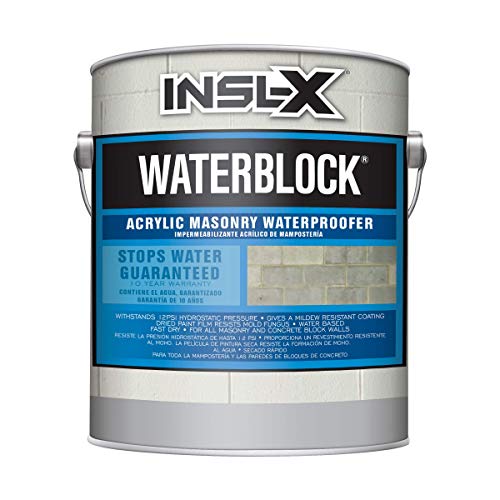
INSL-X WaterBlock is a water-based acrylic masonry coating designed to seal vertical basement walls, foundations, and retaining walls. It dries quickly and offers high alkali resistance (up to pH-13), making it suitable for challenging basement environments. Best for: homeowners who prefer a fast-drying, interior-exterior compatible formula with strong alkali tolerance. Limitation: not a heavy-duty elastomeric option, so may be less forgiving on significant substrate movement or cracking.
YKF Masonry Pro Foundation & Basement Sealer

YKF Masonry Pro is a water-based polyurethane-based coating designed for basement walls, foundations, crawl spaces, and retaining walls. It resists hydrostatic pressure up to 15 PSI when applied correctly and provides a white, decorative finish that helps conceal minor surface imperfections. Best for: those needing a higher-pressure resistance coating with a more decorative final look. Limitation: some surfaces may require thorough dry conditions and surface preparation for optimal bonding.
Zinsser WaterTite White Damp Wall Primer

Zinsser WaterTite is a direct-to-damp wall primer designed for concrete, masonry, and cast-in-place surfaces. It blocks water leaks and dampness at the source and withstands hydrostatic pressure up to 34 PSI, making it suitable for high-moisture basements. Best for: prepping damp walls before finishing coats to improve long-term moisture resistance. Limitation: primer alone does not provide a finish; pair with a compatible topcoat for full protection.
Buying Guide
What should you consider before choosing basement wall coatings? Start with moisture level and substrate type. Elastomeric products tolerate movement and cracks better than standard paints, but may require priming on very porous or damaged surfaces. For interior basements, weigh odor, drying time, and coverage against the severity of water intrusion. For above-grade or outdoor sections, consider UV resistance and weather exposure. Always prep the surface by cleaning, repairing cracks, and ensuring proper humidity levels before applying coatings.
Key questions to guide your choice:
- Do I have active leaks or hydrostatic pressure to manage?
- Is the surface interior, exterior, or both?
- Do I prefer a fast-drying finish or a highly durable elastomeric coating?
- Is ease of application important (brush, roller, or sprayer)?
- Will the coating be visible as a finished wall or covered by another finish?
Practical tips for choosing and applying
- For severe moisture, consider elastomeric waterproofers like Ames Block & Wall Liquid Rubber for foundational protection.
- Use WaterBlock or WaterTite primers on damp walls to block moisture at the source before topcoating.
- Prep surfaces: remove efflorescence, fix cracks, and clean thoroughly to improve adhesion.
- Follow manufacturer recoat times and consider multiple coats for best performance on porous masonry.
FAQ
- Can these coatings fix leaking basements? Some products help manage moisture and create barriers, but active leaks may require structural sealing and professional assessment.
- Is a primer necessary with waterproof paints? Primers can improve adhesion and moisture resistance, especially on damp or porous walls.
- Are there odors with basement paints? Some products are low-odor; elastomeric coatings may have a stronger smell during application.
- Can I use interior masonry paints outdoors? Many interior coatings are suitable for exterior masonry, but confirm outdoor compatibility and weather resistance on the product page.
- Will these coatings affect basement curing or humidity? Proper surface prep and curing conditions help ensure optimal performance; follow product guidelines for humidity and temperature.
- How do I choose between paint and liquid rubber coatings? Elastomeric liquid rubbers offer higher crack-bridging and waterproofing capacity, while paints provide faster coverage and decorative finishes.