Answering the question most buyers have: which basement and masonry waterproofer gives lasting protection against leaks on concrete, brick, and block walls? The top picks below are suited for basement walls, foundations, and other below-grade or high-humidity areas. Each product is explained with who it’s best for, plus practical pros and limitations to help you decide.
Buyer’s quick reference table (selected products):
| Product | Best For | Key Benefit |
|---|---|---|
| INSL-X WaterBlock Acrylic Masonry Waterproofer | Interior/Exterior basement walls and foundations | Fast-drying, high alkali resistance |
| KILZ Basement And Masonry Waterproofing Paint | Indoor/outdoor basement and masonry walls | Nanotechnology water barrier, versatile for many surfaces |
| Drylok Latex Base Masonry Waterproofer | Basement walls needing easy latex application | Low odor, easy cleanup |
| UGL Drylok 28613 Extreme | High-water-pressure scenarios and below-grade needs | Stops up to 15 psi, bright white finish |
| YKF Masonry Pro Foundation & Basement Waterproofing Sealer | Below-grade and foundation walls | 15 psi hydrostatic resistance, durable polyurethane formula |
INSL-X WaterBlock Acrylic Masonry Waterproofer
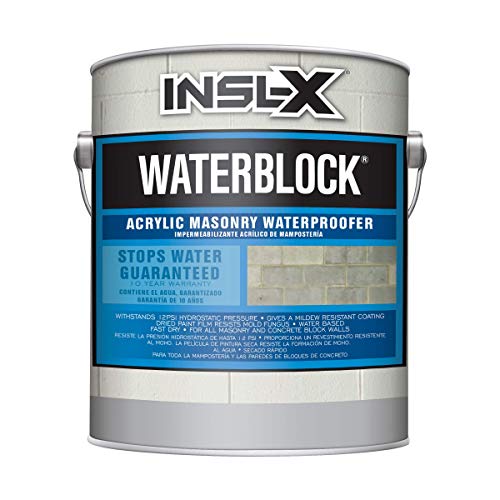
Product overview: Water-based coating designed to seal vertical interior and exterior concrete walls, including basement walls, foundations, and retaining walls. It dries quickly and resists high alkali conditions up to pH-13, making it suitable for masonry, concrete blocks, stucco, brick, and other porous surfaces.
- Best for: Basement and foundation walls needing fast-drying acrylic protection with alkali resistance.
- Why chosen: Combines ease of application with durable alkali resistance, helping slow moisture intrusion from humidity and damp basements.
- Limitation: As a water-based product, its performance depends on proper surface prep and may require multiple coats for heavily porous surfaces.
KILZ Basement And Masonry Waterproofing Paint

Product overview: An interior/exterior waterproofing paint engineered with nanotechnology to block up to 12 PSI of water pressure. Suitable for basement, masonry, stucco, brick, concrete blocks, and retaining walls. Not recommended for walls with active leaks.
- Best for: Surfaces requiring a robust water barrier with decorative finish for indoor/outdoor use.
- Why chosen: Nanotechnology barrier provides strong protection against seepage on multiple masonry substrates.
- Limitation: Not ideal for active leaks or floors; must prepare holes/cracks with hydraulic cement for below-grade use.
Drylok Latex Base Masonry Waterproofer (Set of 2)

Product overview: A latex-based masonry waterproofer that forms a durable waterproof barrier when correctly applied. White finish can brighten surfaces and can be tinted with universal colorants.
- Best for: Quick, user-friendly waterproofing on interior/exterior masonry where odor and cleanup are considerations.
- Why chosen: Latex base provides easier cleanup and lower odor than oil-based products, useful for home basements and utility spaces.
- Limitation: White finish may require tinting for some aesthetic goals; not designed for continuous active leaks without preparation.
UGL Drylok 28613 Extreme Concrete & Masonry Waterproofer

Product overview: A high-performance masonry waterproofer designed to withstand extreme hydrostatic pressure. It provides a barrier against water infiltration and features a bright white finish that can be tinted. Suitable for above- and below-grade applications.
- Best for: Surfaces exposed to significant water pressure or damp basements where a strong, deep-penetrating barrier is needed.
- Why chosen: Withstand up to 15 psi of water pressure, making it a strong option for challenging basement and exterior walls.
- Limitation: White finish, while bright, may require tinting; ensure proper surface prep and ventilation during application.
Ames Block & Wall Liquid Rubber Waterproofer
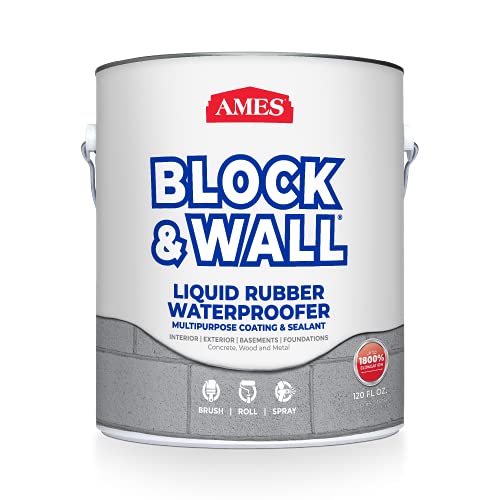
Product overview: A liquid rubber coating designed for basements and foundations, providing a multi-purpose sealant and waterproofer. White color suitable for various masonry surfaces.
- Best for: Those seeking a versatile coating that doubles as a concrete sealer and waterproofer for foundation walls.
- Why chosen: US-made emphasis and multi-use nature can simplify projects with varied substrate conditions.
- Limitation: Product weight and handling must be considered for larger surfaces; verify compatibility with existing coatings.
YKF Masonry Pro Foundation & Basement Waterproofing Sealer

Product overview: A water-based polyurethane sealer with a high-solids formula designed for basement and foundation walls. It provides a protective barrier against moisture while delivering a clean, white finish.
- Best for: People who want a durable, water-based sealer with good moisture resistance for below-grade walls.
- Why chosen: 15 PSI hydrostatic resistance and a distinctive white appearance help with both protection and aesthetics.
- Limitation: May require careful surface preparation and proper curing conditions for best results.
Buying Guide
Key purchase considerations help align product choice with your basement and masonry needs. Use these practical questions to compare options.
What type of surface will you treat?
Interior basement walls, exterior foundations, brick, or concrete blocks require different formulations. For porous masonry, consider products with deep penetration and high alkali resistance.
Do you need a fast-drying or low-odor option?
Water-based products typically dry quickly and emit less odor, making them suitable for finished basements or areas with limited ventilation.
What level of water exposure do you expect?
For high hydrostatic pressure or below-grade walls, select products that specify psi resistance or extreme protection. For moderate moisture, standard waterproofer coatings may suffice.
Can you tolerate a tinted or white finish?
Several products finish white and bright; some can be tinted. If appearance matters, plan for tinting or choosing a product that matches decor.
Preparation and maintenance considerations
Proper surface prep (cleaning, repairing cracks, and allowing surfaces to dry) is essential for best results. Some products require caulking or hydraulic cement for cracks before coating.
Application method and cleanup
Spray, brush, or roll-on methods are common. Latex-based formulas offer easier cleanup with water, while solvent-based alternatives may require mineral spirits or defined ventilation.
FAQ
- Q: Can these coatings stop active leaks?
- A: Most products are designed to seal and protect against moisture but may require crack repair and, in some cases, hydraulic cement for active leaks.
- Q: Which is best for below-grade walls?
- A: Look for products with hydrostatic resistance ratings and deep penetration, such as those marketed for basement and foundation use.
- Q: Are water-based coatings suitable for exteriors?
- A: Yes, many water-based coatings are designed for interior and exterior masonry, but verify weather tolerance and cure times for outdoor use.
- Q: Do I need multiple coats?
- A: Some surfaces require two coats for full coverage and optimal moisture protection; follow the manufacturer’s guidelines for best results.
- Q: Can I tint the finish?
- A: Several products offer tinting options; read product notes to ensure compatibility with universal colorants if you plan to color-match.