If you’re fighting basement flooding, a reliable 1/2 HP sump pump is a strong option for automatic water removal. This guide highlights five solid choices, detailing who each pump is best for, and why they stand out. Whether you’re dealing with heavy rainfall, snowmelt, or basement seepage, these models are suited for homeowners who want dependable, low-maintenance performance. The table below compares key aspects at a glance.
| Product | Best For | Key Feature |
|---|---|---|
| Wayne CDU800 1/2 HP Submersible Sump Pump | Bases with cast iron, long-lasting builds | 5,100 GPH, vertical float, durable construction |
| Zoeller M98 Flow-Mate Sump Pump | Situations needing robust float control | Cast iron housing, LED power plug, high flow |
| LANCHEZ 1/2 HP Submersible Sump Pump | Heavy-duty, corrosion resistance | 5200 GPH, cast iron & stainless steel, auto float |
| AQUASTRONG 3450 GPH Sump Pump | Budget-conscious, reliable basic pump | 1/2 HP, bottom suction, automatic operation |
| RainBro 1/2 HP Thermoplastic Sump Pump | Versatile, light-weight installations | 3600 GPH, vertical float, multiple outlet options |
Wayne CDU800 1/2 HP Submersible Sump Pump

Best for heavy-duty, long-term basement protection. The Wayne CDU800 delivers up to 5,100 GPH and uses a cast iron and corrosion-resistant steel construction for durability in demanding sump environments. The vertical float switch is designed for automatic operation and tested for up to 1 million cycles, reducing the need for manual intervention. This pump is well suited for homeowners facing frequent storms or rapid snowmelt. A potential limitation is its heavier build, which may be less ideal for tight spaces or portable use.
Zoeller M98 Flow-Mate Sump Pump

Best for households prioritizing visible power status and longevity. The Zoeller M98 features a cast iron housing with an integrated LED power plug for quick power checks, and a high flow rate up to 4,320 GPH. Its automatic operation relies on a built-in float switch, avoiding manual control. Pros include robust heat dissipation from the oil-filled motor; a potential drawback is a higher price point relative to basic plastic models.
LANCHEZ 1/2 HP Submersible Sump Pump
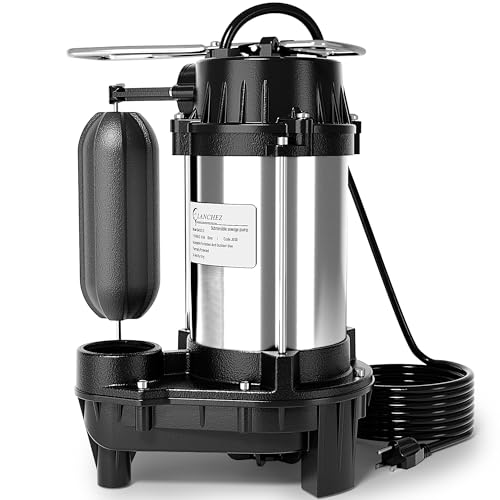
Best for heavy-duty corrosion resistance and high capacity. The LANCHEZ model offers a 5,200 GPH flow with a 26 ft lift, thanks to a cast iron and stainless steel housing. Its automatic vertical float switch activates as water rises, with a defined on/off range. Built-in thermal overload protection helps prevent motor burnout. Choose this if you need a robust, long-life sump pump for tough conditions; avoid if space is extremely limited due to its size and weight.
AQUASTRONG 3450 GPH Sump Pump

Best for budget-conscious buyers needing reliable automatic operation. The 3450 GPH model uses a 1/2 HP motor with bottom suction to reduce airlocks and debris clogging. It includes automatic operation via an adjustable float switch, with a straightforward installation that suits many homes. A limitation is its lower maximum flow compared to larger 1/2 HP models, which may be a consideration in very large flood scenarios.
RainBro 1/2 HP Thermoplastic Sump Pump
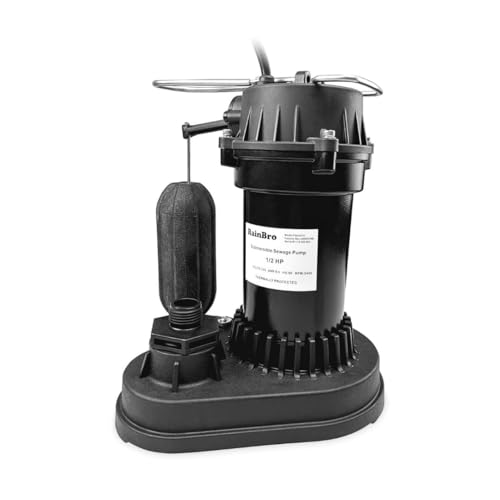
Best for versatile, lightweight installations and multiple outlet options. The RainBro model pumps up to 3,600 GPH with a 10-foot power cord for flexibility. Its vertical float switch enables automatic operation, and the pump supports two outlet diameters for adaptable hose connections. While lighter and easier to move, its lower flow relative to some 1/2 HP competitors may be less suitable for very large flood events.
Buying Guide
What to consider when choosing a 1/2 HP sump pump
- Flow rate vs. lift height: Higher GPH matters for quick water removal, while lift height determines how far water can be pumped up and out of the area.
- Construction material: Cast iron and stainless steel offer durability in tough environments; thermoplastics save weight and cost but may be less durable over time.
- Automatic operation: A reliable float switch minimizes manual intervention; verify switch type and cycle rating if possible.
- Discharge size and plumbing compatibility: Check NPT discharge measurements and adapters to fit existing piping.
- Outdoor and indoor use: Some models are designed for basements, crawl spaces, or outdoor areas with different debris handling capabilities.
- Maintenance considerations: Access to motor cooling, ease of cleaning, and debris filtration can improve long-term performance.
Frequently Asked Questions
- What is the standard GPH for a 1/2 HP sump pump?
Most 1/2 HP pumps range from about 3,600 to 5,100 GPH, depending on head height and impeller design. - Can a 1/2 HP pump handle dirty water?
Some models have bottom suction or debris filters; check the product features for solids handling specifications. - Is cast iron or thermoplastic better for sump pumps?
Cast iron offers durability and heat tolerance; thermoplastics reduce weight and cost but may wear faster in harsh conditions. - Do automatic sump pumps require regular maintenance?
Yes, inspect the float switch, clean filters, and ensure the discharge area remains clear to prevent clogs. - Which pump is best for frequent basement flooding?
Models with higher GPH, durable housings, and reliable float switches are preferable; Wayne, Zoeller, and LANCHEZ options are strong contenders. - What should I consider before installing a sump pump?
Evaluate the sump pit size, discharge route, electrical supply, and the presence of backflow prevention or check valves.