Choosing a high-capacity tankless water heater means prioritizing reliable flow, energy efficiency, and durable design. The following five models are among the top options for delivering up to about 8–9 GPM at steady temperatures across multiple outlets. Each entry highlights core features, efficiency, and smart or safety options to help you compare quickly and decide which unit fits your home’s needs.
Overview Of Selected Models
| Product | Brand | Flow (GPM) | Fuel | Notes |
|---|---|---|---|---|
| APUS 8.1 GPM Outdoor Gas Tankless | APUS | 8.1 | Natural Gas | High efficiency, supports 3 showers + 2 faucets |
| Rheem RTGH-95DVLN-3 | Rheem | 9.5 | Natural Gas | Indoor, 199,900 BTU, electric ignition |
| APUS 8.1 GPM Outdoor Propane Tankless | APUS | 8.1 | Propane | WiFi remote control, strong cold-water performance |
| Rheem Natural Gas Condensing 9 GPM | Rheem | 9 | Natural Gas | Condensing, high efficiency |
| Rheem RTG-70XLN-3 | Rheem | 7.0 | Natural Gas | Outdoor, 160,000 BTU, good for two-three baths |
APUS 8.1 GPM Natural Gas Outdoor Tankless

The APUS 190,000 BTU outdoor unit delivers 8.1 GPM of instant hot water, making it suitable for whole-home use. The system is designed to supply multiple outlets simultaneously, including showers and faucets, even under low-flow conditions thanks to a low 0.79 GPM minimum flow. Advanced heat exchanger technology uses copper with staged combustion for improved efficiency, and a 2-year full warranty covers major components. Safety protections guard against freeze, overheat, and flame failure, supporting reliable daily operation.
Key advantages include a precise temperature range and compatibility with standard 3/4″ connections for easy installation. The model supports remote monitoring and control options, enabling smarter scheduling and setpoint adjustments. This unit is ideal for homes that require robust hot water delivery without sacrificing energy efficiency or safety.
Rheem RTGH-95DVLN-3 Tankless Water Heater
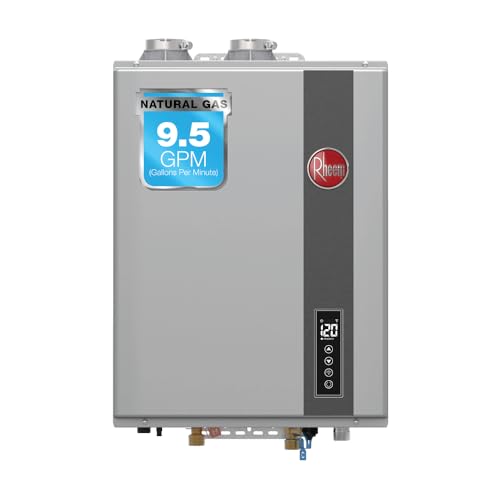
This indoor natural gas tankless heater from Rheem provides up to 9.5 GPM and up to 199,900 BTUs. It includes electric ignition and offers a broad output range (100–140°F) with a default at 120°F, making it suitable for larger homes with multiple simultaneous hot-water needs. The higher GPM rating supports 2–3 bathrooms’ worth of hot water concurrently, reducing the risk of cold-water bursts in peak usage periods. Efficient operation and Rheem’s service network help ensure dependable performance over time.
Considerations include venting requirements for indoor installation, the need for adequate electrical and gas supply, and ensuring proper sizing for your climate and piping layout. Temperature control flexibility and a straightforward control interface support easy daily use for families that rely on steady water at consistent temps.
APUS 8.1 GPM Outdoor Propane Tankless With WiFi

This propane-fired APUS model also delivers 8.1 GPM and 190,000 BTU for whole-home use. Smart temperature control allows remote adjustments through an app or wired controller with a precise ±1°F accuracy (95–149°F). The compact outdoor design fits a broad range of exterior mounting configurations, and its low minimum flow helps maintain reliable performance even when water pressure is weak. It’s well-suited for households seeking app-based control and flexible fuel options.
When evaluating, consider your primary fuel source, local natural gas availability, and any required outdoor clearance or venting. Wireless control can improve convenience, particularly for households with dynamic occupancy patterns.
Rheem Natural Gas Condensing 9 GPM Tankless

Rheem’s condensing model combines high efficiency with strong flow, delivering up to 9 GPM at steady temperatures. With an indoor installation option and a 0.4–9 GPM flow range, this unit is built for homes that require dependable hot water across multiple outlets. The 120°F default setting provides a comfortable baseline while allowing adjustments to meet cold-climate demands or higher-temperature preferences. Electric ignition adds convenience and reduces standby energy usage compared to some pilot-light designs.
Key considerations include venting and exhaust requirements for indoor use, compatibility with existing gas lines, and the unit’s capacity to maintain temperatures during peak demand. Condensing technology typically yields improved efficiency and ongoing fuel savings over long-term operation.
Rheem RTG-70XLN-3 Outdoor Tankless
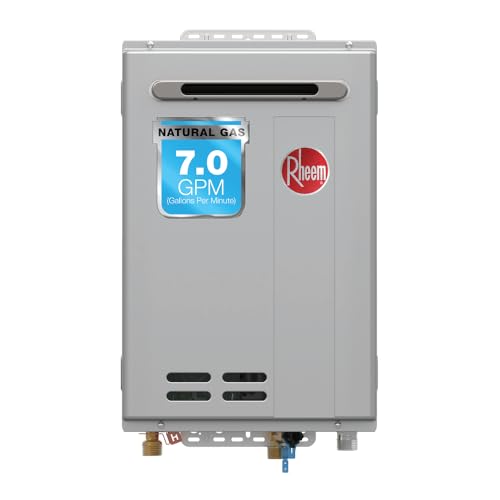
This outdoor unit delivers 7.0 GPM and 160,000 BTUs, making it a practical option for homes that need steady hot water across two to three bathrooms. Outdoor installation reduces indoor space requirements, while a robust outdoor cabinet protects the components from the elements. The model supports efficient natural gas operation and provides reliable performance during peak household activity, ensuring multiple points of use remain well-heated even during busy mornings or evenings.
When shopping, assess the balance between GPM rating, BTU input, climate considerations, and your home’s piping layout. Outdoor models can be easier to install but require weather protection and proper clearances from walls and overhangs.
Buying Guide: Key Purchase Considerations
- GPM capability: Match the unit’s flow rating to your home’s hot-water demands. A higher GPM helps with simultaneous use across multiple fixtures, but real-world performance depends on incoming water temperature and climate.
- Fuel type and efficiency: Natural gas models are common for large homes, with condensing units offering higher efficiency. Propane can be a good alternative where gas lines are limited, but fuel availability and costs matter.
- Ventilation and installation: Indoor models require venting, proper electrical supply, and adequate space. Outdoor units eliminate indoor space concerns but need weather protection and correct mounting.
- Temperature control: Look for models with precise thermostatic control, digital or app-based interfaces, and safe temperature defaults to avoid scalding and energy waste.
- Safety and warranties: Check for freeze, overheat, flame-failure protections and warranty terms that cover major components for multiple years.
- Maintenance and service: Consider brands with established service networks and replaceable parts readily available to minimize downtime and repair costs.
For homes with high simultaneous hot-water needs, choosing a unit with the right BTU rating, robust minimum flow, and flexible control options helps maintain steady temperatures. Evaluate climate, water pressure, and the number of outlets you expect to run at once. In some cases, pairing two smaller units or selecting a high-capacity model may deliver better performance and redundancy compared with a single, lower-capacity heater.