For American homes aiming to replace bulky tanks with compact, energy‑savvy on‑demand solutions, a 2.5 GPM or higher tankless heater can deliver steady hot water without wasting space. The models below pool the latest in efficiency, installation flexibility, and performance across typical household demand points. This guide compares several popular electric tankless options, highlighting real‑world flow, required electrical circuits, and notable features to help you pick the right unit for your home.
Summary At A Glance
| Product | Approx. Flow (GPM) | Key Benefit |
|---|---|---|
| GEN II Ranein 13kW 240V | Up to 3.1 | Compact, energy‑saving, suitable for 1–2 points |
| GEN II Ranein 18kW 240V | Up to 4.3 | Higher flow for 2–3 points, efficient |
| GEN II Ranein 27kW 240V | Up to 6.5 | Greater capacity for whole‑house use |
| Rheem 18kW 240V | Up to 4.4 | Self‑modulating, LED display |
| Westinghouse 14kW 240V | Up to 3.38 | Smart WiFi control, compatible with Alexa/Google |
GEN II Ranein 13kW 240V Tankless Electric Water Heater

Powerful on‑demand performance with a 13 kW, 240‑V design, this model delivers up to 3.1 GPM. It uses a single 60‑amp circuit breaker and is compact enough to fit in tight spaces. Its high thermal efficiency reduces energy waste by eliminating standby heat, and a front LED temperature control panel makes adjustments straightforward for daily use. Ideal for 1–2 hot water points, such as a bathroom or kitchen line, without the need for a storage tank.
GEN II Ranein Tankless Water Heater Electric, 18kW 240V

With 18 kW of power at 240 V, this model supports up to 4.3 GPM, making it capable of serving two to three hot water points simultaneously. It requires two dedicated 240 V circuits and 40 A breakers, emphasizing the need for proper electrical planning. Its compact form and 99% thermal efficiency help minimize energy use while providing instant hot water on demand. A temperature display and control knobs simplify user adjustments and monitoring.
GEN II Ranein Tankless Water Heater Electric, 27kW 240V
This higher‑capacity 27 kW unit, also at 240 V, delivers up to 6.5 GPM, suitable for whole‑house demand with multiple hot water points. It requires three dedicated 240 V circuits and robust wiring, reflecting its larger power draw. The unit emphasizes high thermal efficiency and on‑demand performance, ensuring instant hot water without preheating delays, even when multiple fixtures are in use.
Rheem 18kW 240V Tankless Electric Water Heater
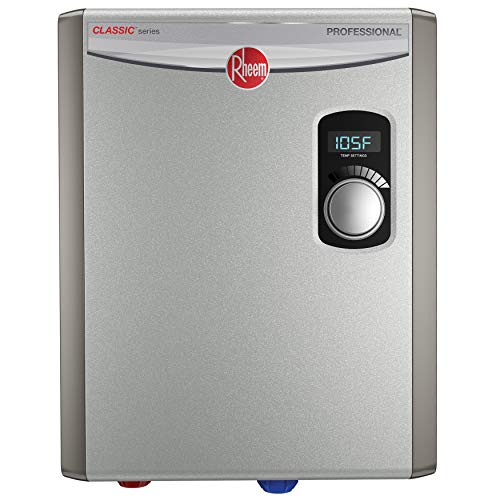
Rheem’s 18kW model combines self‑modulation with an LED display to show real‑time temperature and power usage. It supports up to 4.4 GPM and is designed to adjust heat output to current demand, reducing energy consumption while maintaining consistent hot water. Durable copper immersion elements enhance longevity and ease maintenance, with field serviceable components allowing some components to be replaced in the field as needed.
Rheem 3.5kW 120V Point‑Of‑Use Tankless Electric Water Heater

This compact point‑of‑use option runs on 120 V with a 30 A circuit requirement. While smaller in capacity, it’s designed for dedicated hot water near a single sink or utility area. It features thermostatic temperature controls in 1‑degree increments (80–140°F) for precise on‑demand performance and is notably space‑saving, ideal for apartments, offices, or garages where space is at a premium.
Westinghouse 14kW 240V Smart WiFi Tankless Water Heater
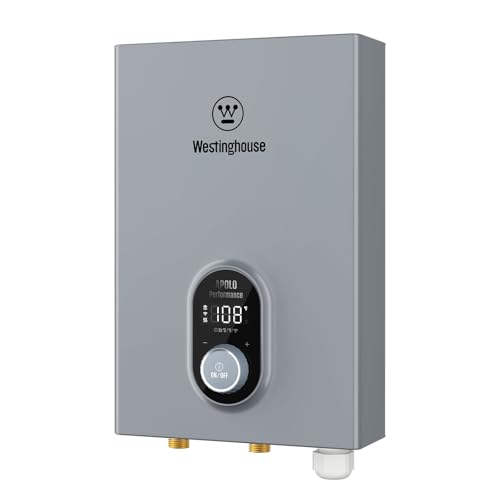
Westinghouse’s APOLO series delivers up to 3.38 GPM at 14 kW with smart WiFi integration for remote control via app or voice assistants. It requires a 60 A DP breaker and 6 AWG wiring. The unit offers instant hot water, stable temperature control, and a comprehensive LED display for easy monitoring. The combination of compact size and smart features makes it a versatile choice for households seeking a digital, connected experience with reliable performance.
Buying Guide: Key Purchase Considerations
- Flow requirements: Estimate your simultaneous hot water needs. Most showers and sinks can demand 1–2 GPM each, so a model in the 3–4 GPM range can handle multiple points at once, while higher kW units cover whole‑home usage.
- Electrical capacity: Tankless electric heaters require dedicated circuits and appropriate amperage. Check your home’s panel capacity and available breakers (e.g., 60 A, 2 × 40 A, or 3 × 40 A configurations) before purchasing.
- Thermal efficiency: Nearly all listed models advertise high thermal efficiencies (often ~99%). Higher efficiency reduces energy waste, especially in homes with long hot water runs.
- Installation space: Tankless units are compact, but some models require ventilation or specific mounting clearance. Measure available space and consider clearance around electrical panels, plumbing, and heat sources.
- Temperature control: Look for units with digital displays, temperature knobs, or smart controls. Some models support app or voice integration for convenient remote adjustments.
- Maintenance and serviceability: Field‑serviceable parts and copper elements are common advantages. Consider models with widely available components and service options.
- Cost of ownership: While installation cost varies, weigh upfront cost against long‑term energy savings. Electric tankless heaters typically save space and reduce standby energy, but electrical upgrades may be needed in some homes.
- Point‑of‑use vs whole‑home use: POU models fit under cabinets or sinks for targeted hot water, while higher‑kW units deliver hot water to multiple fixtures across the home.
Note: This guide presents multiple perspectives on choosing a tankless electric water heater, including capacity, electrical requirements, and smart features. When deciding, align the heater’s flow capacity with your household’s peak hot water demand and ensure your electrical system can safely support the unit’s full load.