Looking for a reliable 32 to 34 gallon well tank to support your household water system? This guide highlights five top options that balance durability, compatibility, and value. Each product is best for different needs—from small to mid-sized homes, light farm use, or upgrade paths for older systems. Use the quick comparison table below to narrow choices, then read detailed sections to understand who should choose each tank and why. A buying guide follows to help you match tank features to your well pump and water usage.
| Product | Capacity | Best For | |
|---|---|---|---|
| Water Worker HT-32B Well Tank | 32 gal | Homes needing a standard 32 gal diaphragm tank | 1 in FNPT connection |
| VEVOR 34-Gallon Vertical Well Tank | 34 gal | Large households with higher water draw | Pre-charged, carbon steel, 1 in NPT |
| WaterWorker HT-30B Vertical Tank | 30 gal chamber, 26 gal usable | NSF-listed, reliable for general home use | NSF/ANSI Std 61 compliant diaphragm |
| Amtrol WX-203 Well-X-Trol | 32 gal | Standard diaphragm tank replacements | Virgin polypropylene liner, strong shell |
| Well-X-Trol WX-203 (Different listing) | 32 gal | Diaphragm tank upgrades | Vertical mount, stainless steel components |
Note: This table summarizes core specs at a glance. Actual compatibility depends on your pump model, existing plumbing, and local codes. The five selections cover common needs from basic 32-gallon units to larger 34-gallon capacity options that help reduce pump cycling in busier homes.
Water Worker HT-32B Well Tank

The Water Worker HT-32B is a 32-gallon diaphragm well tank designed for standard residential water systems. Its primary strength is compatibility with common well pumps and 1-inch FNPT connections. Best for: homeowners seeking a straightforward replacement that fits standard piping and delivers dependable water pressure. Limitations: as with many diaphragm tanks, ensure proper pre-charge pressure matching your pump settings to avoid pressure swings.
VEVOR 34-Gallon Vertical Well Pressure Tank
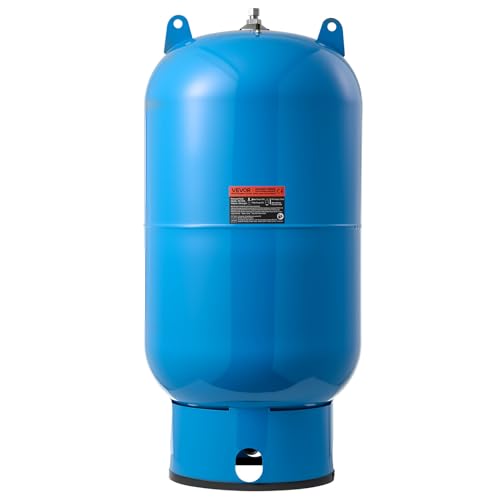
The VEVOR 34-gallon vertical tank adds slight capacity for higher daily usage. It is pre-charged and built with 1-inch NPT connectors and a robust carbon steel body. Best for: larger households or setups needing less frequent pump cycling and steadier pressure. Caution: not intended for drinking water or frost-prone environments, so locate indoors or in weather-protected spaces.
WaterWorker HT-30B Vertical Tank

The WaterWorker HT-30B provides a 30-gallon vertical tank with 26 gallons of usable capacity. It is NSF-listed under ANSI/NSF Std 61 with a seamless butyl diaphragm and a durable polypropylene liner. Best for: homes prioritizing NSF-listed components and long-term water quality. Limitation: slightly smaller usable volume than the 32- or 34-gallon competitors, which may affect peak-demand days.
Water Storage Bladder Well (53 Gallon)

The Water Storage Bladder Well offers a larger 53-gallon capacity in a PE bladder design. Best for: households with elevated water use or where a larger buffer is preferred to minimize pump cycling. Caution: this model uses a bladder design rather than a traditional diaphragm, which can differ in maintenance needs and fitment with specific pump setups.
Well-X-Trol WX-202 / WX-202XL / WX203 Kit

The WX-203 family includes a 32-gallon diaphragm tank with stainless steel components and a kit that helps integrate with Square D switches. Best for: users upgrading to Well-X-Trol systems who want a reliable diaphragm design with robust construction. Limitation: stainless elements may be overkill in basic setups, and compatibility should be confirmed with existing hardware.
Amtrol WX-203 Well-X-Trol Stand Well Tank

The WX-203 Well-X-Trol stand tank features a high-strength steel shell and virgin polypropylene inner liner, designed to withstand aggressive water. Best for: traditional tank upgrades where a sturdy diaphragm tank is preferred for long service life. Caution: ensure correct stand mounting and space for vertical installation in cramped areas.
Buying Guide: Choosing the Right 32–34 Gallon Well Tank
What should you consider when selecting a well tank? Here are practical questions and answers to help decide:
- What capacity do I need? Consider your home’s water usage and pump cycling. A 32–34 gallon tank provides a good balance for many households, reducing pump start-stop frequency without excess stored water.
- Diaphragm versus bladder vs bladderless tanks: Diaphragm tanks (like Well-X-Trol and Water Worker) tend to be durable and stable; bladder tanks can separate water from the air chamber but may require different maintenance.
- Is the port size compatible with existing piping? Most options use a 1-inch FNPT or NPT connection. Check your fittings before purchase.
- Material and liner quality: Virgin polypropylene liners resist chipping and taste transfer. Steel shells add durability but may require corrosion considerations in aggressive water.
- NSF/ANSI compliance: If drinking water quality is a concern, look for NSF-listed tanks and liners designed for safe contact with potable water.
- Installation environment: Some models are not frost-proof. Place tanks indoors or in climate-controlled spaces if you live in cold areas.
- Upgrade path: If you anticipate higher water needs or future expansion, a 34-gallon model or a 53-gallon bladder tank can provide extra buffer.
Practical setup tips
- Match the pre-charge pressure to your well pump cut-in pressure for optimal performance.
- Verify the base and mounting clearance, especially for vertical installations.
- Use leak-proof connections and sealants rated for potable-water systems.
Frequently Asked Questions
- Why choose a 32-gallon tank over a larger option? A 32-gallon tank suits many homes, offering sufficient storage while keeping system size reasonable and affordable.
- What maintenance is required for diaphragm tanks? Periodic inspection of the diaphragm and liner is advised, plus ensuring the air charge aligns with pump settings.
- Are these tanks suitable for outdoor use? Some are not frost-proof; outdoor placement requires weather protection or indoor installation.
- Do I need an automatic air vent? An air vent helps prevent air buildup in some systems, but not all tanks require it.
- Can I mix brands in a single system? Mixing is possible with proper fittings and compatibility checks, but consistency is recommended for reliability.
- What indicates I should upgrade to a larger tank? Frequent cycling, rising electricity use, or fluctuating water pressure can signal a need for higher capacity or a different diaphragm design.