Looking for the right acoustic sound insulation panels to tame room reflections and improve recording or listening environments? This guide highlights five top options, focusing on different needs like self-adhesive ease, higher density, or budget-friendly packs. Ideal buyers include home studio pros, podcast creators, movie room enthusiasts, and office spaces needing quieter, clearer sound. The table below helps compare key specs at a glance.
| Product | Pack Size | Thickness | Best For | Adhesive |
|---|---|---|---|---|
| Focusound 52 Pack Acoustic Foam Panels | 52 panels | 1 inch | Beginner home studios | Included |
| SD SODOCT 24 Pack 2” Pyramid Panels | 24 panels | 2 inches | High absorption, studios | Optional |
| Saiqiang 12 Pack Sound Absorbing Panels | 12 panels | 1 inch | Compact setups | Optional |
| Sonicism 12 Pack Self-Adhesive Panels | 12 panels | 2 inches | Easy install, walls | Self-adhesive |
| Knightsacoustic 48 Pack Self-Adhesive | 48 panels | 1 inch | Self-adhesive setup | Self-adhesive |
Focusound 52 Pack Acoustic Foam Panels

Best for: Beginner home studios and small recording spaces. The Focusound kit includes 52 panels with a triangular groove design that enhances noise absorption, reducing echoes and flutter. It comes with 300 adhesive strips, making wall mounting straightforward and wall-friendly. A notable advantage is easy cleanup and removal without wall damage. A potential limitation is that the foam may require maintenance if compressed or stretched over time, though the product offers a quick recovery method by soaking and air-drying.
SD SODOCT 24 Pack 2” Pyramid Panels

Best for: Rooms needing strong absorption with a modern look. The 2-inch pyramid design increases surface area for better diffusion and absorption, yielding a quieter, acoustically balanced environment. Made from premium acoustic foam with flame retardant properties for safety. Consider that these panels do not include adhesive in this pack, so installation may require tape or spray if you don’t have adhesive on hand.
Saiqiang Acoustic Foam Panels Sound Absorbing 12 Pack
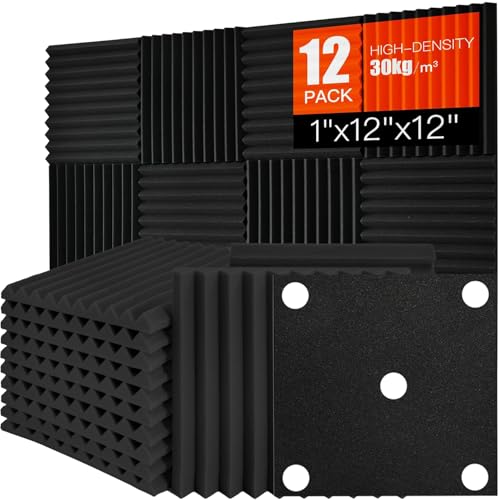
Best for: Compact studios and small offices needing effective noise reduction. The 12-pack uses high-density sound deadening foam to manage reflections and reduce echo, improving audio clarity in vocal booths, podcasts, and home theaters. It is explicitly noted for fire-safety standards, making it suitable for everyday home use. A limitation is the smaller pack size, which may require more panels for larger rooms.
Sonicism 12 Pack Self-Adhesive Panels

Best for: Quick-install walls and ceilings in bedrooms or small studios. Sonicism panels feature a pyramid 3D design and a 100% PU sponge composition, offering quick expansion and rapid shape recovery after opening. The self-adhesive backing eliminates the need for extra glue or tape, simplifying the setup. A caution is that the self-adhesive strength can vary with wall texture and dust; ensure clean, smooth surfaces for best adhesion.
Knightsacoustic 48 Pack Self-Adhesive Panels

Best for: Mid-sized rooms requiring dense, self-adhesive panels with a rugged look. The 48-pack includes fire-retardant foam and self-adhesive backing, allowing straightforward installation on walls and furniture. It is ideal for studios, control rooms, and home theaters seeking professional-level absorption. A minor limitation is the initial odor some users report, which typically dissipates after airing out for 24 hours.
Knightsacoustic 50 Pack (Non-Adhesive)

Best for: Large installations where adhesive is not preferred. This pack emphasizes professional sound absorption with high resilience and the option to use separate mounting methods. Do not rely on this pack for easy, wall-temporary installations if you need removal flexibility without residues. It is better for dedicated studio builds rather than rental spaces.
Buying Guide: Key Considerations For Acoustic Foam Panels
- Purpose: Identify whether you need noise reduction, echo control, or full room whitening of reflections. For recording, prioritize higher density and thickness.
- Adhesion: Decide between self-adhesive backs and classic mounting methods. Self-adhesive options offer quick installs but surface compatibility matters.
- Panel Type: Pyramid vs wedge vs flat design affects diffusion and absorption across frequencies. Higher surface area typically improves absorption.
- Room Size and Layout: Larger rooms may require more panels or layered absorption on walls, ceiling, and corners.
- Fire Safety: Look for flame-retardant foam if used in basements, offices, or rental properties with safety standards.
- Maintenance: Some foam recovers shape after compression; others may require replacement if damaged.
Frequently Asked Questions
- What is the difference between acoustic foam and soundproofing?
– Acoustic foam manages reverberation and echoes within a room, while soundproofing aims to block sound from entering or leaving a space. - How many panels do I need for a small home studio?
– Start with 8-20 panels for a small room and adjust based on reflections and monitoring results. - Are self-adhesive panels safe for walls?
– They are generally wall-safe, but high-adhesion options may pull paint or wallpaper when removed; test a small area first. - Can I install foam panels on ceilings?
– Yes, but ensure proper support and consider corner bass traps for better overall acoustics. - What thickness is best for vocal recording?
– Thicker panels (2 inches) typically offer better low-frequency absorption, beneficial for vocal booths. - Do foam panels require air to dry after cleaning?
– If dampened, air-dry in a well-ventilated area away from direct heat sources.