Answering the demand for reliable, low-maintenance filtration, these automatic and semi-automatic water filtration systems provide steady protection against chlorine, sediments, and common contaminants. They’re suitable for buyers seeking whole-house protection, appliance safeguarding, or affordable point-of-entry filtration. The following picks emphasize automation, durability, and straightforward maintenance suitable for American homes.
Summary of selected products
- iSpring WF150K Whole House Central Water Filtration System with Set and Forget Smart Valve
- iSpring WGB21B 2-Stage Whole House Filtration System
- Aquasure Harmony Series Whole House Water Softener
- 3-Stage Whole House Water Filter System with 9 Filters by Ziwshom
- Purewell 3-Stage 0.01μm Ultra-Filtration Gravity System
iSpring WF150K Whole House Filtration With Smart Valve
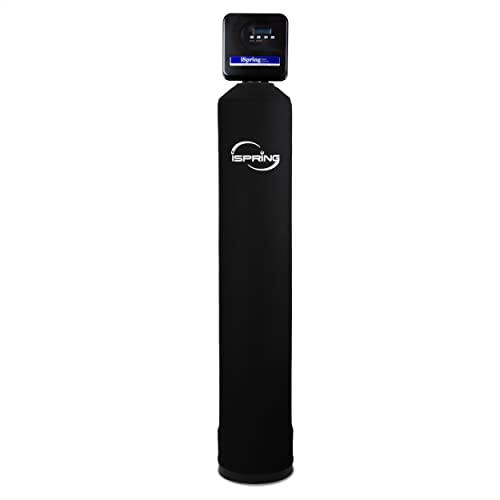
The WF150K installs at the main water entry to provide filtered water to every faucet. It removes chlorine, lead, heavy metals, pesticides, herbicides, VOCs, and other contaminants. It is lab-tested to NSF/ANSI 42 and 53 standards, promoting overall better-tasting water. Best for households wanting comprehensive, set-and-forget protection and longer-lasting appliance life.
Best for: Homeowners seeking full-house filtration with automated back-flush and long service life. It’s particularly suitable for mid-sized homes with 2–3 bathrooms or light commercial use.
Limitations: Advanced features require the smart valve; if power or control electronics fail, maintenance may be more involved than simple cartridge changes.
iSpring WGB21B 2-Stage Whole House System
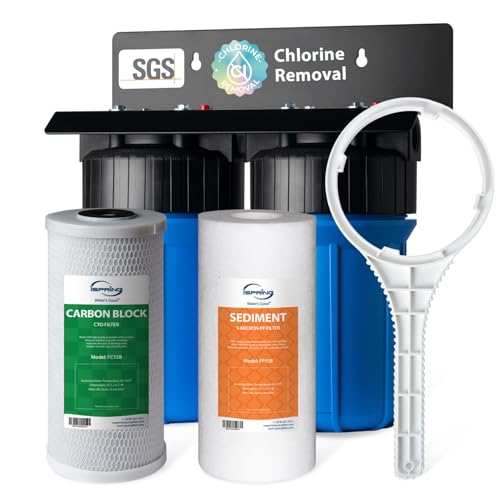
This two-stage system uses a sediment filter first and a CTO activated carbon filter second. It delivers up to 50,000 gallons of clean water for a family of four, with 1-inch inlet/outlet ports for efficient flow. It helps reduce sediment, chlorine, and VOCs, protecting plumbing and appliances. Best for homeowners wanting reliable filtration with straightforward DIY installation.
Best for: Families needing substantial filtration at the point of entry while preserving water pressure and reducing common contaminants.
Caution: Requires regular filter changes to maintain performance; the system’s efficiency depends on timely maintenance and correct filter selection for local water quality.
Aquasure Harmony Series Whole House Water Softener

The Harmony Series reduces water hardness and scale, protecting appliances and plumbing. With a high-capacity 64,000-grain rating and digital metered control, it delivers softened water across the home while helping to extend appliance life and reduce mineral buildup. Best for homes with hard water and multiple bathrooms seeking smoother water without frequent manual interventions.
Best for: Households dealing with hard water who want automatic, consistent softening and minimal maintenance beyond resin resin bed regeneration.
Limitation: It softens water rather than removing all contaminants; pairing with a separate filtration stage may be needed for off-tastes or odors in some water supplies.
3-Stage Whole House Filter System by Ziwshom

This 3-stage system uses 0.5 micron filtration to reduce sediment, chlorine, and odors. It ships with three complete filter cartridge sets, designed for 1.5–2 years of use. The built-in bypass valve head enables quick installation and easy filter changes. Best for: homeowners who want a complete, multi-stage filtration solution at the main water line with flexible maintenance intervals.
Best for: Those preferring a straightforward, all-in-one filtration setup that works with both well and municipal water supplies.
Caution: The 0.5-micron stage is fine for particulate removal but may not address dissolved chemicals; supplementing with a carbon stage could be beneficial for taste and odor concerns.
Purewell 3-Stage 0.01μm Ultra-Filtration Gravity System

The Purewell gravity system uses a 0.01μm UF membrane alongside carbon and silver ion components to reduce chlorine, rust, sediments, and heavy metals. It’s NSF/ANSI 42 and 372 certified and uses a 304 stainless steel housing with a compact, countertop form factor. Best for: users seeking a gravity-fed, non-electric system that delivers high filtration accuracy and a stylish, compact setup.
Best for: Small kitchens or apartments where electrical outlets are limited and users want a portable, high-precision filtration option.
Limitation: Gravity-fed systems generally have slower flow rates; not ideal for high daily water use without planning for multiple filling cycles.
Buying Guide: Key Considerations For Automatic Home Water Filtration
- Water source and quality: Municipal water often benefits from carbon and multi-stage filtration; well water may require sediment and iron-specific treatment in addition to carbon.
- Filtration vs. softening: If scale and hardness are concerns, a water softener (like the Harmony Series) addresses minerals; pair with a filter for taste and odor improvements.
- Flow rate and household size: Larger homes with higher daily water use need systems rated for higher GPM and gallon capacity to avoid pressure drops.
- Maintenance and automation: Smart valves or digital controls reduce manual intervention. Plan for filter replacement intervals based on water quality and usage.
- Installation considerations: Point-of-entry systems require space at the main water line; countertop gravity or under-sink options suit apartments or smaller homes.
- Certification and safety: Look for NSF/ANSI certifications for contaminant reduction and material safety to ensure reliability and compliance.
- Scalability: Some systems support additional stages or extensions; if anticipating water quality changes, choose modular designs.
Frequently Asked Questions
- What is the difference between a whole-house filtration system and a countertop system?
Whole-house systems treat water at the entry point for all fixtures; countertop units typically filter drinking water or a single tap. - How often should filters be replaced?
Replacement intervals depend on water quality, system design, and usage; follow the manufacturer’s guidance and monitor flow or taste. - Do I need a water softener if I already have a filter?
A filter reduces contaminants; a softener specifically targets minerals that cause hardness and scale. Some homes benefit from both. - Are these systems easy to install myself?
Many are designed for DIY installation, especially under-sink and some whole-house models; always follow the included manual and consider professional help for complex setups. - Will a gravity filtration system remove all contaminants?
Gravity systems can remove many particles and chlorine, but they may not address dissolved chemicals; verify contaminant targets and consider additional stages if needed. - What certifications should I look for?
NSF/ANSI certifications for specific contaminant reductions verify performance claims and safety of materials.