Yes—concrete slab radiant heat kits are a practical way to add comfort to any concrete floor. This guide highlights five reliable kits that work well on concrete slabs and explains who each product is best for. Whether you’re renovating a basement, upgrading a workshop, or finishing a new build, these kits offer straightforward installation, programmable thermostats, and clear coverage estimates for smaller to larger areas.
Summary of selected products
| Product | Brand | Coverage | Best For |
|---|---|---|---|
| SunTouch WarmWire Electric Floor Heating Kit | SunTouch | 90 Sq. Ft. | Mid-sized spaces, programmable control |
| Easy Heat Inc. DFT1030 Warm Tiles Kit | Warm Tiles | Unknown (tile warming cables) | Budget-friendly tile installations |
| Maier 69998 Heat Tile Kit | Maier USA | Unknown (tile/wraps) | High heat tolerance, durable setup |
| SunTouch Warm Wire 3.0 Kit | SunTouch | 30 Sq. Ft. | Small areas, precise control |
| SunTouch WarmWire Floor Heating Kit | SunTouch | 15 Sq. Ft. | Small spaces, quick heat |
SunTouch WarmWire Electric Floor Heating Kit, 90 Sq. Ft., (120V) with Command Touch Programmable Thermostat

Best for medium to larger rooms requiring comprehensive radiant coverage on concrete slabs. This kit includes WarmWire heating cable, a programmable SunStat thermostat with Command Touch, a LoudMouth Alarm, and installation accessories. It covers up to 90 square feet, making it suitable for basements, living areas, or workshops where a consistent floor temperature is desired. The kit’s compatibility with concrete slabs, backerboard, or plywood adds installation flexibility. A potential limitation is the need for proper subfloor preparation to ensure even heat distribution.
Who it’s best for: homeowners upgrading a mid-sized space who want programmable control and reliable, even heat across a concrete slab. Why selected: strong coverage, complete accessory set, and a dedicated thermostat for precise temperature management. Caution: ensure compatible subfloor and proper spacing of cables for uniform heat in irregular layouts.
Easy Heat Inc. DFT1030 Warm Tiles Kit

Best for tile installations over concrete slabs where a warm tile experience is desired with a simpler cable-based approach. The kit emphasizes affordability while delivering a 3.0 amp warm tiles solution. It’s suitable for bathrooms, entryways, and other tile floors where radiant warmth is beneficial. Limitations include the lack of some advanced thermostat features found in larger systems, so you may want to pair it with compatible thermostats if you need more precise control.
Who it’s best for: budget-conscious projects requiring warm tiles on a concrete slab or subfloor. Why selected: straightforward tile-focused kit with essential heating cables. Caution: verify compatibility with your tile thickness and substrate to ensure even heating without overheating edges.
Maier 69998 Heat Tile Kit

Best for installations requiring resilience to higher heat exposure and durable heat-tolerant components. This kit includes heat-proof strips and materials designed to withstand elevated temperatures, suitable for spaces where radiant warmth is a long-term feature. Best for tile installations on concrete slabs where durability and heat stability are valued. Caution: verify the kit’s exact compatibility with tile type and grout depths to avoid installation gaps that can affect heat transfer.
Who it’s best for: builders or DIYers prioritizing heat resilience and long-term durability. Why selected: strong heat tolerance and protective features. Caution: confirm heat exposure expectations align with the kit’s listed temperature ranges.
SunTouch Warm Wire 3.0 Kit, Electric Radiant Floor Heating Cable System 30 Sq. Ft., (120V)
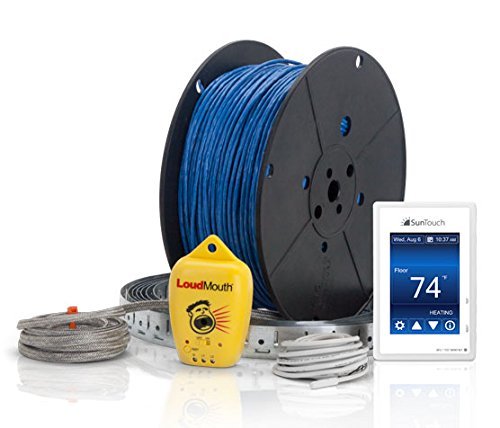
Best for small areas or zones where precise control over radiant heat is required. This kit includes WarmWire, a programmable SunStat thermostat with install accessories, and covers 30 square feet. It’s well-suited for nuanced projects like a small bathroom or entryway over concrete slabs. Limitation: smaller area coverage means you may need additional kits for larger spaces or to create multi-zone configurations.
Who it’s best for: homeowners working on compact spaces needing reliable zone control. Why selected: compact footprint with complete control features. Caution: plan for expansion if you anticipate heat needs beyond 30 square feet.
Buying Guide: Key Considerations for Concrete Slab Radiant Heat Kits
- Coverage Area and Layout: Match kit coverage to the intended space. For large rooms, consider kits with higher square-foot coverage or plan multi-zone layouts to avoid cold spots.
- Thermostat Features: Programmable or smart thermostats simplify temperature control and energy efficiency. Look for floor sensing capabilities and easy integration with home automation if desired.
- Installation Surface: Concrete slabs require proper subfloor preparation, mesh embedding, or adhesive layers. Verify compatibility with concrete, backerboard, or subfloor materials.
- Electrical Requirements: Check voltage (commonly 120V) and amperage. Ensure the electrical circuit can support the added load and that proper GFCI protection is in place where required.
- Durability and Heat Tolerance: Tile and tile-like systems should withstand daily temperature cycles. Some kits emphasize heat-proof components for higher heat-tolerance environments.
- Accessories and Support: Include thermostat, floor sensor, installation accessories, and alarm systems if available. A complete accessory set reduces additional shopping.
- Compatibility with Finishes: Consider how final flooring (tile, vinyl, wood) affects heat transfer. Some finishes insulate more than others and can impact perceived warmth.
- Safety and Codes: Ensure compliance with local electrical codes and proper clearance around mats or cables. Look for UL-listed components when available.
FAQ
- Can I install a radiant heat kit directly on a concrete slab? Yes, many kits are designed for concrete slabs, but proper subfloor preparation and installation guidelines must be followed to ensure even heat distribution.
- Is a programmable thermostat necessary for concrete slab heating? Not strictly necessary, but it improves comfort and energy efficiency by maintaining consistent temperatures and reducing overheating risk.
- What flooring types work best with radiant heat on concrete? Ceramic or porcelain tile, natural stone, and some dense vinyl options generally work well due to good thermal conductivity. Ensure flooring compatibility with your kit’s heat output.
- How does heat loss affect performance on concrete slabs? Concrete can retain heat, but poor insulation or drafty edges can cause heat loss. Pairing with proper insulation and edge detailing improves efficiency.
- Can I install multiple kits in one room? Yes, with proper planning, but you’ll need to manage zoning, power requirements, and thermostat placement to prevent interference and ensure uniform heat.
- What maintenance is required for radiant floor kits? Generally minimal; inspect cables and sensors during installations or renovations and ensure thermostats and alarms function correctly.