When choosing a crawl space ventilation fan, look for models with adequate airflow, built-in humidity control, and reliability in damp environments. This guide highlights five top options and explains who each is best for, plus simple buying tips. Ideal buyers include homeowners seeking moisture management, those improving indoor air quality, and contractors needing robust, low-maintenance solutions. The following summary table and product sections help compare key capabilities at a glance.
| Product | Airflow | Humidity Range | Best For |
|---|---|---|---|
| CADPXS Crawlspace Ventilation Fan | 220 CFM | 20% – 80% RH | Balanced humidity control in small-to-medium crawl spaces |
| ALORAIR 540CFM Crawl Space Ventilator | 540 CFM | 10% – 80% RH | Medium-to-large damp spaces with radon and odor management |
| AC Infinity AIRTITAN T8 | Variable (engineered for exhaust) | Programmable humidity/temperature | Smart control with schedules for basements and crawl spaces |
| ALORAIR 780CFM Stainless Steel | 780 CFM | 10% – 80% RH | Heavy-duty, rust-resistant performance in humid climates |
| Durablow 220 CFM | 220 CFM | 20% – 80% RH | Budget-friendly dual-fan option with stainless steel |
The following product sections present concise, objective details to help you compare features, installation considerations, and suitability for different crawl spaces.
CADPXS Crawlspace Ventilation Fan With Humidistat
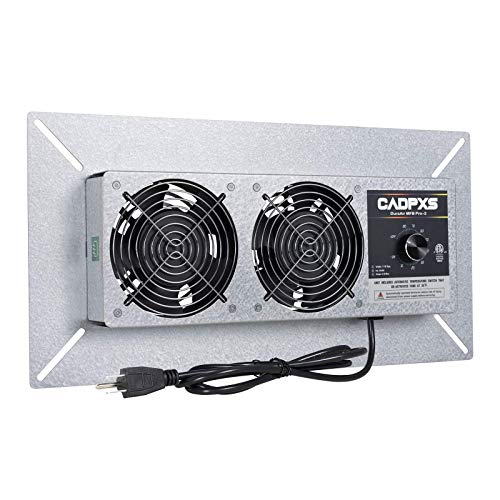
Airflow is 220 CFM with dual fans and a 6.56-foot grounded power cord. This model exchanges outdoor and indoor air to improve overall air quality and balance humidity. It includes a built-in humidistat with a 20% – 80% RH range. Best for smaller to mid-sized crawl spaces needing consistent humidity control. Limitations include a potential sensitivity to very cold outdoor temperatures; the freeze-protection feature minimizes operation under low temperatures.
ALORAIR 540CFM Crawl Space Ventilator With Humidistat

This 540 CFM ventilator is designed for damp crawl spaces, basements, attics, and garages. It includes a built-in dehumidistat and a freeze protection thermostat, with operating humidity from 10% to 80%. The unit features an IP-55 rated aluminum zinc shell and isolation mesh to reduce particulates. Best for medium-to-large spaces requiring automatic humidity control and durable weather resistance. Caution: mounting and wiring should comply with local codes; ensure outdoor temperature sensors remain unobstructed.
AC Infinity AIRTITAN T8 Crawlspace Basement Ventilator

This system emphasizes moisture control with exhaust airflow and dynamic programming for temperature, humidity, and vapor pressure deficit (VPD). It offers timers, cycles, scheduling, and minimum speed settings. Best for homeowners who want programmable control to fit irregular schedules and variable humidity. Note: actual humidity and temperature control depends on installation and ducting layout; no standalone humidity range is listed in product highlights.
ALORAIR 780CFM Stainless Steel Crawl Space Fan

Stainless steel construction with an IP55 rating offers strong corrosion resistance and durability in humid environments. Airflow reaches 780 CFM, and the humidity range is 10% – 80% RH. Built-in isolation mesh and an antifreeze thermostat help protect the unit and maintain operation in cooler conditions. Best for heavy-duty needs and long-term reliability in damp crawl spaces. Limitation: higher airflow may increase noise and energy use; consider placement to minimize noise.
Durablow 220 CFM Dual-Fan Vent Fan

Dual fans provide high airflow at 220 CFM and a stainless steel 304 housing for corrosion resistance. Features include a built-in dehumidistat (20% – 80% RH) and a freeze protection thermostat turning off below 35°F. Best for mid-range performance with robust durability for damp crawl spaces. Caution: 304 stainless steel offers good corrosion resistance but requires proper sealing to prevent moisture intrusion around mounting areas.
Abestorm 8.7 Inch Crawlspace Ventilation Fan With Humidistat

This 540 CFM exhaust fan uses a built-in dehumidistat and freeze protection thermostat with a 5%-80% RH operating range. It features IP-55 rated isolation mesh and an aluminum zinc shell for weather resistance. Best for homeowners needing reliable humidity control and protection against moisture-related issues. Limitation: some installations may require longer ducting to optimize air exchange across larger spaces.
240 CFM Crawlspace Vent Fan With Humidity Control

Provides 240 CFM airflow with dual fans and smart humidity/temperature control. Auto-activates based on preset humidity or temperature levels, helping to prevent condensation and mold. It includes a low-temperature protection thermostat to avoid backflow in cold weather. Best for climate-responsive ventilation in mixed-use spaces. Caution: performance depends on sensor placement and air path design.
Buying Guide: Key Considerations And Comparisons
- Airflow needs: Match CFM to crawl space size. Larger areas benefit from higher CFM units.
- Humidity and temperature control: Look for built-in humidistats and thermostats for automatic operation.
- Durability: For damp spaces, consider IP ratings, corrosion-resistant housings, and isolation meshes to reduce debris intrusion.
- Cold weather behavior: Freeze protection or antifreeze thermostats prevent backdrafts during winter.
- Power and wiring: Verify power cord length, grounding, and compatibility with existing electrical setups.
- Installation considerations: Duct size, placement near vents, and access for maintenance influence effectiveness.
- Noise and energy use: Higher CFM units can be louder and consume more energy; plan mounting and spacing to minimize disturbance.
- Maintenance: Look for simple filter-like guards and accessible components for periodic checks.
Frequently Asked Questions
- What is a crawl space fan used for?
- Do crawl space vents require humidity control?
- Will a higher CFM fan always perform better?
- Is automatic humidity control necessary?
- What safety considerations matter?
- Can these fans help with radon?
It ventilates damp spaces to exchange moist indoor air with drier outdoor air, reducing humidity and improving air quality.
Humidity control helps prevent condensation and mold growth, especially in crawl spaces that experience temperature swings.
Not necessarily. While higher CFM moves more air, the effectiveness depends on space size, ducting, placement, and control features.
Automatic humidity control simplifies operation and maintains consistent conditions without manual adjustments.
Ensure proper electrical wiring, ground fault protection if applicable, and protection against moisture ingress into electrical components.
Some models support venting or reducing radon indirectly by improving air exchange, but dedicated radon mitigation typically requires specialized equipment and professional assessment.