The best dance studio floor material depends on the movement, available space, and whether the floor needs to roll away. Marley-style vinyl is the closest fit for ballet, jazz, and contemporary practice: the ProStep roll suits portable studio setups, while VEVOR offers a larger coverage option. A compact PVC mat is better for small home practice areas. Interlocking foam tiles are less specific to dance, so consider them only for general cushioning rather than a Marley-style surface.
| Product | Best For | Material |
|---|---|---|
| ProStep Reversible Marley Roll | Portable ballet, jazz, and contemporary practice | Vinyl |
| VEVOR Dance Floor Roll | Larger practice areas | PVC |
| Compact Marley Dance Floor | Small home studios and barre work | PVC |
| ProsourceFit Puzzle Mat | General exercise and cushioning | EVA foam |
| Shihanee Interlocking Tiles | Small tiled areas where dance-specific performance is not essential | Foam |
ProStep Reversible Marley Dance Floor Roll

Best for: Dancers who need a portable, dance-specific surface for ballet, jazz, contemporary, or lyrical practice. This 1.2 mm vinyl roll measures 5.25 by 10 feet and has a matte finish on both sides. Its reversible black-and-grey design gives buyers two surface color options.
The product features describe a controlled-slip surface with medium-fast floor speed and a low-reflection finish. It rolls up for storage or travel and can be secured with vinyl tape for temporary installation or double-stick tape for a semi-permanent setup. Those details make it a strong choice when easy setup and storage matter.
Limitation: At 52.5 square feet, it covers less area than the larger VEVOR roll. Tape is needed to secure it for the stated installation options.
VEVOR Portable PVC Dance Floor Roll

Best for: Dancers who need a larger roll-out practice area. The listed 6.6-by-15.7-foot option covers 103.6 square feet, and the product is also offered in a 6.6-by-49.2-foot size. Its PVC material is listed as lightweight, wear-resistant, and non-slip, with a matte grey-and-black surface.
At 1.5 mm thick, this is a little thicker than the ProStep roll. The listing describes the surface as balancing comfort and stability and says the floor can be taped down for temporary or semi-permanent installation. It can also be rolled up after use.
Limitation: The larger listed roll weighs 31.8 pounds, so it is less convenient to move than a small practice mat. Confirm the selected size before buying.
Compact Marley Floor For Home Practice
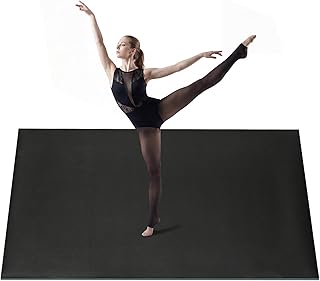
Best for: Home dancers with limited floor space who want a roll-up PVC mat for barre work, stretching, or basic practice. It measures 6.6 by 3.9 feet, making it the smallest listed dance-specific roll in this selection.
The product features a smooth top and grippy backing intended to help reduce slipping. It also describes slight cushioning while retaining a firm feel for footwork. The mat rolls up for compact storage, which is useful when a bedroom or small studio has to serve other purposes between practice sessions.
Limitation: Its compact footprint is not suitable for dancers who need a broad area for traveling steps or expansive choreography. The listing does not provide a thickness measurement.
Shihanee Interlocking Foam Floor Tiles

Best for: Buyers considering a small interlocking foam-tile area rather than a dedicated Marley floor. The listed set contains 16 tiles, each measuring 11.8 by 11.8 inches, in light pink.
This product is included as a contrasting flooring format, not as a direct substitute for dance-specific vinyl. Interlocking tiles can be assembled as a tiled surface, but the supplied product information does not specify a dance-oriented top texture, floor speed, or performance characteristics.
Limitation: The available details do not establish whether the tiles suit turns, jumps, or particular dance styles. Choose a Marley-style product instead when controlled slip and dance-specific surface information are priorities.
ProsourceFit Interlocking Exercise Puzzle Mat

Best for: General home exercise areas where cushioning is more important than a dance-specific surface. The product includes six black EVA foam tiles, each described as half an inch thick, with 24 square feet of total coverage.
The listing positions these interlocking tiles for home gyms, workout equipment, and kids’ play areas. Their foam construction and puzzle-style assembly distinguish them from roll-out Marley vinyl. They may be relevant for stretching or non-dance activity in a multipurpose room, but the supplied features do not describe dance floor speed or controlled-slip performance.
Limitation: Do not assume a cushioned exercise mat provides the surface needed for turns or traveling dance steps. This is a general exercise-floor option, not a dance-specific recommendation.
Buying Guide: How To Choose Dance Studio Floor Material
Which material works best for ballet, jazz, and contemporary?
Look for a dance-specific Marley-style vinyl or PVC surface when the priority is a consistent practice surface for ballet, jazz, or contemporary work. The ProStep listing specifies controlled slip and medium-fast floor speed; VEVOR specifies a matte, non-slip PVC surface. Foam exercise tiles are not described with comparable dance-performance details.
How much floor coverage do you need?
Measure the usable practice area before selecting a roll. The compact mat is 6.6 by 3.9 feet, ProStep covers 52.5 square feet, and the listed VEVOR size covers 103.6 square feet. A larger floor can provide more room for movement but may be heavier and take more effort to handle.
Should you choose roll-out flooring or interlocking tiles?
Roll-out vinyl and PVC floors are the more directly dance-oriented choices in this list and can be stored between sessions. Interlocking foam tiles create a modular surface and may suit general exercise, but the product details here do not establish dance-specific slip or turning performance.
How should a portable floor be secured?
Check the installation instructions for the selected product and the surface beneath it. ProStep lists vinyl tape for temporary setups and double-stick tape for semi-permanent use; VEVOR also describes taping its roll down. The compact mat is described as having a grippy backing, but its listing does not specify a tape method.
Frequently Asked Questions
What is Marley dance flooring?
Marley is a term commonly used for dance-surface flooring. In these product listings, Marley-style choices are portable vinyl or PVC rolls designed for dance practice.
Is foam flooring a good substitute for a Marley floor?
Not based on the details provided here. Foam tiles are listed for exercise or play areas, while the Marley-style rolls provide dance-specific surface descriptions.
What is the best option for a small home studio?
The compact 6.6-by-3.9-foot PVC mat is the most space-conscious dance-specific option in this selection. Its limited footprint makes it less suitable for larger traveling movements.
Can portable dance flooring be stored after practice?
The listed Marley-style rolls are designed to roll up for storage. Follow the product’s installation guidance when securing or removing the flooring.