The search for an efficient wood burning stove ends with models that balance heat, fuel use, and safety for your space. This guide highlights five strong options suited for different living areas and outdoor needs. Best for medium to large rooms, compact apartments, or camping setups, these stoves emphasize reliable heat delivery, durable construction, and practical features. Use this overview to compare sizing, burn control, and heat distribution before choosing the right stove for your environment.
Summary of chosen products
| Product | Best For | Key Benefit | Notes |
|---|---|---|---|
| US Stove US1100E-BL 1,200 Sqft Wood Stove | Small to mid-size homes | Powerful heat with a blower | Blower adds distribution, 68,000 BTU output |
| Comfort Glow Cast Iron Wood Stove | Budget-friendly, reliable heat | Cast iron durability | Fits 22″ logs, EPA certified |
| US STOVE 750 Sq Ft Stove | Mid-sized living spaces | Compact, efficient for 750 sq ft | Blower not included |
| Indoor Wood-Burning Heating Stove by Marsyyds | Camping and outdoor heating | Heavy-duty, versatile 3-in-1 cooking surface | Portable for camping use |
| GVUHR Portable Wood Stove | Backpacking and lightweight camping | Folding design, highly portable | Best for outdoor cooking and small spaces |
US Stove US1100E-BL 1,200 Sqft Wood Stove

Best for larger living areas that demand robust warmth, this stove produces up to 68,000 BTUs to heat spaces up to 1,200 square feet. It includes a 100 CFM blower to distribute heat efficiently when electricity is available. The 1.3 cubic foot firebox accommodates logs up to 18 inches, offering a practical burn time and strong heat retention. Choose this if you want a high-output stove that delivers quick, even warmth with blower-assisted circulation. Caution: freight delivery and curbside placement only; indoor installation services are not included.
Comfort Glow Cast Iron Wood Stove

This indoor heater is a solid, budget-friendly option with EPA certification and a cast iron build that excels at heat retention. It’s designed to heat up to 900 square feet and accepts full-size 22-inch logs for longer burn times. Best for small-to-mid-sized living areas where solid, dependable heat matters more than rapid heat output. Best for users prioritizing durability and standard wood-burning performance. Limitation: not optimized for very large rooms, and may require supplementary heat sources in extreme cold.
US STOVE 750 Sq Ft Wood Stove

Designed for mid-sized spaces, this stove heats up to about 750 square feet and accepts logs up to 11 inches. It’s a practical option when you want a compact unit with respectable heat output, though it does not include a blower. Best for rooms where space and simple operation are priorities. Note: blower and additional components are sold separately, so plan for potential add-ons if you need enhanced heat distribution.
Indoor Wood-Burning Heating Stove by Marsyyds

This heavy-duty camping-style stove blends wood-burning efficiency with practical outdoor cooking features. It offers a versatile 3-in-1 cooking surface with adjustable ring sizes and a pull-out ash drawer for easier cleanup. Best for users who want a portable, all-purpose stove for camping, hunting cabins, or backyard heating. Limitation: not designed as a primary home heating appliance; best used as a supplemental or outdoor heat source.
GVUHR Portable Wood Stove
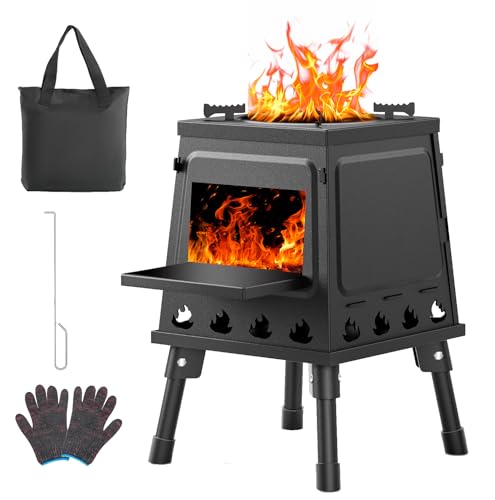
This folding twig stove emphasizes portability and compact design, tailored for backpackers and light outdoor cooks. It’s built to be disassembled and carried easily, with a cast iron core for durable heat distribution. Best for hikers and campers who need a lightweight, space-saving option with reliable burn efficiency. Caution: its small size limits heat output for larger cooking tasks or extended shelter heating needs.
Buying Guide
- Heat output vs. space: Match BTU ratings to your room size. Larger rooms need higher BTU and may benefit from a blower to improve heat distribution.
- Fuel and burn efficiency: Look for stoves designed for efficient burning with good heat retention. Cast iron builds often offer durable heat storage.
- Clearance and installation: Check required clearances from walls and combustibles. Some models require professional installation or freight delivery.
- Ventilation and chimney: Consider the availability and compatibility of chimney piping. Some compact stoves rely on optional components for proper venting.
- Portability vs. permanence: Outdoor and camping models prioritize portability, while home stoves emphasize steady, long-term heating.
- Maintenance: Features like ash draw systems simplify cleanup. A clean burn improves efficiency and reduces maintenance time.
Frequently Asked Questions
- What size stove do I need for a 1,000 sq ft space? Answer: A stove capable of delivering heat for up to roughly 1,000 square feet is typically around 40,000–60,000 BTUs, depending on insulation and climate. A blower can help distribute heat more evenly.
- Are cast iron stoves better than steel? Answer: Cast iron offers durable construction and excellent heat retention, but steel stoves can heat up faster and may respond more quickly to temperature changes.
- Do I need professional installation for a wood stove? Answer: It depends on local codes and the stove model. Some units require professional venting and certification for safe operation.
- Is a blower necessary? Answer: Blowers boost heat distribution, especially in larger rooms or when using a stove with a smaller firebox. They require electricity to operate.
- What is EPA certification and why does it matter? Answer: EPA-certified stoves meet emission standards, typically offering cleaner burning and fuel efficiency compared to non-certified models.
- Can I use these stoves outdoors? Answer: Some models are designed for outdoor or camping use, but most are intended for indoor heating. Always follow the manufacturer’s guidelines for safe operation.