Faux cinder block panels can add a concrete-block look without using full-size masonry. The two EverStone options below are the closest match for a cinder block appearance: the smooth-face panel suits a cleaner finish, while the split-face version offers a more textured look. The other selections are lightweight faux-brick alternatives, better for shoppers open to a different masonry style. Check the listed dimensions and material before choosing.
| Product | Best For | Key Detail |
|---|---|---|
| EverStone Smooth-Face | A smoother cinder block look | 81 1/4 inches wide; 9 inches high |
| EverStone Split-Face | A textured cinder block look | 81 1/4 inches wide; 1 1/4 inches deep |
| Ultimate Premium Products 3D Panels | Large faux-brick coverage | Nine panels, each 40 x 20 inches |
| Greymond Faux Brick Panels | Cut-to-fit foam wall covering | 20 pieces; 15 x 13.7 inches |
| Commomy 3D Faux Brick Panels | Lightweight interior DIY | Ten panels cover 12.92 square feet |
EverStone Smooth-Face Cinder Block Panel

This EverStone panel is best for shoppers who want a relatively clean, even cinder block appearance rather than a visibly rough surface. Its listed dimensions are 81 1/4 inches wide, 9 inches high, and 1 inch deep. The Smokey Pearl finish provides a gray-toned concrete-style option.
The product is described as lightweight for quicker, easier installation. That makes it a candidate for decorative projects where handling a lighter panel is useful. Choose this version if a smooth-face look matters more than added surface texture.
- Best for: A smooth faux concrete-block finish.
- Why it stands out: It is specifically described as a smooth-face cinder block panel.
- Limitation: Its 9-inch height may not suit projects that need larger individual panel sections.
EverStone Split-Face Cinder Block Panel
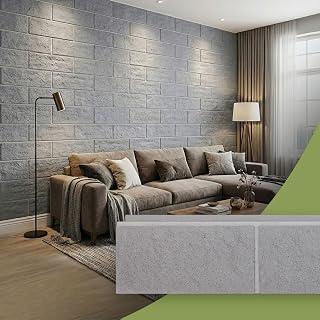
The split-face EverStone panel is best for buyers who prefer more surface variation in a faux cinder block design. It measures 81 1/4 inches wide by 9 inches high, with a listed depth of 1 1/4 inches. The Smokey Pearl color keeps the look in a concrete-inspired gray palette.
Like the smooth-face version, it is described as lightweight for quicker and easier installation. Its greater listed depth makes it the better choice of the two EverStone options when a split-face profile is the priority. Compare the depth with adjacent trim or surfaces before planning the installation.
- Best for: A textured or split-face block appearance.
- Why it stands out: It is the only listed option explicitly identified as split-face cinder block.
- Limitation: At 1 1/4 inches deep, it projects farther than the smooth-face panel.
Ultimate Premium Products 3D Faux Brick Panels

This nine-pack is best for shoppers willing to use a brick pattern instead of a cinder block pattern. The listed panel size is 40 by 20 inches, and the product describes a textured, realistic-looking surface. The panels are made of Styrofoam and can be cut or shaped for a DIY installation.
The manufacturer describes the panels as suitable for interior and exterior use and notes moisture resistance for damp rooms such as bathrooms or basements. This is a different product category from the EverStone faux concrete panels, so select it for a brick-style result rather than a precise cinder block effect.
- Best for: A larger-format faux-brick treatment.
- Why it stands out: The listed pack has nine sizable panels and is designed to be cut to fit.
- Limitation: It imitates brick, not cinder block.
Greymond Black And Grey Faux Brick Panels

Greymond’s 20-piece set is best for buyers who want smaller panels that can be cut to suit a wall. Each piece measures 15 by 13.7 inches and is 0.27 inches thick. The panels are described as XPE foam, with flexibility, waterproofing, and an easy-to-clean surface.
The product listing also says the softer paneling can help prevent children from being injured while playing. Its black-and-grey brick design may work for decorative applications where that color scheme is wanted, but it does not provide the specific cinder block pattern sought by some buyers.
- Best for: A flexible, cut-to-size faux-brick wall covering.
- Why it stands out: The 20-piece format gives buyers multiple smaller pieces to arrange.
- Limitation: The thin 0.27-inch profile and brick pattern differ from concrete-block panels.
Commomy 3D Faux Brick Wall Panels

Commomy’s ten-piece set is best for an interior DIY project where light, flexible faux-brick panels are preferred. Each piece measures 15.74 by 11.8 inches, and the listed pack coverage is 12.92 square feet. The panels are described as thin PVC that can be cut with scissors or a utility knife.
The product says installation requires no grout, glue, or additional tools. That feature may appeal to shoppers seeking a straightforward decorative update. Choose it for a brick pattern and convenient cutting, not for an exact faux cinder block finish.
- Best for: Lightweight interior wall decoration with a brick texture.
- Why it stands out: The listing provides pack coverage and describes simple cutting and installation.
- Limitation: The product is a faux-brick panel, not a cinder block panel.
Buying Guide: How To Choose Faux Cinder Block Panels
Do you need a cinder block pattern or a similar masonry look?
Start by deciding whether the wall needs to read specifically as cinder block. The EverStone products are the direct matches in this selection. The other three products have brick patterns, so they are alternatives only if a different masonry style is acceptable.
Which surface profile should you choose?
Choose smooth-face panels for a more even-looking surface. Choose split-face panels if a more textured profile is the goal. Compare the listed depth as well: the smooth-face EverStone panel is 1 inch deep, while the split-face model is 1 1/4 inches deep.
How should you compare panel size and coverage?
Measure the wall area before ordering and compare it with each product’s listed dimensions or pack coverage. Commomy specifies that ten panels cover 12.92 square feet. The Greymond and Ultimate Premium Products listings provide piece dimensions, while the EverStone listings give individual panel dimensions. Do not assume that panel dimensions alone account for overlap, trimming, or installation layout.
What material and installation details matter?
Check the stated material and cutting method against the project. The listings describe the Ultimate Premium Products panels as Styrofoam, Greymond as XPE foam, and Commomy as PVC. The EverStone descriptions emphasize lightweight construction. Confirm the intended installation surface and follow the manufacturer’s instructions; the supplied product details do not specify every installation requirement.
Are faux panels a replacement for masonry?
These products are described as decorative panels or wall coverings. The provided details do not establish that they provide structural support or replace a masonry wall. For a decorative finish, compare appearance, dimensions, and material; for a structural project, use an appropriate building product instead.
Frequently Asked Questions
Which listed product is most like a real cinder block panel?
The two EverStone options are specifically described as faux cinder block panels. Choose smooth-face for a more even look or split-face for a more textured profile.
Are faux brick panels the same as faux cinder block panels?
No. Faux brick panels imitate a brick pattern, while cinder block panels imitate concrete masonry blocks. The three non-EverStone products in this selection are brick-pattern alternatives.
Can these panels be cut to fit?
The Ultimate Premium Products panels are described as cuttable and shapeable, Greymond says its pieces can be cut, and Commomy specifies cutting with scissors or a utility knife. Check the individual product instructions for the recommended method.
Which panels are described as moisture resistant?
The Ultimate Premium Products listing describes its Styrofoam panels as moisture resistant. Greymond describes its XPE panels as waterproof. These statements apply to those products; they should not be assumed for every panel in this article.
How do I estimate how many panels I need?
Measure the wall, then compare its area with the product’s stated coverage or panel dimensions. Allow for cuts and layout needs, and verify pack coverage on the product listing when it is provided.