The best choice in this selection for fire-resistant eave ventilation is the 1.5-inch round soffit vent with overlapping baffles and a mesh plate. It is the only listed product whose features specifically describe ember and flame protection and identify fire-related listings and compliance. The other products are made for fireplace intakes, fire pits, or general exhaust ventilation; they should not be treated as substitutes for a fire-resistant eave vent.
| Product | Best suited for | Fire-resistant eave use |
|---|---|---|
| Ember-blocking round soffit vent | Eave openings needing ember protection | Specifically described for this purpose |
| Fireplace intake vent cover | Wood-stove or gas-fireplace intake | Not specified |
| Stainless steel fire-pit vent panels | Masonry fire pits and outdoor kitchens | Not specified |
| Four-inch stainless steel louvered vent | Flat-duct ventilation | Not specified |
| Four-inch dryer vent cover | Dryer or bathroom exhaust | Not specified |
Ember-Blocking Round Soffit Vent

Best for: Homeowners and builders looking for a purpose-designed round soffit or under-eave vent with features intended to resist ember entry.
The listed features describe triple protection, overlapping baffles, and a 1/16-inch mesh plate. The design is stated to resist intrusion from embers, flames, and wind-driven rain and snow. The product is listed as fitting standard 1.5-inch, 2-inch, or 3-inch round holes, which may suit some retrofit openings as well as new construction.
The listing also identifies CAL FIRE listing, an ASTM E119 fire rating, and WUI Zone compliance. These are product claims in the supplied information; confirm that the exact vent and installation meet local building requirements. Limitation: This is a round vent for specified hole sizes, not a universal replacement for every eave vent opening.
Galvanized Steel Fireplace Intake Cover
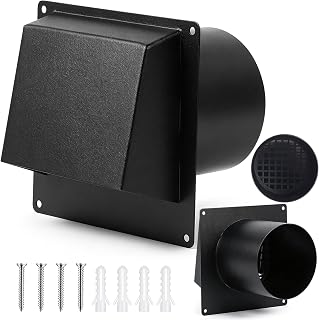
Best for: A wood-stove or gas-fireplace intake opening, not an eave ventilation opening requiring ember protection.
This assembled kit includes an outside-air shield hood and mounting screws. Its integrated metal mesh is described as supporting airflow while helping reduce debris entry. The listing says galvanized steel and stainless components are used for outdoor exposure to weather and seasonal temperature changes.
Choose this if the project is specifically a fireplace or stove intake and the opening matches the product. Its intended use and features differ from those of a fire-resistant eave vent. Limitation: The supplied information does not state an ember-resistance rating or eave-vent fire certification.
Stainless Steel Fire-Pit Vent Panels

Best for: Masonry fire pits and outdoor kitchen projects that need venting panels.
This two-panel set is described as made from 304 stainless steel with weather- and rust-resistant properties. Each panel is listed as 15 inches by 4.5 inches, with 0.3-inch screw holes. The stated application is masonry fire pits and outdoor grills, where the panels are intended to support airflow.
Choose these for the stated outdoor cooking or fire-pit application, not as a substitute for a listed ember-resistant eave vent. Limitation: The supplied features do not identify fire-resistance testing, ember-blocking construction, or approval for eaves.
Four-Inch Stainless Steel Louvered Vent

Best for: Buyers seeking a four-inch stainless steel louvered grille for flat ducting.
The product name identifies a four-inch stainless steel air vent with a louvered grille cover. This makes it a possible option to investigate for general duct ventilation when its dimensions and application match the project. It is included for comparison because it is a vent product, but the provided details do not establish that it is designed for eaves or wildfire ember defense.
Limitation: No fire rating, ember-blocking feature, mesh specification, or eave-specific use was supplied. Do not select it for fire-resistant eave protection based on the product name alone.
Four-Inch Hooded Dryer Vent Cover

Best for: A four-inch exterior exhaust outlet for a dryer, laundry area, bathroom fan, or other stated exhaust use.
The listing describes a galvanized-steel hooded wall vent with a screen and damper for a four-inch pipe. Those features address exterior exhaust ventilation and protection from debris, rather than eave intake ventilation. Choose it only when the project matches its listed exhaust application.
Limitation: The supplied features do not claim fire resistance, ember protection, or approval for soffit or under-eave installation.
Buying Guide: How to Choose a Fire-Resistant Eave Vent
Does the vent explicitly address ember entry?
Look for product information that specifically describes ember-blocking construction, such as baffles or a fine mesh plate. A metal body, louver, hood, or screen alone does not establish that a vent is fire-resistant. Verify the precise product documentation and any required local approvals.
Will it fit the existing opening?
Measure the opening and compare its shape and size with the vent’s stated fit. The round soffit model in this selection lists compatibility with standard 1.5-inch, 2-inch, or 3-inch round holes. That does not mean it fits rectangular openings or every existing vent assembly.
What listings or code requirements matter?
Check local building and wildfire-zone requirements before buying. Confirm that any claimed listing or fire rating applies to the exact model and installation. A product described for a fireplace, dryer, duct, or fire pit should not be assumed to meet eave-vent requirements.
How should airflow and protection be balanced?
An eave vent must serve the building’s ventilation design while limiting exposure to embers and weather. Ask a qualified contractor or building official whether the selected vent’s opening area and installation are appropriate. Do not cover or replace ventilation openings without considering the effect on the roof and attic ventilation system.
Frequently Asked Questions
What makes an eave vent fire-resistant?
Relevant features may include ember-blocking mesh and baffles, along with applicable fire-related listings or ratings. Confirm these details for the exact vent rather than relying on material or appearance alone.
Can a regular louvered vent protect against embers?
Not based on its louvered design alone. The supplied information must specifically support ember resistance and the intended eave application.
Can I use a dryer vent cover under an eave?
The listed dryer vent is described for four-inch exhaust uses, not fire-resistant eave ventilation. Its supplied features do not establish eave suitability.
Which listed product is the clearest match for fire-resistant eaves?
The round soffit vent is the clearest match because its features specifically describe ember and flame resistance, overlapping baffles, mesh, and fire-related listings.
Should I check local requirements before installation?
Yes. Confirm applicable building and wildfire-zone rules, product documentation, opening dimensions, and installation details before selecting or installing a vent.