Gravity-based purifiers offer simple, reliable filtration without electricity. This guide selects five top options to fit common households, camping needs, and small offices. The best choice depends on capacity, filtration stages, and whether you want stainless-steel durability or extra PFAS/lead reductions. Ideal buyers include: small households seeking safe drinking water on a budget; preppers and campers needing non-electric systems; and users prioritizing lead, PFAS, or fluoride reduction in a countertop setup.
| Product | Best For | Key Benefit |
|---|---|---|
Below, each product section highlights who it’s best for, why it stands out, and a practical note to consider before buying. For quick comparison, use the Buying Guide at the end to align features with your needs.
Purewell 2.25G Gravity Filter System PW-KS

The 2.25-gallon Purewell PW-KS uses a 3-stage filtration with a 0.01μm hollow fiber UF membrane, silver ion membrane, and activated carbon block. It reduces chlorine and intercedes rust, sediment, organic matter, and heavy metals. A water level window lets you monitor remaining capacity without opening the unit. This model delivers a steady 4 gallons per hour flow, balancing filtration depth with usability.
Best for small households that want a compact, visually clear system with strong contaminant reduction. The water level window helps households track usage, avoiding surprises. One potential limitation is that the system’s capacity may require more frequent refills in busier households.
Key considerations:
- 3-stage filtration with 0.01μm pore size for high filtration accuracy
- Stainless steel housing with a transparent water level window
- Non-electric, simple gravity-fed operation
Big Berkey 2.25 Gal Gravity System

The Big Berkey is a well-known, durable gravity-fed system designed for everyday use in homes, apartments, offices, and RVs. It uses two authentic Black Berkey filters (BB9-2) to reduce a broad range of substances that affect taste and odor. Stainless steel construction and a compact countertop footprint make it suitable for kitchens with limited space.
Best for families or groups needing higher capacity and established filtration performance. A caution: the system can take longer to refill to full capacity during heavy usage, and the water flow rate may slow as filters age. Consider adding more filter elements if you anticipate higher demand.
Key considerations:
- 2-filter setup with BB9-2 elements
- 2.25-gallon capacity; no electricity or plumbing required
- Polished stainless steel, countertop-friendly
Purewell 3-Stage PW-OB Ultra-Filtration

This Purewell model emphasizes certification and ultrafiltration, with a 0.01μm hollow fiber UF membrane and silver ion membrane, plus activated carbon to capture chlorine and metals. It notes NSF/ANSI 42 and 372 certifications, highlighting a compliance-backed approach to filtration performance. A complete accessory set, including a 304 stainless steel housing and a non-slip stand, supports long-term use.
Best for users who prioritize recognized certifications alongside a compact stainless steel system. It’s a solid choice for those who want reassurance about filtration standards. A caution: some users may find the setup slightly more involved than the most basic gravity units.
Key considerations:
- NSF/ANSI 42 & 372 certified filtration
- 0.01μm pore size for high purity water
- Includes accessories, stainless steel construction, stable base
Purewell PFAS-Free 6-Stage System SF-2.25G

This 6-stage Purewell upgrade focuses on PFAS and lead reduction, certified to diminish Total PFAS, lead, chlorine, mercury, and other contaminants. It combines pre-filter mesh, PP cotton, activated carbon, KDF, silver ions, and a second PP layer to target a broad contaminant spectrum while preserving flow at a practical rate.
Best for households with PFAS concerns or lead risk where a multi-layer filtration approach is valued. A caution: higher stage count may increase maintenance considerations, though the system is designed to stay user-friendly.
Key considerations:
- 6-stage filtration with PFAS/lead reduction
- Compatible with Purewell SF series and ZeroWater products
- NSF/ANSI 42 certified filtration
Purewell 3-Stage PW-OBT with Ceramic Filters

This model uses washable ceramic filters in a 3-stage design with activated carbon and silver ions. The ceramic outer layer blocks large particulates, while activated carbon removes 99% of chlorine and chemicals. Silver ions help prevent microbial growth within the filter. It requires a one-minute flush before first use and a stainless steel housing with a spigot and stand.
Best for users who want a washable, reusable filter element with robust chlorine reduction. A caution: ceramic filters require periodic maintenance to keep pores clear and should be flushed before initial use.
Key considerations:
- 3-stage filtration with washable ceramic filters
- Lead-free, BPA-free housing
- Stainless steel, included stand and spigot
Purewell 8-Stage PW-OBT-CF
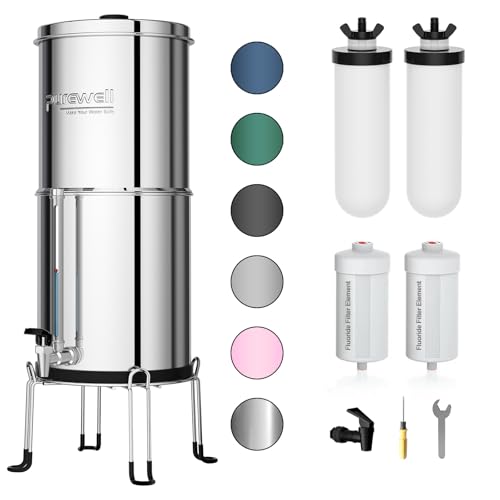
The 8-stage design adds both ceramic and fluoride reduction elements, using a fluoride reduction membrane, activated carbon, and multiple sediment layers. It reduces fluoride by up to about 90% and carries NSF/ANSI 42 certification. A 2.25-gallon stainless steel housing with a metal spigot and stand supports long-term daily use.
Best for households seeking fluoride reduction without resorting to more complex filtration setups. A caution: higher fluoride reduction may come with more frequent filter changes to maintain performance.
Key considerations:
- 8-stage filtration for broad contaminant removal
- Fluoride reduction element included
- Stainless steel housing with metal spigot
Buying Guide: Gravity-Based Water Purifiers
What matters most for gravity-fed purifiers is how well the filter stages match your water quality and daily consumption. Consider these questions:
- What contaminants concern you most (chlorine, heavy metals, PFAS, fluoride, lead)?
- What capacity do you need (daily cups or gallons per day) and how many people will use it?
- Do you prefer fewer, simpler stages or a multi-stage system with certified filtration?
- Is corrosion resistance and durability important (stainless steel vs. plastic)?
- Do you require certifications (NSF/ANSI 42, 372) for peace of mind?
Practical Comparisons
- Best for compact spaces: Purewell PW-KS 2.25G with a water level window
- Best for family use and higher output: Big Berkey with BB9-2 filters
- Best certified filtration: Purewell PW-OB and PW-OBT variants
- Best PFAS/lead focus: Purewell SF-2.25G PFAS-Free
- Best for fluoride reduction: Purewell PW-OBT-CF
Maintenance Tips
- Flush new filters as recommended and monitor for reduced flow.
- Clean spigots and housings regularly to prevent mineral buildup.
- Replace filter elements per manufacturer guidance to maintain performance.
FAQ
- What is a gravity-based water purifier? Answer: A non-electric filtration system that uses gravity to push water through multi-stage filters for contaminant reduction.
- Do these systems remove PFAS? Answer: Some models, like the PFAS-Free variants, target PFAS reductions as part of their filter design.
- Is stainless steel better than plastic? Answer: Stainless steel is typically more durable and less prone to leaching than plastic, but price and weight are considerations.
- Do I need certified filters? Answer: Certification (NSF/ANSI 42 or 372) provides independent validation of performance claims.
- Can I install these without tools? Answer: Most countertop gravity systems are designed for simple setup and do not require plumbing.
- How often should I replace filters? Answer: Replacement frequency depends on usage and water quality; follow the manufacturer’s guidance.