This article highlights top high-efficiency options for hot water in American homes, focusing on tankless and compact tank models that maximize energy savings and performance. Each product showcases advanced controls, quick delivery of hot water, and efficient operation to reduce utility costs. Read on to compare features, installation considerations, and performance factors to help you choose the right model for your household needs.
| Product | Brand | Max Flow (GPM) | Fuel Type | Key Benefit |
|---|---|---|---|---|
| 18kW Electric Tankless Water Heater | APUS | Up to 4.4 | Electric | Space-saving, LED control, memory feature |
| FOGATTI Instagas Comfort 170S | FOGATTI | 7.5 | Gas | Compact design, high flow, precise temp control |
| ThermoMate CZ422NG | thermomate | Up to 5 | Gas | High efficiency, multi-point heating, safety features |
| Rheem Condensing Tankless | Rheem | Up to 9 | Gas | High flow, continuous hot water, indoor venting |
| BOSCH Tronic 3000 | Bosch | 2.5 | Electric | Point-of-use, quick access hot water |
APUS 18kW Electric Tankless Water Heater
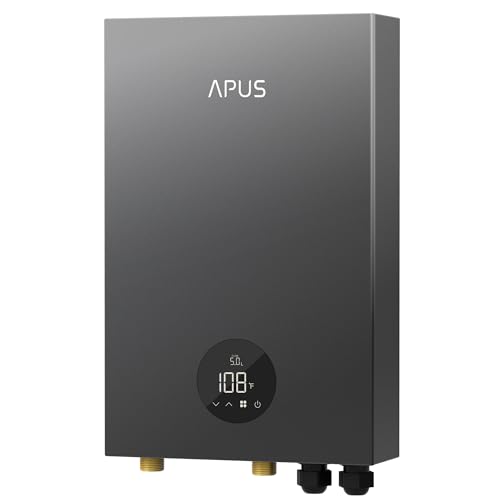
The APUS 18kW electric tankless unit provides continuous hot water with a maximum flow of up to 4.4 GPM, suitable for two to three simultaneous uses such as showers or sinks. It features an LED temperature display with 1°F accuracy, enabling precise control from 86°F to 140°F. The built-in memory preserves settings after power interruptions, and self-modulating technology adjusts power use based on flow rate for stable output. With 99.8% thermal efficiency, it heats water on demand to minimize energy waste and eliminate standby heat loss, extending equipment life for eco-conscious homes.
FOGATTI Instagas Comfort 170S Natural Gas Tankless

FOGATTI’s Instagas Comfort 170S indoor gas tankless unit delivers up to 7.5 GPM with 170,000 BTU, providing ample hot water for multiple outlets. It offers instant heating as water flows, maintaining comfort across showers, sinks, and appliances. Advanced water servo technology and sensors adjust flow and gas intake to keep temperature variation within ±1°F. Its four-stage combustion system ensures consistent performance across seasons, making it suitable for busy households needing reliable on-demand hot water with compact footprint.
ThermoMate CZ422NG Natural Gas Tankless

The ThermoMate CZ422NG provides up to 5 GPM at 113,000 BTU, enabling two showers simultaneously at comfortable temperatures. Its advanced flow sensor and rapid-heating chip perform up to 20,000 heating adjustments per second, delivering water within ±1°F. It includes multiple protections such as anti-boil dry, freeze, flame-out, overheating, and more, with frost protection at 41°F to safeguard pipes. The heat exchanger uses copper for superior thermal conductivity and reliability, with a high energy efficiency profile that reduces operating costs versus older models.
Rheem Condensing Tankless Indoor 9 GPM

Rheem’s condensing tankless model delivers up to 9 GPM at 180,000 BTU, suitable for larger homes with multiple hot water demands. This indoor unit supports continuous hot water with electric ignition and is designed for high efficiency and reliability. The larger flow capability helps balance simultaneous needs like showers, laundry, and appliances, while condensing technology captures heat to maximize efficiency and reduce energy use compared with non-condensing designs.
BOSCH Tronic 3000 T 2.5-Gallon Mini-Tank
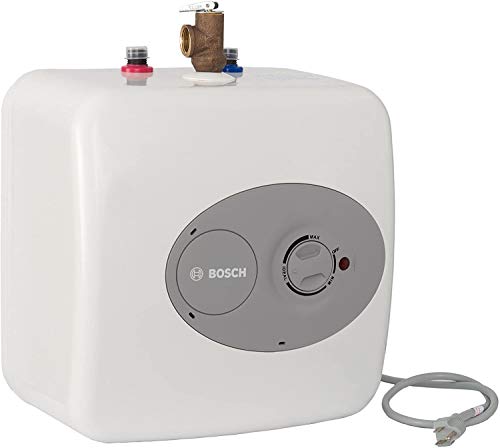
The Bosch Tronic 3000 ES2.5 is a compact 2.5-gallon mini-tank designed for point-of-use hot water delivery. It fits under a sink and uses 98% thermal efficiency with a 120V electrical supply. Ideal for handy, localized hot water at fixtures, it eliminates long waits for hot water and reduces waste. Its compact dimensions and independent installation capability make it a practical choice for remodeling or spaces with limited access to a central hot water system.
Buying Guide
Key considerations when selecting a high-efficiency hot water system include fuel type, household size, and installation constraints. Tankless units provide endless hot water and high efficiency by heating on demand, but may require multiple units or a dedicated outdoor install for larger homes. Gas-powered models typically offer higher flow and quicker recovery, but require venting and exhaust considerations. Electric models are easier to install in many homes but may have lower flow limits for larger households.
Flow rate (GPM) should align with peak hot water usage. For households with multiple showers or appliances, choose a unit with a higher working GPM and BTU rating, and confirm compatibility with existing venting and electrical capacity. Temperature stability is critical; look for models with precise temperature regulation and protections against freeze, overheat, or flame-out.
Durability and maintenance matter. Copper heat exchangers and robust ignition systems enhance longevity, while easily replaceable sensors and self-diagnostic features help with service costs. Space considerations and mounting options should match your installation area—compact, floor-mounted, or indoor/ outdoor configurations each have distinct installation requirements.
Energy efficiency ratings, such as high thermal efficiency and favorable energy factors, impact long-term operating costs. Consider whether a condensing design or a standard efficiency model best balances initial cost with energy savings. Finally, ensure that the selected model carries appropriate certifications and meets local safety and venting codes for reliable performance and compliance.