If you’re seeking reliable, user-friendly options for household water purification, these five systems offer a mix of under-sink, countertop, and whole-home solutions. They serve different buyers: under-sink RO enthusiasts, whole-house needs, and portable or budget-conscious households. The list highlights easy installation, mineral restoration, multi-stage filtration, and practical maintenance features. The following buying guide and product mini-reviews help you compare options at a glance.
| Product | Type | Best For | Key Benefit |
|---|---|---|---|
| iSpring RCC7AK-BN | Under-Sink RO | Homeowners wanting alkaline remineralized water | Mineral AK stage for balanced pH |
| XINSHUO 3-Stage | Whole House | Whole-home filtration with multiple taps | 3-stage filtration with 0.5 micron |
| DREO Countertop RO | Countertop RO | Renters or kitchens needing no-install solutions | Self-contained, installation-free |
| Purewell 3-Stage Gravity | Countertop Gravity | Non-electric filtration with stainless steel | 0.01 μm pore size for high filtration accuracy |
| HQUA WF3-03 | Floor-Standing Whole House | Whole-home with UV and contaminants | UV purification and PFAS reduction |
iSpring RCC7AK-BN Alkaline 6-Stage RO System

Best for: Homeowners who want mineralized, pH-balanced RO water from a compact under-sink setup. The patented top-mounted design simplifies installation. The AK mineral stage adds minerals for a more balanced taste, while the transparent first-stage housing helps monitor filter life.
Why chosen: This model emphasizes remineralization and visibility of filter status, making maintenance straightforward. The top-molt design reduces installation complexity for many kitchens, and the alkaline stage aims to improve water flavor without sacrificing filtration quality.
Caution: As with all RO systems, expect ongoing filter changes and occasional reservoir care to maintain performance. Ensure your under-sink space accommodates the top-mounted faucet design.
XINSHUO 3-Stage Whole House Filter System

Best for: Homes seeking comprehensive filtration across all taps without frequent housing changes. This 3-stage system reduces chlorine, rust, sediment, and odors while preserving healthy minerals for drinking and cooking.
Why chosen: It provides a robust multi-stage approach with leak-proof seals and multiple filter sets included, offering long-term maintenance ease for whole-home use. It’s noted for simplifying installation with standard 3/4″ connections.
Caution: TDS levels remain unchanged, so mineral balance remains a function of the system design and water source. The system requires space on or near the main line for best performance.
DREO RO Countertop Water Filter
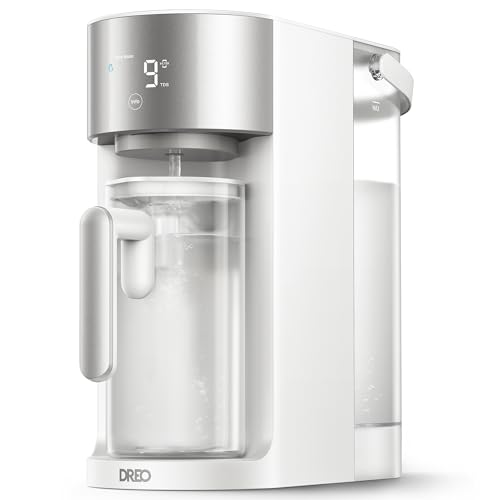
Best for: Renters or households needing an installation-free solution with portability. The DREO offers a compact RO filtration system that sits on a counter, ideal where under-sink space is limited.
Why chosen: It combines efficient purification with real-time TDS and filter-life monitoring, plus auto-fill and self-cleaning features for convenience. It’s a good pick for those who want a quick, self-contained countertop option.
Caution: Countertop RO units can have limited tank storage and require access to a faucet or additional plumbing tweaks in some kitchens.
Ziwshom 3-Stage Whole Home System

Best for: Homes needing an all-in-one filtration solution that covers multiple rooms without separate point-of-use systems. It emphasizes sediment and chlorine removal while maintaining minerals.
Why chosen: This system delivers 3-stage filtration with a bypass head for easy filter changes and compatibility with both well and city water. It’s designed to fit kitchens and major living spaces with simple upkeep.
Caution: This unit does not reduce TDS, so mineral content remains similar to source water. Proper cartridge replacement intervals ensure consistent performance.
HQUA WF3-03 3-Stage Whole House
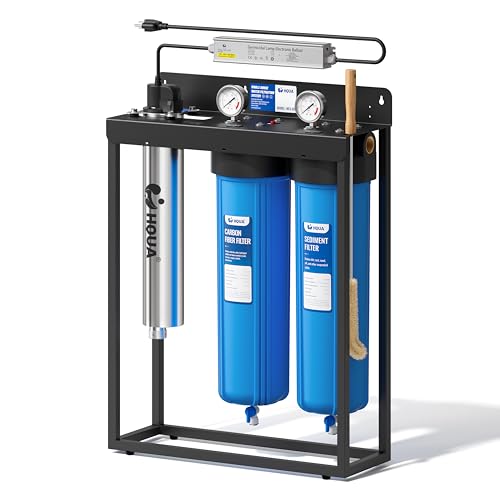
Best for: Households needing flexible floor-standing filtration with added UV purification. This unit targets heavy metals, PFAS, chlorine, and odors across the entire home.
Why chosen: The integrated UV purifier helps reduce microorganisms and improves water clarity, complementing 3-stage filtration for a broader protection profile. It’s a solid option where environmental contaminants are a concern.
Caution: UV systems require power and regular lamp maintenance for sustained effectiveness. Ensure adequate space for floor or wall installation.
Buying Guide: Key Considerations for a Household Water Purification System
- Water source and contaminants: Identify whether you need chlorine removal, heavy metals, PFAS, or microbial protection. Whole-house systems often address many contaminants in one pass, while RO units excel at dissolved solids and minerals.
- Installation type: Under-sink RO systems save space but require plumbing access; countertop models are portable; whole-house units filter every tap but require more space and initial investment.
- Flow rate and usage: Consider GPM needs if you have multiple simultaneous taps. Higher flow helps avoid slow filling during peak use.
- Maintenance and replacement: Check filter lifespans, ease of replacement, and whether pre-filters or sediment stages are included. Monitor features like transparent housings or digital reminders can aid upkeep.
- Mineral balance: If taste and mineral content matter, choose systems with remineralization stages or mineral-boost options to maintain healthy minerals in drinking water.
- Energy and space: UV and pump-assisted systems use electricity and occupy space. Plan for electrical access and clearances around installation.
- Costs beyond purchase: Include ongoing filter replacements, potential service, and hardware that may wear over time. Some multi-pack cartridges can reduce long-term costs.
Frequently Asked Questions
- What is a household water purification system best used for?
Answer: It provides filtered water at multiple points in the home, addressing contaminants such as chlorine, sediment, heavy metals, and sometimes PFAS or microbes, depending on the model. - Do all systems reduce total dissolved solids (TDS)?
Answer: Not all do. Some systems preserve minerals and TDS while improving taste, while RO and certain dual-stage setups reduce TDS significantly. - Is a UV purifier necessary for home filtration?
Answer: UV is beneficial when microbial control is a priority, especially for well water or systems targeting bacteria and other microorganisms. It adds a disinfection layer but requires power and maintenance. - Which system should a renter choose?
Answer: A countertop RO system or a portable purifier is typically best for renters, as it requires no major plumbing and can be moved easily. - How often should I replace filters?
Answer: Replacement frequency depends on usage and water quality. Refer to the manufacturer’s guidelines, and use any included filter-life indicators if available. - Can I improve taste without changing TDS?
Answer: Yes. Gentle remineralization, proper filtration order, and clean housing surfaces can help improve taste while keeping essential minerals balanced.