Choosing the right internal insulation boards can improve energy efficiency, comfort, and indoor air quality. This guide highlights five high-performing options, spanning ceramic fiber, mineral wool, and foam-core boards. Each product is evaluated for fire resistance, thermal performance, durability, and ease of installation. Use the buying guide below to compare features and select the best board for your wall assembly and climate.
| Product | Brand | Key Benefit | Best For |
|---|---|---|---|
| BXI Ceramic Fiber Thermal Insulation Board 12x8x0.4 | BXI | High temp resistance, inorganic, low smoke | Flame-retardant internal walls |
| Rockwool ComfortBoard 80 | Rockwool | Rigid stone wool, noncombustible, vapor permeable | Fire resistance and moisture management |
| Lynn Manufacturing Ceramic Fiber Board 15x24x3/4 | Lynn Manufacturing | High temp, easy to cut, high-temperature applications | Boilers, kilns, stoves and high-heat walls |
| SIMOND STORE Ceramic Fiber Insulation Board 12×24 | SIMOND STORE | 2300°F rated, vacuum cast, durable | Fireproof walls and fireboxes |
| Pellethead Universal Ceramic Fiber Board 24×18 | Pellethead | 2,300°F rating, versatile cutting | Forges, kilns, stoves and furnaces |
BXI Ceramic Fiber Board 0.4 Inch
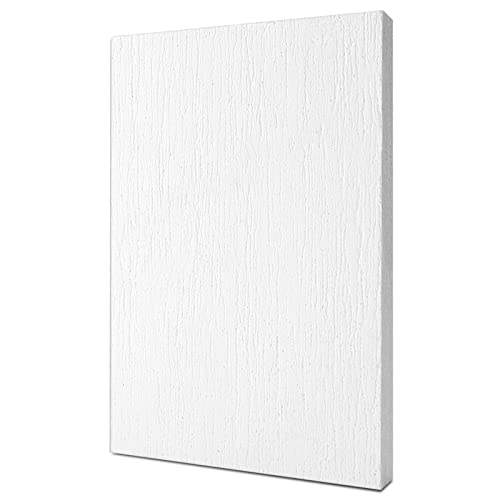
Product notes: 12″ x 8″ x 0.4″ board with high-density aluminosilicate composition. Fire resistant to Class A1 and rated for long-term service up to 2552°F (1400°C), with a maximum use temperature of 2732°F (1500°C). Thermal conductivity is 0.082 W/(m·K), providing an R-value around 0.12 m²·K/W. Inorganic composition offers reduced smoke and odor compared with organic ceramic fibers, and enhanced rigidity for wall applications.
Rockwool ComfortBoard 80

Product notes: 1.5″ x 24″ x 48″ rigid stone wool board covering 48 sq ft. Noncombustible and fire resistant, stone wool helps contain fires and prevent spread. It is vapor permeable, improving wall system drying potential and reducing condensation risk. Inorganic material resists mold growth and maintains integrity under high temperatures.
Lynn Manufacturing Ceramic Fiber Board
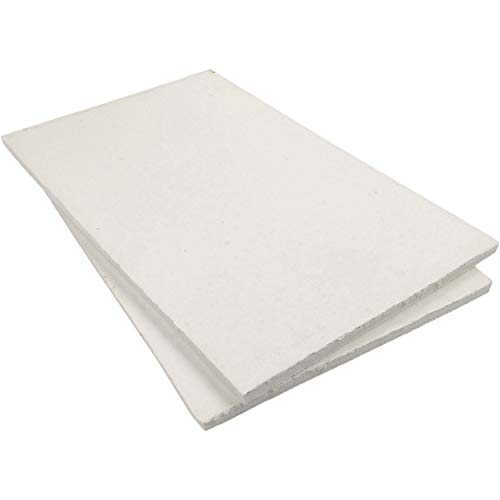
Product notes: 15″ x 24″ x 3/4″ boards rated to 2300°F with 16 lb/ft³ density. Vacuum cast ceramic fiber provides low thermal conductivity and strong resistance to thermal shock. Useful for fireboxes, boilers, stoves, kilns, and other high-heat wall assemblies; easily cut or drilled for custom fit.
SIMOND STORE Ceramic Fiber Board

Product notes: 2300°F rated ceramic fiber board, 0.47″ thickness, 12″ x 24″ size. Vacuum cast with a density around 20-24 lb/ft³. Compressive strength supports wall integrity under high heat, with manageable shrinkage and LOI at high temperatures, suitable for furnaces and related fire-enclosed spaces.
Pellethead Ceramic Fiber Board

Product notes: 24″ x 18″ x 3/4″ board, 2,300°F rated, 500 kg/m³ density. Vacuum cast ceramic fiber refractory board combines high-temperature capability with ease of cutting to size. Suitable for wood stoves, kilns, forge walls, and other high-heat interior applications requiring durable insulation.
Buying Guide
Key considerations when selecting internal wall insulation boards include temperature rating, fire performance, density and rigidity, vapor permeability, installation ease, and compatibility with wall assemblies. Ceramic fiber boards offer high-temperature resilience and low smoke, making them suitable for heat-intensive zones and fire-safe compartments. Mineral wool options like Rockwool ComfortBoard 80 provide strong fire resistance with moisture handling benefits, and vapor-permeable properties that can help mitigate condensation. For high-heat interiors, boards from Lynn Manufacturing and SIMOND STORE emphasize durability and structural integrity, while Pellethead offers a versatile, cut-to-fit option for various interiors.
- Temperature rating: Match board maximum use temperature to the expected heat exposure of the space.
- Fire resistance: Look for Class A1 ratings and inorganic formulations for safer interior use.
- Density and rigidity: Higher density boards resist deformation and provide better impact resistance on walls.
- Vapor permeability: Boards with vapor permeability support wall system drying and reduce moisture-related issues.
- Installation: Consider board thickness, ease of cutting, and compatibility with existing wall studs or framing.
- Applications: Some boards are better suited for fireboxes, kilns, or stoves, while others target general wall insulation.
- For high-heat interiors, prioritize boards rated to 2300°F or higher and with inorganic composition.
- In spaces where moisture risk exists, favor vapor-permeable options to minimize condensation.
- Ensure board thickness aligns with cavity depth and finished wall specifications.
- Consult local building codes and, if needed, a building science professional to select compatible assemblies.