If you’re shopping for a compact, under-sink or low-height hot water solution, a low boy electric water heater is often the right choice. These units fit in restricted spaces while delivering reliable hot water for kitchens, bathrooms, RVs, or studios. The top picks below are suited for different needs—single outlets for small apartments, whole-sink or booster capacity, and easy plug-and-play setups. This guide highlights five options that balance size, efficiency, and ease of installation for American buyers.
| Product | Best For | Capacity | Voltage | Key Benefit |
|---|---|---|---|---|
| VEVOR 12-Gallon Tank | Small apartments or remote water points | 12 gal | 120V | Face-to-face heat, 20 mm insulation for efficiency |
| GE 18 Gallon Versatile Plug & Play | Flexible whole-home option | 18 gal | 120V | Compact design with easy installation |
| ThermoMate 18 Gallon POU | Kitchen & bathroom sinks, boosters | 18 gal | 120V | Low profile, adjustable thermostat, corrosion resistant |
| ThermoMate 6 Gallon POU | Ultra-compact relief for tight spaces | 6 gal | 120V | Very small footprint with adjustable thermostat |
| GE 10 Gallon Versatile Plug & Play | Quick, space-saving solution | 10 gal | 120V | Easily installs where needed |
Notes: The table above summarizes relative capacity and use case. For more precise compatibility, check your space, outlet availability, and plumbing connections before purchasing. The listed products emphasize low-height configurations designed for apartments, RVs, boats, cabins, and other tight spaces.
VEVOR Electric Tank Water Heater, 12 Gallon

Best for: Singles or couples in small apartments needing steady showers and handwashing water without occupying tall space. This 12-gallon unit uses a 1600W element for faster heating and features a side outlet design suitable for point-of-use setups. It includes an LED display and knob control for straightforward temperature management, plus protective features such as dry heating, overheating, and overpressure protections. Its insulation reduces energy loss, helping maintain temperature between uses.
Why chosen: The VEVOR model offers a compact footprint with reliable 120V operation, making it suitable for condos or studios where space is constrained. The enamel interior and corrosion resistance support longer service life in daily use.
Caution: Ensure adequate clearance and ventilation in tight electrical panels. The unit’s performance depends on available 120V circuit capacity; avoid overloading shared circuits.
GE Appliances 18 Gallon Versatile Plug and Play Electric Water Heater

Best for: Small homes or multi-point use where you want flexibility for one or two outlets. This 18-gallon unit is designed for easy installation using standard ¾-inch NPT connections and a 120V supply. It’s a compact solution that can fit within limited spaces like kitchens, bathrooms, cabins, RVs, or garages.
Why chosen: It emphasizes plug-and-play convenience and compact design, allowing quick replacement or integration into existing plumbing where space is limited and electrical demand is modest.
Caution: It suits smaller households; higher hot water demand from multiple outlets may require a larger capacity unit or booster configuration.
ThermoMate 18 Gallon Tank Water Heater (POU)

Best for: Kitchens, bathrooms, or small cabins where a mid-range 18-gallon point-of-use unit is preferred. It provides hot water for sinks, dishwashing, or showers within 20-25 minutes, depending on flow. The 125°F factory setting is adjustable from 90°F to 150°F via a built-in thermostat. The INCOLOY-800 heating element improves corrosion resistance and energy efficiency.
Why chosen: The low-profile design and robust heating element support longevity and consistent performance in compact spaces. It is well-suited for booster installations alongside a larger main heater.
Caution: Hard-wired installation is required; verify that your electrical setup can support 1500W at 120V and ensure proper clearances around the unit.
GE Appliances 10 Gallon Versatile Plug and Play Electric Water Heater
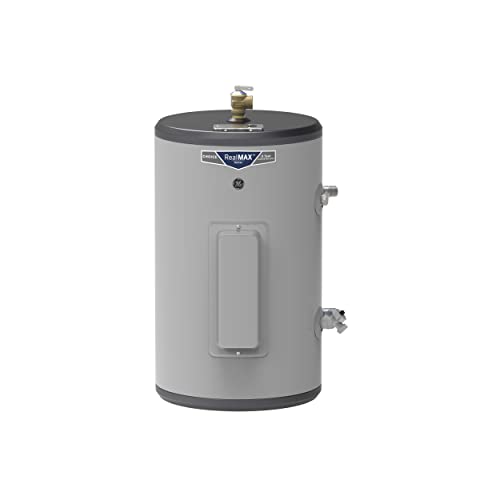
Best for: Quick, space-saving hot water needs in apartments or small homes where minimal footprint matters. This 10-gallon model provides a practical balance of capacity and compactness for compact kitchens or bathrooms.
Why chosen: Its plug-and-play design simplifies setup and reduces installation time, making it a practical choice for renters or spaces where retrofitting is challenging.
Caution: The smaller 10-gallon size may run out of hot water faster if multiple outlets are used simultaneously; consider a booster or larger unit if demand is high.
GE Appliances 18 Gallon Versatile Electric Water Heater (Lowboy)

Best for: Families or shared households that need reliable hot water in a compact tall-low profile (lowboy) unit. This 18-gallon option fits height-restricted spaces while delivering adequate hot water for daily routines.
Why chosen: The lowboy design maximizes space efficiency and ease of replacement in tight areas, with simple connections and straightforward operation for everyday use.
Caution: Ensure your space can accommodate the unit’s height and connection placements; verify clearance around the top and sides for venting and service access.
ThermoMate 8 Gallon Tank Water Heater (POU)

Best for: Ultra-compact hot water needs at a single sink or small workspace. The 8-gallon capacity is ideal for booster installations or dedicated use in limited spaces like RVs or boats.
Why chosen: Its very small footprint and adjustable thermostat offer targeted hot water without occupying significant cabinet space. The INCOLOY-800 element adds durability for higher temperatures.
Caution: Energy efficiency and recovery time decline as the demand increases; this unit is best for low-demand scenarios or as a supplementary heater.
Buying Guide: Low Boy Hot Water Heaters
- What space will it fit? Measure height, width, and depth to ensure the unit clears cabinets, shelves, and plumbing. Lowboy designs prioritize a shorter height to fit under sinks or in closets.
- Do you need plug-in or hard-wired? Some models are plug-and-play for rapid setup, while others require dedicated circuits. Check your electrical panel capacity and local codes.
- Capacity and recovery time: Larger capacities (12–18 gallons) provide more hot water for multiple outlets. Recovery time indicates how quickly the unit reheats after use; higher wattage typically means faster recovery.
- Temperature control: Look for adjustable thermostats and clear displays. Some units come with preset temperatures that are safe and practical for most households, while others offer broader ranges for higher-demand scenarios.
- Material and durability: Enamel interiors and corrosion-resistant heating elements extend life. INCOLOY-800 elements offer improved corrosion resistance over copper at higher temperatures.
- Safety features: Consider overheat protection, dry heating protection, and T&P valves. A T&P valve helps prevent pressure-related issues in mini tanks.
- Installation considerations: Check for 120V circuitry availability, inlet/outlet configurations, and whether the unit is designed for point-of-use or whole-system installation. Ensure compatibility with existing plumbing connections (NPT fittings, 3/4″ connections, etc.).
- Budget and maintenance: While all are compact, yearly maintenance and occasional part replacements (valves, thermostats) should be planned for. Access to service is easier with simplified designs.
FAQ
- What is a low boy water heater?
A compact water heater designed to fit in tight spaces with a shorter height than standard models, often used under sinks or in closets. - Is a 120V unit sufficient for most homes?
For single-point or small-appliance needs, 120V units are common and adequate. Larger homes or higher demand may require higher capacity or booster configurations. - What is the typical recovery time?
Recovery time varies by wattage and capacity but many 18-gallon units recover hot water within 20–30 minutes depending on usage and incoming water temperature. - Can these be used for whole-home heating?
Most low boy heaters are best for point-of-use or booster applications. For full-house hot water, a larger capacity or multiple units may be needed. - Do these require hard wiring?
Some models are plug-and-play, while others require hard wiring. Always follow manufacturer instructions and local electrical codes. - What maintenance is needed?
Regular inspection of valves, ensuring insulation is intact, and testing thermostats helps maintain efficiency and safety.