Answering the question most buyers have: which anti fatigue mat best supports long hours of standing at a desk, kitchen, or workbench? This guide highlights top options for different needs—office desks, industrial environments, and home workshops. The best mats reduce foot, knee, and back stress while staying durable under frequent use. The table below summarizes five strong picks, including who they’re best for and a key trade-off.
| Product | Best For | |
|---|---|---|
| FEATOL Anti Fatigue Mat | Home office and kitchen users seeking premium comfort | Extra thick 9/10″ cushion for strong support and easy care |
| GORILLA GRIP Cushioned Mat | Users needing thick, all-day comfort on hard floors | Three-quarter-inch high-density foam with waterproof, scratch-resistant top |
| Vergo Industrial Anti Fatigue Mat | High-traffic workplaces and workshops | Diamond-plate texture, safety border, and durable memory foam |
| SIT-STAND SMARTMAT | Flexible workspaces with carpet and hard floors | Movable design with foam and gel cushioning, USA-made |
| Performance Tool W88977 Mat | Workbench areas needing oil/solvent resistance | Large, protective surface with handy reference charts |
FEATOL Anti Fatigue Mat for Standing Desk & Kitchen Floor, 9/10 Extra Thick

The FEATOL mat targets long-standing comfort with a 0.9-inch cushion that helps reduce stress on feet, knees, and the lower back. The top surface uses PU leather to resist deformation, punctures, and tears, making it suitable for busy desks or kitchen floors. The mat is easy to clean—wipe with a damp cloth. Best for high-use desks and kitchens where durability matters. Caution: leather-like surface may be less forgiving on lint-attracting debris in ultra-dusty environments.
GORILLA GRIP Cushioned Antifatigue Kitchen Mat for Floor, 48×20, Black
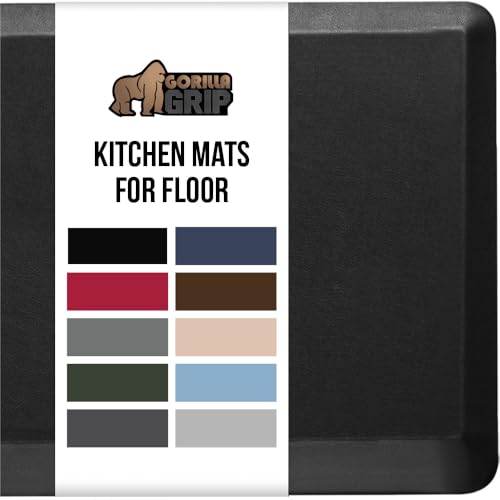
With a thick three-quarter inch foam core, this mat emphasizes all-day comfort for feet and ankles on hard floors. Its high-density foam offers good pressure relief, while the waterproof, scratch-resistant top helps handle spills in kitchens or garages. Best for users who want a simple, rugged mat with easy cleanup. Limitation: very large thickness may feel bulky on lighter-use desks or under low-clearance furniture.
Vergo Industrial 15/16” Extra Thick Anti Fatigue Mat

Designed for commercial use, Vergo’s mat combines high-density memory foam with a durable diamond-plate texture and a vivid yellow border for visibility and safety. It remains flat and non-slip when in heavy traffic, reducing trip hazards. Best for warehouses, workshops, and busy kitchens. Limitation: wider footprint requires more floor space, which may not fit small workstations.
SIT-STAND SMARTMAT: Patented One Foot Moveable Mat

The Sit-Stand SmartMat offers mobility and versatility, allowing seamless transitions between sitting and standing. It uses premium anti-fatigue foam and gel for comfort, and is made in the USA. Best for versatile office layouts, carpeted floors, and users who move between zones. Caution: movable design requires regular checks to ensure edge integrity on high-traffic floors.
Performance Tool W88977 Neoprene Workbench Mat

This mat provides a large, chemical-resistant surface suitable for benches, kitchens, or desks that encounter solvents and oils. The top surface is cushioned with a thermo-fiber layer, and a rubber backing keeps it in place. It also features printed reference charts. Best for workspaces that require chemical resistance and built-in data references. Limitation: not specialized for long-term standing comfort as a pure anti-fatigue mat.
Buying Guide
What should you consider when choosing an anti-fatigue mat for standing work?
- Thickness and density: Thicker mats generally offer more cushion, while higher-density foams provide better support and longer-lasting shape retention.
- Surface material: PU leather, rubber, or anti-slip fabrics affect durability, cleaning ease, and traction. Choose based on spill risk and cleaning frequency.
- Texture and edges: Diamond-plate textures reduce slip risk; beveled edges minimize tripping hazards. Consider high-traffic environments when evaluating edge design.
- Size and shape: Match the mat footprint to your workstation. A larger mat supports broader shifting while smaller mats fit compact desks.
- Mobility vs. stability: Movable mats suit dynamic workspaces; fixed mats suit stationary setups. Consider carpet versus hard floors in your choice.
- Cleanability: Wipeable, spill-resistant surfaces simplify maintenance in kitchens or labs.
- Durability in your environment: For oils, solvents, or heavy use, look for chemical resistance and rugged backing.
FAQ
- What’s the main benefit of an extra-thick anti-fatigue mat?
Extra thickness provides greater cushioning to reduce fatigue in the feet, calves, and lower back during long standing periods. - Are kitchen mats different from office mats?
Some kitchen mats add water resistance and easy-clean surfaces, while office mats emphasize long-term comfort and foot support. - Should I choose a movable mat or a fixed one?
Movable mats are better for flexible workspaces; fixed mats are safer on high-traffic, stable workstations. - How important is the surface texture?
A textured surface improves grip and reduces slip risk, especially on wet or oily floors. - Do anti-fatigue mats help with back pain?
They can, by distributing weight more evenly and reducing pressure on the spine during standing tasks. - Is it necessary to replace a mat periodically?
Yes, to maintain optimal support, especially if the foam compresses or the surface wears down.