Looking for a durable metal baluster deck railing set that’s easy to install and suitable for stairs or flat decks? This guide highlights five top options that balance durability, ease of installation, and value. Best for DIY homeowners who want a professional look without complex routing or special tools. Best for weather resistance and rust-proof performance in outdoor spaces. Best for railing projects that require a mix of straight and angled connections.
Summary table of selected products:
| Product | Material | Length | Best For |
|---|---|---|---|
| ZONEGRACE 105 Pack Aluminum Balusters | Aluminum | 26″ balusters | Overall deck and stair railings; rust-resistant, quick install |
| Hypergiant 105 Pack Aluminum Balusters | Aluminum | 26″ balusters | Rigid, slope-ready connectors; easy DIY setup |
| CAMMOO 110 Pcs Rectangular Deck Balusters | Iron (metal) | 32″ balusters | Wide-coverage railing sections with built-in level |
| HZIU 101 Pack 26″ Rust-Resistant Balusters | Stainless Steel | 26″ balusters | Extreme weather resistance; side-mount installation |
| HZIU 60 Pack 29.5″ Rectangular Balusters | Stainless Steel | 29.5″ balusters | Flexible fit for slope decks and varied rail heights |
ZONEGRACE 105 Pack Aluminum Balusters

Included: 105 balusters at 26″, 3/4″ diameter, plus 210 straight connectors, 30 angled connectors, screws, and a professional-grade bit. Best for constructing 36″ rail heights on both level and stair applications.
Material and finish: Aluminum balusters with AAMA-2604 certified powder coating for rust resistance and weather durability. Low-maintenance and suited for outdoor exposure.
Who it’s best for: DIY homeowners needing a complete kit that covers large railing runs with minimal routing. Why selected: comprehensive kit reduces the need for extra purchases and supports quick, visible results. Caution: some installation setups may require careful alignment with stair angles; ensure connectors are fully seated before tightening.
Hypergiant 105 Pack Aluminum Balusters

What you get: 105 balusters (26″ length, 3/4″ diameter) with 210 flat connectors and 30 slope connectors, plus screws and a screwdriver bit. Designed for rapid installation and clean lines.
Material and coating: 100% aluminum with anti-rust paint; designed to resist daily wear and environmental erosion.
Who it’s best for: homeowners aiming for quick assembly of both flat and angled railing sections. Why selected: includes slope connectors for stair railings, saving time. Caution: ensure deck framing can accommodate 3/4″ baluster spacing and outer diameter compatibility.
CAMMOO 110 Pcs Rectangular Deck Balusters

Contents: 110 iron balusters, 220 screws, 4 spare plugs, and a measuring level. Built-in level and measurement scale aid precise alignment. End caps are pre-installed on balusters for faster setup.
Why chosen: ideal for larger decks or stair sections where precise horizontal alignment matters. Best for projects needing extended railing length with reliable spacing. Caution: iron is heavier than aluminum; tool weight and handling should be considered during installation.
HZIU 101 Pack 26″ Rust-Resistant Balusters
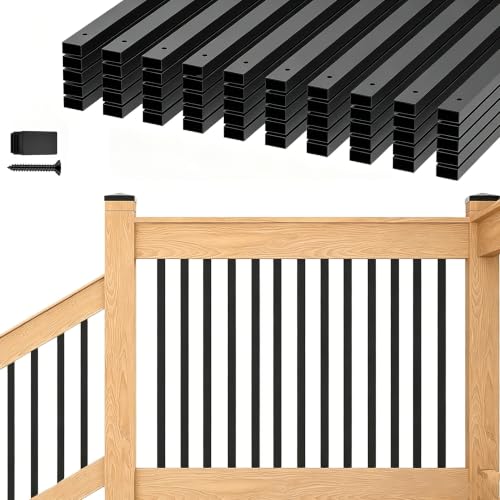
Material and finish: premium stainless steel with black powder-coated finish for long-term weather resistance. Includes all necessary mounting screws and end caps for side-mount installation.
Best for: homeowners prioritizing rust protection and long-term outdoor durability. Why selected: combines ISO9001-inspired quality control with side-mount versatility. Caution: ensure compatibility with your existing handrails and posts before purchase.
HZIU 60 Pack 29.5″ Rectangular Balusters

Contents: 60 rectangular balusters at 29.5″ length with stainless steel construction and black powder coating. Includes all hardware for side-mount installation.
Best for: decks needing taller balusters for safety or higher rail heights. Why selected: flexible fit for slope decks and various railing heights. Caution: verify post spacing and railing height to avoid overhang or gaps.
Buying Guide: Key Purchase Considerations
Material choice matters for outdoor longevity. Aluminum balusters are lightweight, rust-resistant, and easy to install, making them a common choice for DIY projects. Stainless steel balusters offer superior corrosion resistance in harsh climates but can be heavier. Iron or steel balusters provide classic looks and strength but may require more maintenance in humid areas.
- Rail height and spacing: Confirm your deck’s required railing height and baluster spacing (most common is 36″ high with evenly spaced balusters).
- Mounting style: Side-mount and top-mount options affect installation complexity and compatibility with existing posts or handrails.
- Weather exposure: If you face heavy rain, snow, or coastal salt, prioritize rust- and corrosion-resistant finishes.
- Included hardware: Kits with all screws, connectors, and an installation bit expedite setup; verify quantity matches your deck length.
- Installation ease: Look for connector systems that minimize routing or cutting, especially for stairs or angled sections.
- Compatibility: Ensure baluster dimensions (diameter and length) align with your railing frame and post spacing.
Frequently Asked Questions
- What is the standard baluster diameter for most railings? – Common diameters are 3/4″ to 1″ depending on code and aesthetic preferences.
- Do these kits include all necessary installation hardware? – Most listed kits include screws and connectors; check the product page for exact contents.
- Are aluminum balusters better than stainless steel? – Aluminum is lighter and highly resistant to rust with low maintenance; stainless steel offers excellent corrosion resistance but can be heavier and more expensive.
- Can I mix baluster brands on the same railing? – Mixing is possible if sizes (length, diameter) and mounting methods are compatible; consult local code requirements.
- How do I measure for correct baluster spacing? – Measure post spacing and use a calculator or template to maintain even gaps along the railing.
- Is professional installation necessary for steep stairs? – While many DIY kits work for stairs, steeper slopes may benefit from additional planning or assistance.