Answering the common buyer question: which metal roof pitch flashing best seals steep-slope joints and penetrations? The following picks are tailored for pitched metal roofs, focusing on flexible EPDM or silicone flashings that mold to rib lines, fit 35°–65° pitches, and accommodate pipe diameters from 1/4″ up to several inches. These options are ideal for professionals and DIYers seeking durable, weather-tight seals on steep roofs.
| Product | Why It Stands Out |
|---|---|
| Dektite Hi-Pitch #3 Black EPDM | Flexible base, fits 35°–65° pitches, 0–6″ pipes, aluminum collar |
| VIVIDA #3 Metal Roof Pipe Flashing | Square base molds to corrugated rib lines, suitable for 10/12–12/12 pitches |
| Dektite Hi-Pitch #3 Red Silicone | High-temp silicone, 35°–65° pitches, 0–6″ pipes |
| FHA Style Metal Pipe Flashing | Universal 3/12–12/12, heavy-duty 28 gauge galvanized steel |
| Water-Tite 81580 Type B Flashing | Conical design, adjusts 0/12–8/12 to 12/12 pitches |
Buying tips at a glance: look for a flashing with a flexible base that can mold to metal ribs, an appropriate range for your roof pitch, and a pipe size that fits your project. Consider materials (EPDM vs silicone vs galvanized steel) based on temperature exposure and roof environment. The following sections break down each product’s suitability, best-use scenarios, and practical caveats.
Dektite Hi-Pitch #3 Black EPDM High Pitch Flashing

Dektite Hi-Pitch #3 Black EPDM is designed for steep metal roof pitches from 35° to 65°. It accommodates pipes from 0″ to 6″ with a base measuring 11″ x 11″. The EPDM boot with a flexible base and an aluminum collar seals against uneven metal roofing, making it ideal for steep, uneven installations. Best for professional roofers and DIYers tackling high-pitch metal roofs where a flexible, broad-base flashing is needed. A limitation is that the base size is fixed; if your roof contours require a smaller footprint, another option may fit better.
Best for: Steep-pitch metal roofs, larger pipe penetrations, and installations requiring a flexible boot that conforms to irregular metal panels.
VIVIDA #3 Metal Roof Pipe Flashing
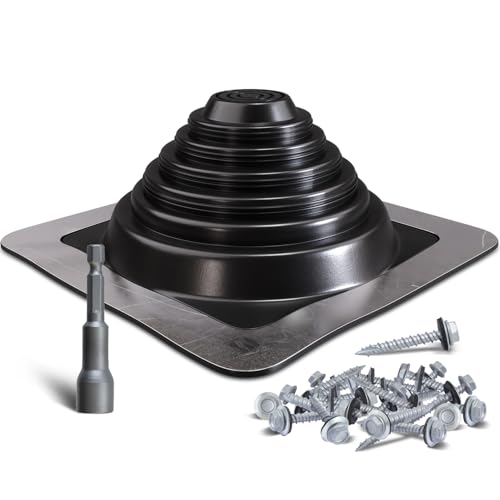
VIVIDA #3 is a silicone pipe flashing with a flexible square base designed for corrugated metal roofs. It fits 1/4″–5″ OD pipes and works well on 10/12 to 12/12 pitch roofs. The square base can be molded to rib lines for a snug seal, and screws are easy to apply. Note: for very deep corrugations (more than 1.5″ of corrugation), you may need the next-size flashing to accommodate the same pipe. Choose this if you have a corrugated metal roof and a mid-to-high pitch. Best for: Corrugated metal roofs with defined rib lines seeking a flexible, moldable base. Caution: ensure the correct pipe size to avoid leaks from an over-tightened connection.
Dektite Hi-Pitch #3 Red Silicone High Pitch Flashing

This Dektite Hi-Pitch #3 Red Silicone model covers pitches from 35° to 65° and fits pipe diameters from 0″ to 6″. Silicone provides continuous service across wide temperature ranges, typically handling extreme heat and cold. Best for: High-temperature exposure areas and steep-pitch roofs where silicone’s temperature tolerance is advantageous. Limitation: silicone flashing can be more expensive than EPDM options and may require careful snugging for irregular roof contours.
FHA Style Metal Pipe Flashing

FHA Style pipe flashing is a universal solution for roof pitches from 3/12 to 12/12 and is designed for single-wall pipes. Made from heavy-duty 28-gauge galvanized steel and manufactured in the USA, it offers multiple size options from 1-1/2″ to 16″. Best for: General metal roof installs needing a sturdy, galvanized flashing with broad pitch compatibility. Limitation: heavier metal flashings may require more precise alignment and sealing in tight spaces.
Water-Tite 81580 Type B Roof Flashing
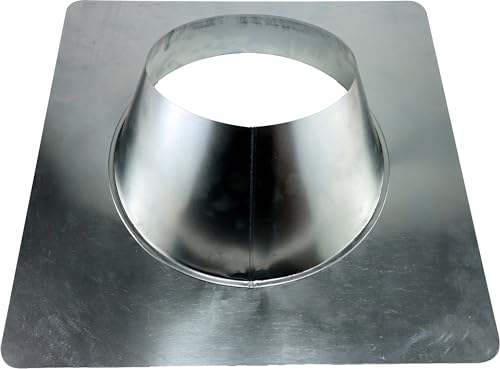
Water-Tite 81580 Type B roof flashing uses 28-gauge G-90 galvanized steel and features a conical shape that adjusts from 0/12 to 8/12 roof pitch, with steep-pitch models covering 8/12 to 12/12. Best for: Applications needing a conical, adjustable base suitable for a wide range of pitches and a straightforward sealing approach. Caution: ensure compatibility with the specific pipe diameter and confirm the seal is properly bedded to prevent leaks on very steep surfaces.
Buying Guide
What to consider when choosing metal roof pitch flashing
- Roof pitch range: Match the flashing’s pitch range to your roof. Steeper roofs benefit from Hi-Pitch or silicone options designed for 35°–65°.
- Pipe diameter: Verify the maximum OD the boot can accommodate and whether it can be trimmed to fit smaller pipes.
- Base design: Flexible square or round bases mold to rib lines; square bases often excel on corrugated panels.
- Material compatibility: EPDM is durable and flexible; silicone resists high temperatures; galvanized steel adds rigidity for certain installations.
- Temperature exposure: For extreme heat or cold, choose materials rated for those conditions; note installation specifics to avoid leakage.
- Installation notes: Some flashings require careful tightening of screws to avoid over-compression and leaks.
FAQs
- What is the best flashing for steep metal roofs?
– Flashings designed for 35°–65° pitches, such as Dektite Hi-Pitch or silicone variants, often perform best on steep slopes. - Can I use a single flashing for different pipe sizes?
– Some models (like all-flash designs) accommodate multiple pipe sizes, but verify the specific size range before use. - Is silicone better than EPDM for rooftop flashing?
– Silicone offers higher temperature tolerance; EPDM is typically more economical and flexible for moderate conditions. - Do I need a square base for corrugated metal roofs?
– Yes, square-based flashings tend to seal better along corrugated rib lines. - How do I avoid leaks on very steep roofs?
– Ensure the base fully conforms to rib contours, use appropriate sealant or gaskets if recommended, and avoid overtightening screws.