The best outdoor natural gas tankless water heater depends on how many fixtures may need hot water at once. The Rheem 7.0 GPM model is suited to larger households, while the Rinnai V53DeN is a more compact, lower-capacity option. Ranein and Westinghouse offer other natural-gas choices; the propane Ranein is included as a fuel-type comparison, not as a natural-gas substitute.
| Product | Fuel | Listed flow rate | Best suited for |
|---|---|---|---|
| Rheem RTG Series | Natural gas | 7.0 GPM | Multiple bathrooms |
| Ranein Natural Gas Outdoor | Natural gas | 8.5 GPM | Higher listed flow needs |
| Rinnai V53DeN | Natural gas | 5.3 GPM | Compact installations |
| Westinghouse Outdoor | Natural gas | 5.1 GPM | Temperature stability features |
| Ranein Propane Outdoor | Propane | 5.3 GPM | Homes configured for propane |
Rheem RTG Series 7.0 GPM

Best for: Larger households that may use several hot-water fixtures at once. This outdoor natural-gas model is listed at 7.0 GPM and 160,000 BTU per hour. Its stated flow rate is 7.0 GPM at a 35°F temperature rise, and the product information describes capacity for two to three simultaneous showers.
The non-condensing design has a listed 0.82 Uniform Energy Factor. Outdoor installation eliminates the need for venting, according to the product details, and the metal cabinet is designed for wall mounting by a qualified installer. It is a strong choice when whole-house demand matters more than choosing the smallest unit.
Consideration: The 7.0 GPM figure is tied to a specific temperature rise; actual output needs may differ with incoming water temperature and household demand.
Ranein Natural Gas 8.5 GPM

Best for: Buyers comparing models with a higher stated flow rate. This Ranein outdoor natural-gas heater is listed at 8.5 GPM and 190,000 BTU, with product information describing use across four to six water points. It also lists an LED control panel, weatherproof construction, and anti-freeze protection.
Choose this model if the listed capacity and outdoor-focused features align with the household’s expected use. The anti-freeze feature may be relevant for buyers who need cold-weather protection, but it should not replace checking the manufacturer’s installation and operating guidance for local conditions.
Consideration: The supplied details do not state the temperature rise associated with its 8.5 GPM figure, so compare the full specifications before estimating simultaneous hot-water capacity.
Rinnai V53DeN Compact Outdoor Heater
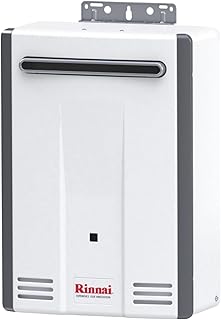
Best for: Buyers seeking a compact natural-gas model with a moderate listed flow rate. The Rinnai V53DeN is rated at 5.3 GPM, and its product information says it can serve up to four appliances. It heats water on demand and is designed for outdoor installation.
This option may suit a household that prioritizes space-saving design over the higher listed flow rates of the Rheem and Ranein natural-gas models. The listing also specifies a 10-year warranty on the heat exchanger. Compare your fixture demand with the unit’s full capacity specifications before selecting it.
Consideration: Its listed 5.3 GPM capacity is lower than the 7.0 and 8.5 GPM models in this comparison, which may matter when several fixtures run together.
Westinghouse 5.1 GPM Natural Gas

Best for: Buyers who value stated temperature stability and anti-freeze features in a mid-capacity unit. This Westinghouse outdoor natural-gas heater is listed at 120,000 BTU and 5.1 GPM, with temperature stability of ±1°F and support for two to four fixtures. The product information also lists a UEF greater than 0.81 and CSA certification.
Choose it if those listed features match your needs and the 5.1 GPM rate is appropriate for your expected concurrent use. It has a lower stated flow rate than the Rheem and the 8.5 GPM Ranein model.
Consideration: Its capacity may be limiting for households that regularly use multiple high-demand fixtures at the same time.
Ranein Propane 5.3 GPM Outdoor Heater

Best for: Buyers whose home or outdoor setup uses propane and who want a compact, listed 5.3 GPM unit. This model is not a natural-gas heater, so it is relevant only as a fuel-type alternative. Its listed features include anti-freeze protection, an LED control panel, and standard 3/4-inch NPT water and gas inlet fittings.
The product information also describes a blower that adjusts to external wind pressure and water temperature, plus dimensions of 23.2 by 14.2 by 5.7 inches. Consider it only after confirming that propane is the required fuel for the installation.
Consideration: Propane and natural gas are different fuel types; do not assume this unit can use a natural-gas supply.
Buying Guide: How To Choose An Outdoor Gas Tankless Heater
Is natural gas the right fuel type?
Check the fuel listed for the exact model before comparing capacity or features. The Ranein 5.3 GPM model above is propane, while the other four products are identified as natural gas. Do not treat the fuel types as interchangeable; verify the appliance and site requirements with the manufacturer and a qualified installer.
How much flow rate do you need?
Estimate which fixtures may run at the same time, then compare that demand with the heater’s flow rate and temperature-rise specifications. A higher GPM number alone does not tell the full story: the Rheem listing, for example, specifies 7.0 GPM at a 35°F rise, while not all supplied product details state a temperature-rise condition.
What installation and climate details matter?
Outdoor placement, mounting, gas supply, water connections, and local installation requirements should be reviewed before purchase. Outdoor models avoid indoor venting requirements as described for the Rheem, but installation still requires attention to the manufacturer’s instructions. Anti-freeze features appear on some listings, but check the product manual for applicable temperature limits and winterization guidance.
Should energy features decide the purchase?
Compare the efficiency information actually provided for each model. Rheem lists a 0.82 UEF and describes on-demand heating; Westinghouse lists a UEF greater than 0.81. Other models emphasize features such as compact size, weatherproofing, or an LED control panel. Use stated specifications rather than assuming every feature applies equally across models.
Frequently Asked Questions
What does an outdoor tankless water heater do?
It heats water on demand and is installed outdoors, rather than storing a tank of heated water. The specific capacity depends on the model and operating conditions.
Is a higher GPM always better?
No. Higher listed flow may support greater demand, but the needed capacity depends on simultaneous fixtures, incoming water temperature, and the heater’s temperature-rise rating.
Can I use a propane heater with natural gas?
Do not assume so. Choose a model specified for the fuel supply at the installation and consult the manufacturer or a qualified installer.
Do outdoor models need venting?
Outdoor installation can eliminate indoor venting requirements, as stated for the Rheem model. Follow the instructions for the exact unit and applicable local requirements.
Does anti-freeze protection remove the need for winter precautions?
Not necessarily. Check the heater’s manual for its operating limits, freeze protection details, and any recommended steps for cold weather or extended shutdowns.