If you frequently need hot water right at the sink, a compact, under-sink heater can save time and energy. This guide compares top over-sink options designed to deliver on-demand warmth without a full-size tank. Each model below fits under most kitchen sinks, bathrooms, or utility areas and supports quick installation in small spaces.
| Product | Brand | Key Benefit | Amazon Link |
|---|---|---|---|
| Rheem 3.5kW 120V Point of Use | Rheem | Compact, space-saving design; 1-degree thermostat increments | Link |
| Tankless Water Heater Electric 3500W | ThermoMate | Self-modulating power; fast on-demand hot water for sinks | Link |
| BOSCH Tronic 3000 T 2.5-Gallon | Bosch | 2.5 gallon mini-tank; high thermal efficiency | Link |
| ThermoMate ES250 | ThermoMate | Under-sink 2.5 gallon; durable glass-lined interior | Link |
| KENUOS Under Sink Instant Hot Water Heater | KENUOS | 2.5 gallon with LED display; 1500W rapid heating | Link |
Below is a concise review of each option to help you choose the best under-sink heater for your needs. Each section highlights installation practicality, energy efficiency, and expected performance in real-world use.
Rheem 3.5kW Point Of Use Heater

The Rheem point-of-use electric water heater is designed for tight spaces while delivering on-demand hot water. It requires a 30-amp double-pole breaker and is intended for hard-wired 120-volt operation. The unit is notably compact, making it suitable for bathrooms, small office breakrooms, wet bars, or garages. Thermostatic controls allow precise, 1-degree adjustments between 80 and 140 degrees Fahrenheit, ensuring consistent hot water when you need it. This model prioritizes space savings without compromising on basic performance, making it a practical choice for single-sink setups.
ThermoMate 3500W Small On-Demand Heater

The ThermoMate 3500W unit provides instant hot water for under-sink fixtures with a 3500W heating core. It’s designed for hard-wired installation and operates at 110–120 volts. Temperature settings range from 86°F to 131°F, and the self-modulating feature adapts power to flow and temperature, potentially cutting energy consumption by up to 50%. A cast aluminum heating element reduces mineral buildup, and the 304 stainless steel water tube contributes to long-term durability in compact spaces. Suitable for kitchen or bathroom sinks that demand quick hot water.
BOSCH Tronic 3000 T 2.5-Gallon
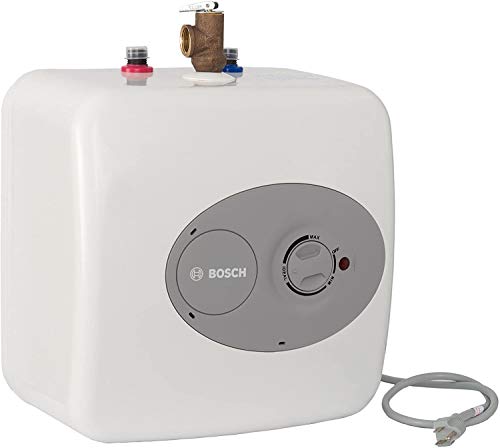
Bosch offers a compact 2.5-gallon mini-tank that fits neatly under most sinks. With 98% thermal efficiency, the Tronic 3000 T is designed for independent installation and quick access to hot water at the point of use. It plugs into a 120-volt outlet with a typical 12-amp draw, making it a straightforward upgrade for single-sink households or apartments. The compact 13.75-inch dimensions help it tuck into tight cabinet spaces, while a glass-lined interior supports durability against mineral buildup and corrosion.
ThermoMate ES250 Under Sink Model

The ThermoMate ES250 is a 2.5-gallon under-sink heater optimized for point-of-use water needs. It offers a 50–149°F adjustable range and a robust 1440W heating element at 120V. The unit includes a thick polyurethane insulation shell and a corrosion-resistant inner tank, prioritized for long-term reliability. A high-quality anode protection and a durable enamel-glass lining help prevent leaks and mineral buildup. This model is ideal where compact size and reliable, on-demand hot water are required for kitchen or bathroom tasks.
KENUOS Under Sink 2.5 Gallon Mini Tank

The KENUOS under-sink heater features a 2.5-gallon capacity and a 1500W heating element for rapid hot water delivery. It includes an LED temperature display for real-time monitoring and a T&P valve for pressure relief, enhancing safety. The 1/2″ NPT fittings and included 3-way valve options simplify installation for multi-sink setups or applications requiring hot water to multiple fixtures. The design emphasizes quick heating, easy setup, and clear temperature visibility in compact spaces.
Buying Guide: Key Considerations For Choosing An Over-Sink Heater
- Water demand: Assess the number of fixtures and typical hot water usage. A 2.5–2.8 gallon capacity works well for single-sink needs, while higher wattage models (e.g., 3500W) can deliver faster hot water at higher flow rates.
- Electrical requirements: Most under-sink heaters require hard-wiring and a dedicated circuit. Check your home’s electrical panel to confirm available amperage (often 15A or 20A for smaller units; 30A for higher-demand models) and ensure the correct breaker type is installed.
- Temperature control: Look for precise thermostats or self-modulating technology that adapts to flow. This helps maintain stable output and energy efficiency, reducing the risk of scalding and wasted energy.
- Installation space: Measure cabinet depth, height, and width. Many units are designed to fit under standard sinks but may vary in dimensions. Consider space for inlet/outlet piping and drainage where applicable.
- Durability and materials: Stainless steel interiors and glass-lined tanks resist mineral buildup and corrosion. Consider models with thick insulation to minimize heat loss and maximize energy savings.
- Safety features: Temperature limits, anti-leakage protections, dry-burn protection, and pressure relief valves are important safety considerations for under-sink installations.
- Maintenance: Access for periodic descaling or inspection reduces the risk of mineral buildup and extends life. Look for units with easy access panels and reliable warranty coverage.
- Cost of ownership: While many compact heaters are affordable upfront, energy-efficiency features like self-modulating power can reduce ongoing electricity costs over time.
- Compatibility with fixtures: If you plan to serve multiple sinks or a bathroom vanity, check whether the model’s outlet flow supports the anticipated hot water demand without excessive pressure drops.
When shopping, compare the product’s wattage, flow rate, and efficiency ratings to your typical usage scenario. For apartments or small homes, a 2–3 gallon unit with self-regulating power often provides a good balance of speed, efficiency, and space savings. For higher-demand kitchens or wet bars, a 3500W-capable model may be worth the additional electrical investment to ensure quick hot water delivery. Always follow local electrical codes and consider professional installation if you are unsure about wiring requirements or venting needs.