The right concrete sealer paint combination stops water intrusion, seals cracks, and preserves appearance in high-moisture areas. This guide highlights five top options well suited for basements, driveways, patios, and other concrete surfaces. Best for homeowners, DIY enthusiasts, and property managers seeking long-lasting protection with practical application. Each pick is evaluated for ease of use, penetration, and surface finish to help you choose confidently.
| Product | Best For | Key Benefit |
|---|---|---|
| Liquid Rubber Foundation Sealant (1 Gal) | Basements & foundations | Permanent flexible waterproof membrane |
| Rain Guard Concrete Sealer (1 Gal) | Outdoor concrete, driveways | Invisible, hydrophobic water protection |
| OAIEGSD 1 Gallon Concrete Sealer | Porous exterior surfaces | Penetrating water-repellent finish |
| KILZ Basement & Masonry Waterproofing Paint (1 Gal) | Basement walls & masonry | Nanotechnology water barrier with alkali resistance |
| Rain Guard Paint Sealer (1 Gal) | Painted concrete & decorative surfaces | VOC-free acrylic sealer with UV protection |
Liquid Rubber Foundation Sealant – 1 Gal
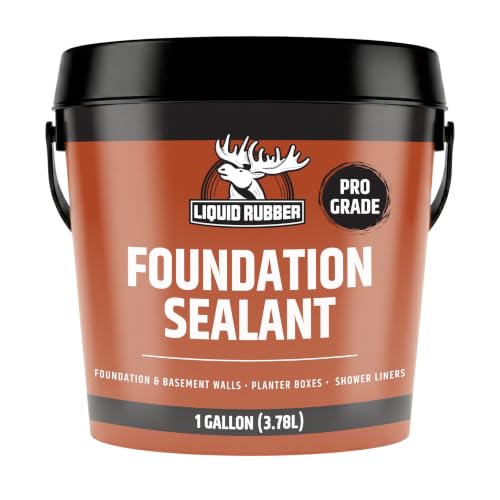
Best for: basements, foundation leaks, and moisture-prone areas where a flexible, long-lasting membrane is needed. This professional-grade sealant forms a durable waterproof membrane with up to 900% elongation, allowing for movement without cracking. It adheres to concrete, masonry, wood, metal, and foundation surfaces, making it suitable for DIY projects and professional repairs alike. The product touts a complete basement waterproofing approach, not just surface protection.
Why selected: It provides superior elasticity and adhesion compared to many traditional sealants. The flexible membrane helps prevent future leaks in fluctuating temperatures and moisture conditions, which is crucial for below-grade spaces.
Caution: For active leaks, surface preparation and proper application are critical; poor surface preparation can reduce performance. Not ideal for floors with heavy traffic unless specified for floor use in your kit.
Rain Guard Concrete Sealer 1 Gallon

Best for: outdoor concrete surfaces that face water, salt, and freeze-thaw cycles. This sealer penetrates unpainted or unsealed concrete to form a hydrophobic barrier that resists water, stains, and efflorescence while maintaining a natural finish. Suitable for driveways, patios, pool decks, and walls where a discreet finish is preferred.
Why selected: The penetrating formula helps reduce long-term damage from moisture and salts, which is common on exterior concrete. It preserves appearance with a natural look and can be used on a variety of substrates.
Caution: It forms an invisible barrier; misapplication on highly textured or previously sealed surfaces may require reapplication for uniform protection. Not a decorative paint; it won’t alter color or shine.
1 Gallon Concrete Sealer, OAIEGSD

Best for: porous exterior surfaces including driveways, bricks, pavers, and stone. This penetrating sealer reduces water and moisture absorption while preserving the concrete’s natural appearance with a clear, non-glossy finish. It works well as a multi-surface masonry sealer for outdoor applications.
Why selected: The product’s versatility across multiple porous materials makes it a practical all-around choice for mixed-material landscapes. It focuses on penetration and moisture reduction rather than surface film formation.
Caution: As a penetrating sealer, it does not add a protective film if your goal is a visible topcoat or gloss. Reapply based on wear and exposure conditions to maintain protection.
KILZ Basement and Masonry Waterproofing Paint (1 Gal)

Best for: basement walls and masonry surfaces needing a combined paint and water barrier. This nanotechnology-based paint forms a water-repellent barrier that withstands water pressure up to 12 PSI, helping to block infiltration on concrete and masonry. Suitable for below-grade applications where a decorative finish is not required on floors.
Why selected: It blends waterproofing with paint quality, offering a protective coating that resists alkali buildup and moisture-heavy environments. This makes it a practical option for users wanting both color and protection in one product.
Caution: Not intended for floors or walls with active leaks; proper surface prep and crack filling remain essential before application for best results.
Rain Guard Paint Sealer 1 Gallon
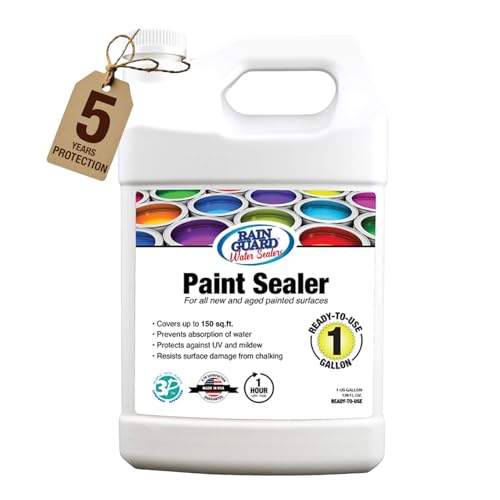
Best for: painted concrete, wood, and stone surfaces requiring a protective topcoat with UV resistance. This silane/siloxane acrylic sealer provides a semi-satin finish and fast-drying properties, making it suitable for both indoor and outdoor use on painted surfaces.
Why selected: The VOC-free formula supports low odor environments and family-friendly use, while offering durable protection against water and sun exposure. It complements painted surfaces without dramatically altering color or texture.
Caution: For heavily trafficked floors, this sealer may require touch-ups over time; verify compatibility with existing paint finishes before application.
Buying Guide
What to consider when choosing a concrete sealer paint:
- Surface type: Exterior concrete vs. basement walls vs. painted surfaces. Some products are better for penetrating bare concrete, while others work well as topcoats on painted surfaces.
- Protection level: Seek products that defend against water intrusion, freeze-thaw cycles, and chemical exposure depending on location and use.
- Finish preference: Natural look, semi-gloss, or a decorative paint finish affects aesthetic results and maintenance.
- Application method: Some products require priming, crack filling, or specific curing conditions; follow manufacturer guidelines for best results.
- Ventilation and safety: Consider VOC content for indoor use and ensure adequate ventilation during application.
- Longevity and reapplication: Penetrating sealers often require periodic reapplication, while surface-applied coatings may have longer intervals between coats depending on wear.
Frequently asked questions
- What is the difference between a penetrating sealer and a surface sealer?
Penetrating sealers absorb into the material to repel water; surface sealers form a film on top of the surface for a protective coat. - Can I apply concrete sealer over painted surfaces?
Yes, many sealers are suitable for painted surfaces, but check compatibility with the existing paint to avoid adhesion issues. - Is a waterproofing paint the same as a concrete sealer?
Waterproofing paints provide a protective coating with color, while sealers primarily prevent water intrusion and moisture without changing appearance. - How often should concrete sealer be reapplied?
Reapplication intervals depend on product type, exposure, and wear; penetrating sealers may require reapplication every few years in harsh conditions. - Can I use these products indoors in basements?
Yes, many are formulated for indoor use with proper ventilation; follow product-specific safety instructions. - Do these products fix active leaks?
Active leaks require professional assessment and proper repair measures before applying sealers or paints.