Choosing a durable, fast-curing floor coating can protect concrete, countertops, and commercial spaces while minimizing downtime. This guide reviews five top polyaspartic/polyurea systems designed for fast cure, UV stability, and chemical resistance. Each option balances ease of application with long-term performance, helping you select a coating that fits residential garages, workshops, and light industrial settings.
Summary of Selected Products:
- MPC-275 Polyaspartic Floor Coating Kit — 2 Gallon Clear Gloss
- Magic Resin Polyaspartic Aliphatic Top Coat — 2 Gallon
- MPC-280 Polyaspartic Floor Coating Kit — 3 Gallon Clear High Gloss
- Master Protective Coatings MPC-290 Clear Coating — Thin, UV-Stable
- Simiron Polyaspartic High Solids Topcoat — 2 Gallon Kit
MPC-275 Polyaspartic Floor Coating Kit

Features: Fast-Curing Clarity delivering a crystal-clear gloss that dries quickly, reducing downtime. The formula is 75% solids, providing a thinner yet durable coat with abrasion, chemical, and UV resistance. Suitable for garage floors, countertops, commercial flooring, and vinyl flakes on various surfaces. This kit emphasizes a balance between ease of application and long-lasting protection.
Magic Resin Polyaspartic Floor Coating System
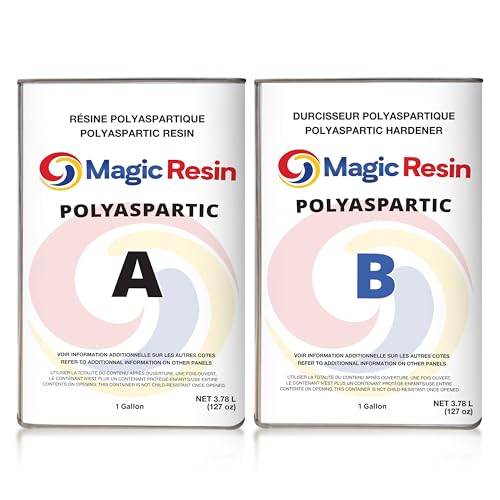
Features: Ultra-durable, chemical and abrasion resistant coating suitable for garages, workshops, and high-traffic areas. A two-component system dries quickly, enabling return to use within 4-6 hours for foot traffic and full cure in about 3 days. Applies smoothly with roller or squeegee, offering a uniform, even finish with minimal effort.
MPC-280 Polyaspartic Floor Coating Kit

Features: Crystal-clear high-gloss finish with UV stability that resists yellowing. Fast-cure technology allows foot traffic in 12–24 hours and full cure within 3 days, making it suitable for weekend installations. Engineered for commercial durability, resisting abrasion, chemicals, dents, and hot tire pickup.
Master Protective Coatings MPC-290 Clear Coating

Features: Solvent-based top coat designed for UV stability and strong gloss retention. This versatile system suits garage floors, countertops, vinyl-flake broadcasts, and decorative applications. It offers a long pot life for easy large-area coverage and good adhesion to multiple substrates, delivering a glossy, protective finish.
Simiron Polyaspartic High Solids Topcoat

Features: High-solids topcoat that delivers a brilliant, protective gloss and superior resistance to UV, abrasion, chemicals, and scratches. Works well over colored coatings or decorative chip systems and offers various cure speeds to suit different project timelines and climate conditions.
Buying Guide: Key Considerations For Polyaspartic/Polyurea Floor Coatings
When evaluating polyaspartic/polyurea floor coatings, consider cure time, surface compatibility, durability, UV resistance, ease of application, and safety. The following perspectives help frame a balanced decision.
- Fast cure vs. working time: Some systems cure rapidly, reducing downtime but potentially requiring quick, precise application. Others offer longer pot life for complex layouts or hot climates.
- Gloss and clarity: If appearance matters, look for UV-stable, crystal-clear finishes that resist yellowing and ambering under lighting.
- Substrate compatibility: Concrete, vinyl, countertops, and wood may demand different topcoats or priming steps. Check substrate adhesion and any recommended prep.
- Abrasion and chemical resistance: For garages and workshops, select products with strong resistance to oils, solvents, impact, and heavy foot or vehicle traffic.
- Application methods: Roll-on, brush, or squeegee methods suit different project sizes and skill levels. Some formulas flow better for a seamless finish with minimal texture.
- UV stability and color retention: UV protection reduces yellowing in sun-exposed spaces, preserving color and gloss over time.
- VOC and safety: Consider volatility, odor, and safety data sheets, especially for indoor projects or spaces with limited ventilation.
- Maintenance and repair: Some systems enable spot repairs without re-coating entire areas, which can save time and cost over the coating’s life.
In choosing among these options, align the product’s cure schedule with your project window, the level of surface traffic, and the expected environmental conditions. For larger or more humid environments, selecting a system with adjustable cure speeds and robust chemical resistance helps ensure consistent results.