Answering the need for reliable rainwater purification, this guide highlights five rain water purifier systems suited for different homes and budgets. The best picks balance filtration depth, ease of installation, and cost of ownership. Ideal buyers include homeowners seeking whole-house filtration, those who want countertop or under-sink solutions, and families prioritizing contaminants removal like heavy metals, chlorine, PFAS, and microplastics.
Product snapshot
| Product | Type | Best For | Why Pick |
|---|---|---|---|
| HQUA WF3-02 | Whole House | Your entire home | Heavy metals and broad contaminant reduction |
| DREO 7‑in‑1 RO | Countertop RO | Small spaces, portable RO | High contaminant removal, compact design |
| Purewell 2.25G | Gravity countertop | Budget-friendly, off-grid | High-level filtration without electricity |
| Brondell Coral UC300 | Under sink | Residential kitchen | Three-stage filtration, easy filter changes |
| iSpring RCC7AK-BN | Under-sink RO | Balanced minerals, kitchen use | Remineralization and clear monitoring |
HQUA WF3-02 3-Stage Whole House Filtration
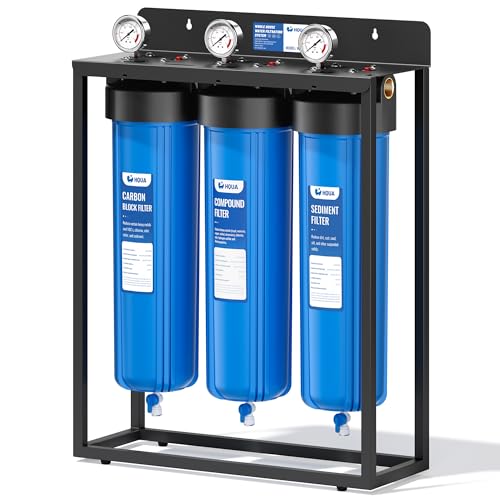
The HQUA WF3-02 is a floor-standing or wall-mounted system designed to filter all incoming water. It reduces heavy metals (lead, mercury, arsenic, cadmium, chromium) and chlorine, plus sediment, odor, and VOCs. Best for homeowners wanting whole-house filtration without multiple under-sink units. It supports flexible installation for stability or space savings. A sediment filter and carbon block filter improve taste by targeting dirt, rust, and suspended solids. Caution: larger unit footprint may not suit compact crawlspaces.
DREO 7-in-1 RO Countertop Filtration

DREO’s RO countertop unit offers 7 filtration stages, delivering 99.9% removal of common contaminants including chlorine, fluoride, and PFAS-related compounds. It’s a compact option ideal for renters or kitchens with limited space. It provides a straightforward, install-free setup and emphasizes portability. Limitation: countertop RO systems may require frequent filter changes and regular maintenance to sustain performance.
Purewell 2.25G Gravity Water Filter

The Purewell gravity system uses a 3-stage process, including a 0.01 μm hollow fiber UF membrane and carbon elements. A water level window lets you monitor tank content without opening the unit. It’s best for households seeking a non-electric, high-purity option with strong filtration and a comparatively high flow rate for gravity systems. Best suited for off-grid use or homes prioritizing simple maintenance. Caution: gravity systems may have slower flow than powered RO units.
Brondell Coral UC300 Under-Sink

The Brondell Coral UC300 uses a three-stage under-sink filtration with a sediment filter, pre-carbon filter, and carbon block filter. It includes a Twist & Seal cartridge change and quick-connect hoses for easy installation. It’s best for kitchens needing reliable, compact filtration with straightforward maintenance. Limitation: under-sink systems require some cabinet space and may need professional help for hard-to-reach plumbing.
iSpring RCC7AK-BN 6-Stage RO System

The iSpring RCC7AK-BN features a top-mounted design for easy installation and a mineral-rich AK stage to remineralize water for balanced pH. It monitors contaminant buildup visually through a transparent stage housing. Best for households wanting enhanced taste and minerals in treated water. Limitations: under-sink RO systems can require regular maintenance and may produce wastewater that needs disposal handling.
APEC Water ROES-50 5-Stage System

The APEC ROES-50 provides 50 GPD with a 5-stage filtration process to remove arsenic, lead, fluoride, and heavy metals. It emphasizes long-lasting filters and user-friendly DIY installation with quick-connect fittings. Best for kitchens needing robust purification with reliable performance. Caution: high-performance RO systems may require more under-sink space and regular maintenance.
Buying Guide: Key Purchase Considerations
- Filtration type: Choose whole-house for comprehensive protection or under-sink/countertop RO for targeted purification.
- Contaminant targets: Prioritize metals, PFAS, chlorine, and microplastics based on local water concerns.
- Installation and space: Consider cabinet, under-sink, countertop, or wall-mounted options to fit your home layout.
- Maintenance and filter life: Compare replacement frequency, cost per filter, and ease of filter changes.
- Water waste and efficiency: RO systems produce wastewater; look for recovery rates or alternative filtration to minimize waste.
- Remineralization and taste: If you want balanced minerals, pick systems with pH+ or mineral stages.
- Monitoring capabilities: Transparent housings or clear indicators help track when to replace filters.
Frequently Asked Questions
- What is the difference between a countertop RO system and an under-sink RO system?
Countertop RO systems are portable and easy to install without plumbing work, while under-sink systems require cabinet space and basic plumbing. - Do all rainwater purifiers remove PFAS?
Many RO and advanced filtration units remove PFAS; check specs for specific models and stage details. - Is remineralization necessary after RO filtration?
Remineralization improves taste and pH balance; it’s common in many 6-stage and 7-stage RO systems. - How often should filters be replaced?
Replacement intervals vary by system and water usage but are often every 6–12 months for residential units. - Can I install these systems myself?
Many models are DIY-friendly with quick-connect fittings, but some under-sink setups may require professional help. - Which system is best for a large household?
Whole-house filtration or high-capacity under-sink RO systems are typically better for high usage and multiple outlets.