Answering the search for reliable reverse osmosis (RO) water dispensers, this guide highlights five top contenders for American households and small offices. Each choice suits a distinct buyer: bottleless office setups, countertop convenience, or family-friendly home use. Read on to compare filtration, temperature options, installation needs, and standout benefits. The table below helps you quickly compare core specs and suitability at a glance.
| Product | Best For | Filtration Style | Install Type | Temperature Options |
|---|---|---|---|---|
| Brio Commercial Grade Bottleless Ultra Safe RO Water Cooler | Small offices, high-usage homes | RO | Point of Use (drain line required) | Hot, Cold, Room |
| DREO 7‑in‑1 RO Countertop | Renters, desks, kitchens with no install | RO with self-cleaning | Install-Free | Cold |
| Avalon Self Cleaning Bottleless RO Cooler | Families, homes upgrading water | RO 4-stage filtration | Under-sink/point-of-use | Hot, Cold |
| PHILIPS Countertop RO Water Filter | Families, multi-user households | RO with mineralization | Plug-and-serve | Room temperature |
| Bluevua RO100ROPOT Countertop RO | Countertop enthusiasts, minimal install | 6-stage RO + UV | Plug-in | Room temperature |
Brio Commercial Grade Bottleless Ultra Safe RO Dispenser

The Brio RO water cooler provides a three-temperature dispenser: hot, cold, and room temperature. It uses reverse osmosis filtration to deliver purified water from a tap source and is UL approved for safe, continuous operation in semi-commercial settings. Best for small offices or high-usage homes where a steady stream of filtered water is needed without frequent refills.
Who it’s best for: buyers needing continuous hot and cold water, with a focus on purity and reliability. Why selected: the three-temperature capability and pull-through RO filtration make it a strong all-day hydration option for shared spaces.
Limitations: a drain line connection is required due to RO wastewater, which may affect placement options in some kitchens or break rooms.
DREO 7‑in‑1 RO Countertop Water Filter
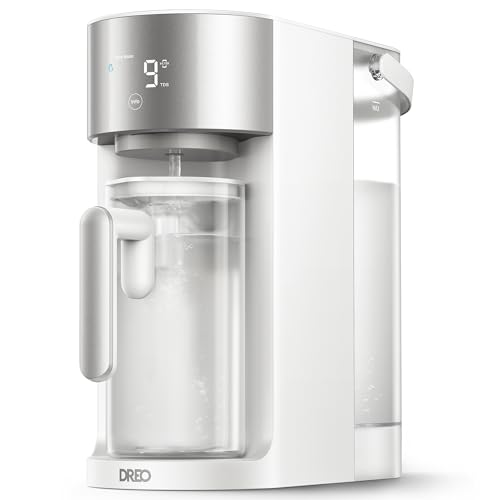
The DREO countertop RO system combines 7 filtration stages with real-time TDS readings and a self-cleaning cycle. It includes an autofill feature for hands-free refilling and a simple, install-free setup, making it ideal for kitchens, dorms, or office break rooms that want ongoing purification without complex plumbing.
Who it’s best for: renters or anyone who prefers plug-and-play RO without installation. Why selected: real-time TDS feedback and auto-cleaning support low-maintenance operation. Caution: ensure the countertop surface can support the unit and your water intake needs.
Avalon Self Cleaning Bottleless RO Water Cooler
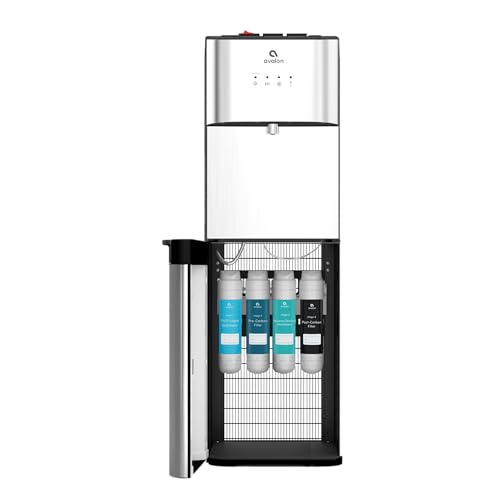
Avalon’s bottleless RO cooler features a four-stage RO filtration system with a dedicated under-sink installation kit. The filtration sequence includes sediment, carbon, RO membrane, and post-carbon steps to balance mineral content and improve taste. It’s suited for homes that want an integrated RO solution without relying on bottled water shipments.
Who it’s best for: households seeking a bottleless system with a defined installation kit and a focus on taste. Why selected: the 4-stage setup with an included installation kit provides a clear path to purer water at home. Caution: proper drain setup is required as with other RO systems.
Bluevua RO100ROPOT Countertop RO System
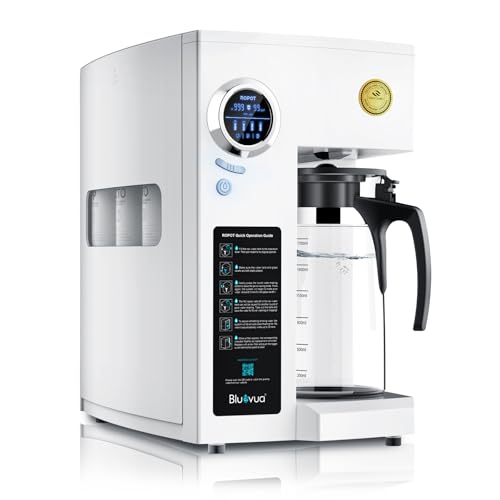
The Bluevua RO100ROPOT countertop unit features a six-stage filtration system plus UV light and a remineralization stage. It is designed for easy setup, with a premium glass carafe rather than plastic, which can appeal to households seeking a stylish, low-waste filtration option. Best for counter space where a self-contained system is preferred.
Who it’s best for: users wanting UV-assisted filtration and a glass carafe for an upscale countertop look. Why selected: UV filtration adds an extra layer of protection, and the 2:1 pure-to-drain ratio helps reduce wastewater. Caution: countertop placement should ensure stable power access and drainage considerations.
Buying Guide: How to Choose the Right RO Water Dispenser
- Filtration depth and stages: Compare systems with 4–7 stages. More stages often mean better taste and mineral balance, especially when a remineralization stage is included.
- Bottleless versus countertop: Bottleless systems typically require under-sink installation or direct-line access, while countertop units offer plug-and-go convenience for renters or limited spaces.
- Waste water considerations: RO processes generate wastewater. Look for systems with efficient pure-to-drain ratios or built-in drain options compatible with your plumbing.
- Temperature options: Decide if you need hot water, cold water, or room-temperature water. Three-temperature models are convenient for tea, coffee, and beverages.
- Maintenance and monitoring: Real-time TDS displays and auto-clean features can simplify maintenance. Consider filter life indicators and ease of filter replacement.
- Installation footprint: Check dimensions and countertop space. Under-sink installations clear space for a clean kitchen setup, while countertop units require enough surface area.
Frequently Asked Questions
- Do reverse osmosis water dispensers require professional installation? Some do, particularly bottleless units; others are install-free and plug-and-play. Verify if your model needs a drain line or under-sink connections.
- Is RO water healthier? RO filtration removes many contaminants, improving taste and odor. Some models add remineralization to restore minerals for balance.
- What maintenance is needed? Replace filters per the manufacturer’s schedule, monitor real-time TDS if available, and use auto-cleaning features if provided.
- Can I use RO water dispensers in apartments? Yes, many countertop units are designed for apartments since they don’t require permanent plumbing changes.
- Will RO systems waste water? Yes, but many models optimize the ratio of purified water to wastewater, reducing overall waste.
- What should I consider for safe placement? Ensure proximity to a power source, a stable drainage path if required, and adequate space for loading and maintenance.