Winter weather brings ice dams and roof leaks, but electric roof ice melt systems offer reliable protection. This guide highlights top-rated, American-made, and UL-listed options that melt ice efficiently, are installer-friendly, and designed for durability in harsh conditions. Explore five carefully selected products, each with key features to help you choose the right solution for your roof and gutters.
| Product | Brand | Key Benefit | Delivery |
|---|---|---|---|
| RHS Snow and Ice Melting System, Roof and Valley Heater | RHS Valley Heater | Melts up to 2″ per hour; DIY friendly | UL listed components; American Made |
| RHS Snow Melting System, Roof and Valley Heater, Mats | RHS Valley Heater | 2″ per hour; rugged mat design | Factory direct; easy installation |
| H&G Lifestyles 24FT Gutter Guard Heaters | H&G Lifestyles | 24 ft continuous de-icing system | High power; aluminum panels |
| WarmlyYours Roof Snow De-Icing Heat Cable 80 ft | WarmlyYours | 5 W/ft; DIY friendly | Comprehensive kit with clips |
| WarmlyYours Roof Snow De-Icing Heat Cable 100 ft | WarmlyYours | 5 W/ft; longer reach | Same easy install |
This article presents five options to tackle ice dams, minimize water damage, and keep your roof and gutters clear. Each entry includes a quick overview, installation notes, and a look at how the product performs in typical winter scenarios.
RHS Snow and Ice Melting System for Roof and Valley

Experience powerful snow melting with a system designed to prevent ice dams and water intrusion. This setup claims up to 2 inches of snow melted per hour, using 50 watts per foot. Built with UL listed components and American-made manufacturing, it emphasizes durability in winter weather. DIY installation is supported, with roofing grommet screws included for a secure, ladder-safe setup. This option is suitable for roof valleys and low-slope applications where ice dam formation is common.
RHS Roof and Valley Heater Mat System
This kit uses a heavy-duty mat configuration to prevent ice dams and roof leaks. It also melts up to 2 inches of snow per hour, delivering 50 watts per foot of warming power. Manufactured with UL-listed components and American quality, the system emphasizes straightforward DIY installation, including necessary grommet screws for a water-tight, quick setup. The mat approach allows broader coverage along roof valleys and eaves where ice tends to accumulate.
H&G Lifestyles 24FT Gutter Guard Heaters
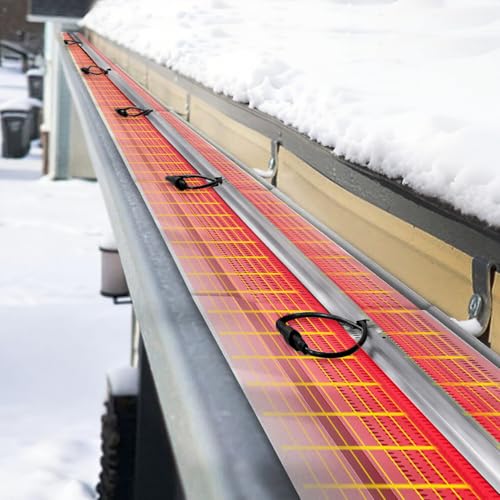
This gutter heating system includes 12 aluminum heat panels with built-in cables, delivering about 200 watts of power to quickly melt ice in gutters and along the roof line. The aluminum design promotes fast heat conduction and durability, allowing a 24-ft continuous installation. Screws secure the panels to gutter guards for a tool-light setup, enabling safer DIY installation without heavy equipment or specialized expertise.
WarmlyYours Roof Snow De-Icing Heat Cable 80 ft

This heat cable kit provides a DIY-friendly solution with 5 watts per foot, suitable for metal or plastic gutters and inclined roofs. It includes clips and spacers to fit various roof layouts, and it plugs into a standard outlet. The 80-foot length suits mid-sized homes, offering consistent heat to prevent ice dam formation and snow buildup along the eaves and gutters.
WarmlyYours Roof Snow De-Icing Heat Cable 100 ft

This extended-length heat cable option shares the same 5 W/ft performance, designed for longer roof spans and gutters. It remains a DIY-friendly solution with included clips and spacers for flexible installation. It supports comprehensive coverage to reduce ice dam risk across larger eave areas and multiple gutter runs, aligning with standard building codes for winter protection.
Buying Guide
- System type: Choose between mats, heat cables, or integrated gutter heaters based on roof layout, eave length, and preferred installation approach.
- Power and coverage: Look for wattage per foot and total run length to ensure adequate heat for typical snowfall in your area. Higher power generally yields faster melting but may increase energy use.
- Installation: Prioritize DIY-friendly kits with clear mounting hardware, weatherproof components, and gutter-compatible mounting options to minimize ladder time and safety risks.
- Durability and compliance: Favor UL-listed components and American-made manufacturing for reliability and long-term performance in harsh climates.
- Maintenance and expansion: Consider whether you may need to extend coverage later. Some systems offer modular sizing (e.g., 8′, 10′, 15′, up to 50′ or more) to fit irregular roof profiles.
- Safety: Ensure proper electrical protection, GFCI-rated outlets where required, and weatherproof connectors to prevent shorts and corrosion in wet conditions.
- Aesthetics and integration: For visible roof areas, evaluate whether the system blends with roofing materials or appears unobtrusive once installed.