Answer: This guide highlights top-rated RV roof coatings and sealants that help prevent leaks, block heat, and extend roof life. The best picks suit different needs: heavy-duty protection for large trailers, budget-friendly options for campers, and high-performance silicone coatings for long-term durability. Whether you own a motorhome, travel trailer, or pop-up camper, these products provide waterproof membranes, UV resistance, and compatibility with common roof substrates. The table below compares key options to help you choose quickly.
| Product | Best For | Surface Compatibility | Coating Type |
|---|---|---|---|
| Liquid Rubber RV Roof Sealant – 5 Gallon | Large travel trailers, frequent travelers | EPDM, TPO, Fiberglass, Aluminum | Elastomeric waterproof membrane |
| Liquid Rubber RV Roof Sealant – 1 Gallon | Smaller RVs, repair on a budget | EPDM, TPO, Fiberglass, Aluminum | Elastomeric waterproof membrane |
| 100% Silicone Roof Coating – Countryman | Long-term durability, extreme climates | Metal, EPDM, Fiberglass, SPF, and more | 100% silicone coating |
| Kohree RV Roof Coating 1 Gallon | Easy application, UV protection | EPDM, TPO, Metal, Wood, Fiberglass | 100% silicone coating |
| Gardner-Gibson Sta-Kool 15-Year Turbo-Dri | Fast-drying, “rain-safe” protection | Various roof types; designed for RVs | Elastomeric acrylic coating |
Liquid Rubber RV Roof Sealant – 5 Gallon

Best for large trailers and frequent travelers needing a robust, flexible membrane. This 5-gallon kit provides a durable elastomeric sealant that remains flexible across temperatures, protecting against leaks and water intrusion. It is designed to pair with Liquid Rubber EPDM Primer for EPDM/TPO surfaces, enhancing adhesion and coverage. Caution: large bulk may require a thorough surface prep and multiple coats for optimal performance on complex roof areas.
Liquid Rubber RV Roof Sealant – 1 Gallon

Best for smaller RVs, quick repairs, or topping off an existing sealant system. This 1-gallon option delivers the same flexible, heat-reflective coating and a complete roof-sealing system with compatibility across popular RV roof substrates. It provides durable leak-proof coverage and helps reduce interior heat. Limitation: larger or heavily damaged roofs may require additional coats or supplementary sealants for full protection.
RV Roof Sealant RV Roof Coating – SENVEN

Better for year-round protection with a durable waterproof membrane and heat-reflective properties. SENVEN’s coating is designed to work across EPDM, TPO, fiberglass, and aluminum roofs, delivering long-lasting leak resistance and interior temperature control. Caution: verify surface compatibility if you use it on older silicone coatings, as adhesion may vary with preexisting surfaces.
100% Silicone Roof Coating – Countryman

Best for long-term durability and extreme climates, this 100% silicone coating resists ponding water and UV exposure. It bonds to metal, EPDM, fiberglass, SPF, and more, often without primer in many applications. Caution: silicone coatings can be tricky to apply in very humid conditions or temperatures outside recommended ranges, and surface prep remains essential for best results.
Kohree RV Roof Coating 1 Gallon
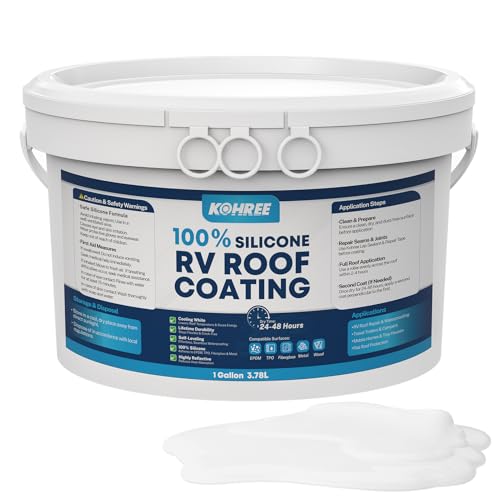
Choose this for easy application and reliable heat reflection. The 100% silicone formula delivers elasticity, UV resistance, and waterproof sealing across EPDM, TPO, metal, wood, and fiberglass. It’s user-friendly for DIY repairs and typically requires 1–3 coats. Limitation: coverage estimates vary by roof shape, and more coats may be needed on larger surfaces.
CUKWUYBY RV Roof Sealant Kit

This all-in-one kit is designed for convenience and quick restoration. It includes a gallon of white waterproof coating, self-leveling sealant tubes, and RV tape, offering a complete solution without extra shopping. Best for DIY projects that need both sealant and repair materials in one package. Caution: kit contents may not suit very large roofs without additional product or multiple kits.
Gardner-Gibson Sta-Kool 15-Year Turbo-Dri
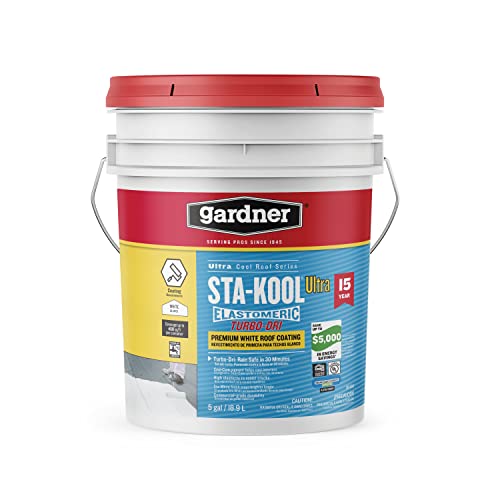
Best for fast turnaround on RV roofs needing dependable protection. Sta-Kool Turbo-Dri uses cool-core technology to reflect heat and is marketed as rain-safe within 30 minutes, with recoating possible in about three hours. This makes it ideal for projects with tight schedules. Limitation: it’s an elastomeric acrylic, which may perform differently under extreme weather compared with silicone-based options.
Buying Guide
What should you consider when choosing an RV roof coating?
- Roof type compatibility: Confirm EPDM, TPO, fiberglass, metal, or wood suitability for your roof.
- Longevity vs. ease of application: Silicone coatings typically offer longer-term durability; acrylic and elastomeric coatings may cure faster and be easier for beginners.
- Heat reflectivity: If you park in hot climates, prioritize reflective finishes to reduce interior temperatures and cooling costs.
- Primer requirements: Some coatings require a primer for best adhesion; others claim no primer needed for most applications.
- Weather and climate: Consider cure times, rain-safe properties, and performance in your seasonal conditions.
- Coverage and coats: Check square-foot coverage per gallon and typical coats needed for complete protection.
FAQs
- Q: Do I need to remove old coating before applying a new one?
A: Surface preparation is typically required to ensure adhesion; follow the product’s prep instructions. - Q: Which coating lasts the longest on RV roofs?
A: 100% silicone coatings and high-quality silicone sealants often provide extended durability, especially in UV-heavy climates. - Q: Can I apply on a roof with existing leaks?
A: Address active leaks first; sealant coatings should follow a dry, clean surface for proper sealing. - Q: Is primer always necessary?
A: Not always; some formulations are designed to bond without primer, but surface type may influence this requirement. - Q: How many coats are usually required?
A: Most projects require 1–3 coats, depending on product type, substrate, and climate. - Q: Are these products safe for pets and plants?
A: Follow label directions and ensure adequate ventilation during application and curing; avoid runoff near vegetation.