Looking for a secure document storage box that protects papers from fire and water? This guide highlights five top options. Each entry explains who it’s best for, why it’s a good pick, and any practical limitation. Ideal buyers include homeowners seeking home emergency protection, travelers needing portable solutions, and small offices organizing sensitive documents.
| Product | Best For |
|---|---|
| ENGPOW Fireproof File Organizer Bag | Affordability with high-capacity storage and lock security for everyday use |
| SentrySafe Black Fireproof and Waterproof Safe (HD4100) | Home or office document protection with staple file storage and key lock |
| DocSafe Fireproof File Organizer with Lock | Hard-shell, portable solution for travel and home custody of valuables |
| IPYIPY Fireproof Document Organizer | Lightweight, 13-pocket organization with water and fire resistance |
| ENGPOW 5200°F Fireproof Document Box with Lock | Heavy-duty protection for large, valuable document sets and media |
ENGPOW Fireproof File Organizer Bag with 13 Pockets Accordion File Folder

Best for: Home offices or small workplaces needing a compact, all-in-one filing solution with built-in security. This bag combines 13 accordion pockets, passport mesh bags, card slots, USB pockets, and a combination lock for safety. It supports large-capacity storage in a portable format.
Why selected: It offers a multi-layer design with fireproof and water-resistant materials, UL94 flame retardant testing, and a password lock. The bag’s partitioned layout helps keep documents, money, passports, and media organized and accessible during emergencies or travel.
Caution: The product is a bag rather than a rigid box, so it may collapse if overloaded or stored on an unstable surface. Ensure lock operation is understood from the manual for reliable use.
SentrySafe Black Fireproof and Waterproof Safe, File Folder and Document Box with Key Lock
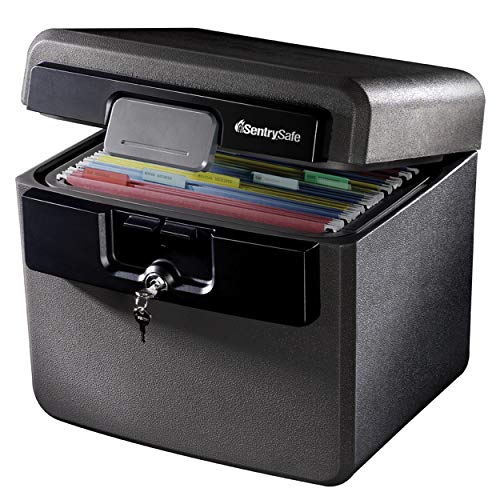
Best for: A sturdy home or office solution for organizing essential papers with a simple key-lock mechanism. Ideal for long-term storage of legal documents, passports, and insurance records in a compact, secure unit.
Why selected: UL fire-test classification and ETL water-exposure verification provide trusted protection for critical paperwork. Its file-folder compatibility helps keep documents orderly and accessible in emergencies.
Caution: This option emphasizes document protection and storage space rather than expanded portability; consider a lighter-weight alternative if you need frequent mobility.
DocSafe Fireproof File Organizer with Lock, Hard-Shell Case
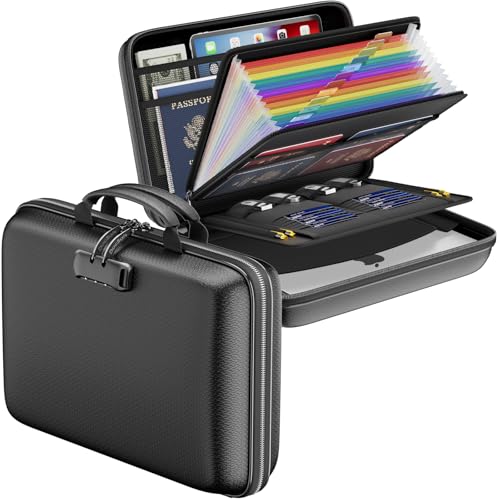
Best for: Travelers or office workers needing a rugged, portable hard-shell organizer capable of withstanding harsh conditions while keeping documents secure.
Why selected: The hard-shell design provides durability and dust resistance, with a multi-pocket layout including labels, zipper pockets, and passport holders. It combines fireproof and water-resistant properties with a robust locking mechanism.
Caution: The hard-shell construction adds weight; ensure comfortable handling if you carry it for extended periods.
IPYIPY Fireproof Document Organizer with Lock
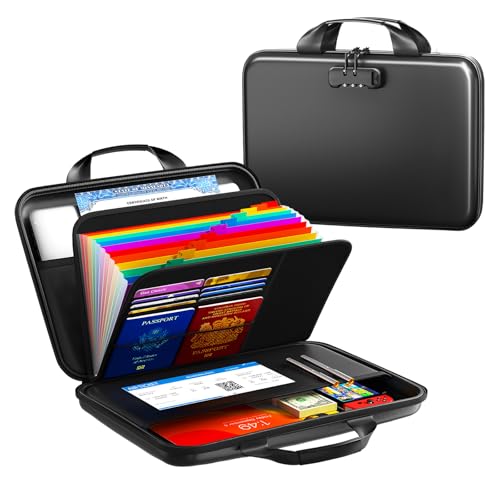
Best for: Individuals who need reliable fireproof and water-resistant protection with straightforward 13-pocket organization in a semi-rigid shell for travel and daily use.
Why selected: It uses an oil-based silicone coating and flame-retardant material, meeting recognized flame-retardant standards. The semi-rigid EVA shell protects contents while remaining portable.
Caution: While protected, it may not store large legal-size files as comfortably as larger hard-shell boxes; verify file dimensions before purchase.
ENGPOW 5200°F Fireproof Document Box with Lock

Best for: Users needing maximum fire resistance and a large-capacity, hard-cased storage solution for heavy document loads, media, and valuables.
Why selected: Upgraded fireproof materials withstand temperatures up to 5200°F with thickened silicone-coated fabric and aluminum foil lining. The box includes multiple mesh pockets and a durable lock system for enhanced security.
Caution: The large size and weight may reduce portability; use when you have a stable storage site or a dedicated space to avoid strain when moving.
Buying Guide
What to consider when choosing a secure document storage box:
- Protection rating: Look for fire resistance (UL or similar standards) and water resistance. Higher peaks for high-risk environments provide stronger protection.
- Capacity and layout: Consider the number of pockets, slots, and whether you need a hard-shell case or a soft fabric bag to fit letter or legal sizes.
- Portability vs. permanence: Do you need a portable organizer for travel or a stationary safe for home/office use? Shell material and weight influence this decision.
- Security features: Evaluate lock type (key vs. combination) and ease of access vs. protection balance. A quick-access option can be helpful in emergencies, but may be less secure.
- Durability and dust control: Hard-shell designs resist impacts and dust; soft fabrics may be lighter but could be less durable over time.
Frequently Asked Questions
- What is the difference between fireproof and fire-resistant storage boxes? Fireproof boxes resist ignition and protect contents, while fire-resistant boxes slow heat transfer and protect contents temporarily during a fire.
- Are these boxes suitable for documents beyond standard letter and legal sizes? Some models are designed for large capacities; always check the inner dimensions to ensure compatibility with your file sizes.
- Do these boxes protect electronics or digital media? Some boxes include pockets for USB drives and CDs; however, prioritize moisture protection and shock resistance for electronics.
- Is a lock always necessary for document storage? Locks add security against casual access; for high-risk documents, combine a secure box with a home security plan.
- Can these boxes be used for travel? Portable designs exist, but confirm weight, dimensions, and carry comfort for travel use.
- How should I maintain these storage boxes? Keep lids closed when not in use, avoid prolonged exposure to extreme temperatures, and periodically verify seals and integrity of zippers and locks.