Answering common buyer questions, a smart water filtration system can deliver safer, better-tasting water with real-time monitoring. This guide highlights five top options that suit different households—whether you want compact under-sink filtration, whole-home coverage, or a tankless design for space-saving setups. The listed products are selected for meaningful features, reliability, and clear benefits. Below you’ll find a quick summary table, detailed product sections, and practical buying tips to choose the right system for your needs.
Summary of chosen products:
- Waterdrop G3P600: Tankless RO with smart faucet and TDS monitoring; ideal for compact kitchens and quick updates for small to mid-sized households.
- iSpring RCC7AK-BN: 6-stage under-sink RO with mineral boost; best for those who want alkalized water and easy installation.
- Waterdrop G3P800: Higher capacity tankless RO; great for larger families needing faster filtration with minimal wastewater.
- Waterdrop G5P700A: Alkaline remineralization on a compact tankless system; for households prioritizing minerals and space efficiency.
- iSpring WF150K: Whole-house filtration with a smart valve; best for comprehensive home protection and appliance longevity.
Waterdrop G3P600 Tankless RO Water Filter

The Waterdrop G3P600 is a tankless reverse osmosis system designed to reduce contaminants while validating certifications for safety and water quality. It features a smart faucet with a TDS monitor and a filter-life tracker, enabling proactive maintenance. This model appeals to buyers who want a compact, on-demand filtration solution with real-time feedback on water quality and filtration status.
Best for: Small to mid-sized households that want real-time water feedback and a space-saving RO option. Better for those who value a smart display and proactive maintenance alerts. Caution: As a tankless system, installation may require careful plumbing adjustments in tight under-sink spaces.
iSpring RCC7AK-BN NSF Certified 75 GPD RO

This 6-stage RO system adds a Mineral AK stage to restore minerals while balancing pH, potentially improving taste. It also offers a top-mounted faucet design for easy above-sink installation and a transparent first-stage housing to monitor contaminant buildup. It suits buyers who want mineral-rich output with straightforward installation and visible filter condition checks.
Best for: Homeowners seeking mineral remineralization and a simple, above-sink setup. Choose this if you prefer visible filter status and an easy countertop installation. Caution: The system uses a more complex 6-stage filtration, which may require periodic maintenance to maintain optimal pH balance.
Waterdrop G3P800 Tankless RO Water Filter
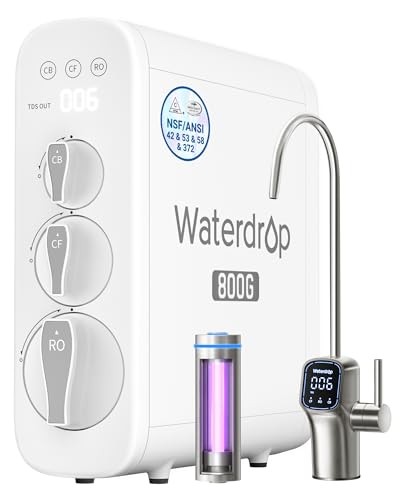
The Waterdrop G3P800 delivers an 800 GPD capacity with tankless design and 10-stage filtration. It targets larger families with higher daily water demand and features an efficient 3:1 pure-to-drain ratio. This model is best when you need rapid filtration without a large tank and want strong PFAS and heavy metal reduction with a compact footprint.
Best for: Large households or high-demand scenarios needing rapid filtration. Better for those who want high capacity without a bulky tank. Limitation: Higher flow may require more precise water pressure management in some homes.
Waterdrop G5P700A Alkaline Mineral RO Water Filter

This 8-stage system combines a 0.0001 μm RO membrane with alkaline mineralization, enriching water with essential minerals like calcium, magnesium, sodium, and potassium. Its compact tankless design frees up under-sink space, making it a strong choice for modern kitchens that prioritize mineral-rich water and space efficiency.
Best for: Households focusing on mineral-enhanced water and space-saving design. Choose this if you want mineralization to improve taste and pH. Limitation: This model emphasizes minerals; those seeking ultra-low TDS may want to review precise reduction targets.
iSpring WF150K Whole House Central Water Filtration
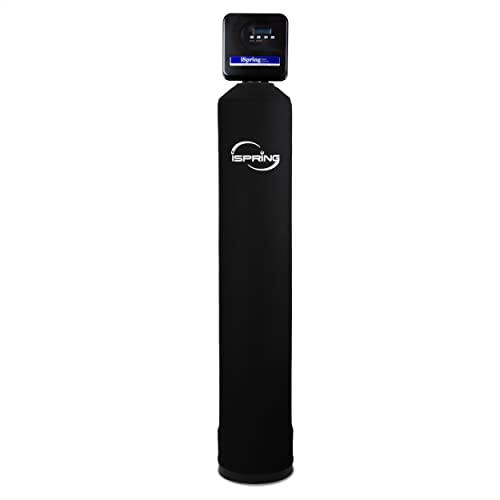
The WF150K is a whole-house filtration solution designed to remove chlorine, lead, heavy metals, pesticides, herbicides, VOCs, and more at the main water entry. It includes a smart control valve for backflushing and regeneration, with a long anticipated life span for homes with multiple bathrooms. It’s well-suited for comprehensive home protection and appliance longevity.
Best for: Homes seeking comprehensive filtration across every faucet and appliance. Choose this if you want a central system to protect plumbing and reduce contaminants throughout the house. Caution: Whole-house systems require more upfront space and plumbing coordination than under-sink models.
Waterdrop TSU-WB 0.01μm Ultra-Filtration Under Sink

This under-sink unit uses a 0.01 μm ultrafiltration membrane and does not reduce TDS. It’s designed for municipal cold water and delivers 30+ substance reduction with no wastewater and no power usage. It’s compact and maintenance-friendly, making it ideal for apartments or spaces with limited plumbing capacity.
Best for: Renters or small homes needing a quick, no-waste under-sink upgrade. Avoid this if you require TDS reduction or hot-water filtration.
Buying Guide: Key Considerations For Your Smart Filtration System
- Water source and TDS targets: Decide if you need TDS reduction, dechlorination, or mineralization based on your tap water profile.
- System type: Tankless under-sink, traditional tank-based, or whole-house filtration. Tankless saves space; whole-house protects all fixtures; tank-based often offers simple maintenance.
- Capacity and flow: Larger households may require higher GPD (gallons per day) and lower wastewater ratios. Consider your daily consumption and refill habits.
- Smart features: Look for TDS monitors, filter-life indicators, and automatic reminders to simplify maintenance.
- Installation and space: Measure under-sink clearance and plan for faucet compatibility. Some models require professional installation.
- Certifications: NSF/ANSI standards verify safety and performance. IAPMO and SGS certifications add confidence for reduction claims.
- Maintenance cost: Account for filter replacement frequency and costs over time. Mineralization stages may adjust filter cycles.
Frequently Asked Questions
- What is the main difference between tankless and traditional RO systems? Tankless systems filter on demand without a storage tank, saving space and reducing standby water, while traditional systems store filtered water in a tank for immediate dispensing.
- Do I need TDS reduction for drinking water? TDS reduction improves taste and mineral control in many cases, but not all contaminants are addressed by TDS alone. Check targeted contaminants in your water report.
- Is alkaline remineralization important? Alkaline remineralization adds minerals and can balance pH, potentially improving taste. Some users prefer neutral or slightly alkaline water for health reasons.
- Can a whole-house system affect water pressure? Some whole-house filters can impact pressure slightly. Choose a model rated for home water pressure and ensure proper sizing for your fixtures.
- How often should I replace filters? Replacement schedules vary by model and usage. Smart monitors help track remaining life; follow manufacturer guidelines for optimal performance.
- Are these systems safe for well water? Some systems are designed for municipal water; wells may require additional pre-treatment or specific filters to address iron, hardness, or arsenic.