Looking for a solar roof vent with a thermostat to keep attics cooler without skyrocketing energy bills? The best options below blend solar power with automatic temperature control to target hot, humid spaces. These models suit homeowners who want steady attic ventilation, minimal wiring, and flexible day/night operation. The top picks are best for medium to large attics, workshops, sheds, or garages where consistent airflow matters. This guide highlights five strong choices, each with clear strengths and trade-offs, plus practical buying considerations to help you compare quickly.
| Product | Best For | Key Benefit | Approx. Airflow |
|---|---|---|---|
| Hon&Guan 40W Solar Attic Fan with Thermostat | Large attics up to 2500 sq ft | Adjustable wind speed with dual power auto-switch | 2000 CFM |
| iLiving HYBRID Ready Smart Thermostat Solar Roof Attic Exhaust Fan | Smart control lovers; mid-to-large spaces | Smart thermostat control; weatherproof motor | 1150 CFM |
| VEVOR 42W Solar Attic Fan | All-weather, remote control fans | Intelligent temp/humidity control | Up to 2800 CFM |
| VEVOR 35W Solar Attic Fan | Metal/masonry roofs; budget-conscious | Auto temp control with high airflow | 2400 CFM |
| Hon&Guan 40W Solar Attic Fan with AC Adapter | Day/night operation; mixed power sources | MPPT controller; two modes | 2000 CFM |
Note: Airflow values are approximate and depend on installation, roof angle, and sun exposure. This table is for quick comparison and planning only.
Hon&Guan 40W Solar Attic Fan With Thermostat
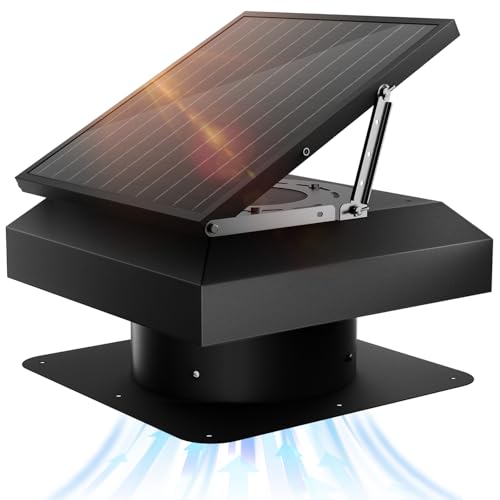
Best for large attics up to 2500 sq ft. This 40W solar attic exhaust fan delivers up to 2000 CFM with dual power auto-switch for continuous operation. It includes an adjustable solar panel (0–70°) for optimal exposure and a thermostat option (68–113°F) to auto-start the fan. It is suited for spaces where solar power plus a reliable day/night option matters, such as regions with long sunny periods and occasional overcast days.
Who this is for: homeowners needing strong airflow across big attic spaces and who want flexible power sources. Limitation: no built-in battery backup; continuous operation relies on sunlight or adapter power.
iLiving Hybrid Ready Smart Thermostat Solar Roof Attic Exhaust Fan
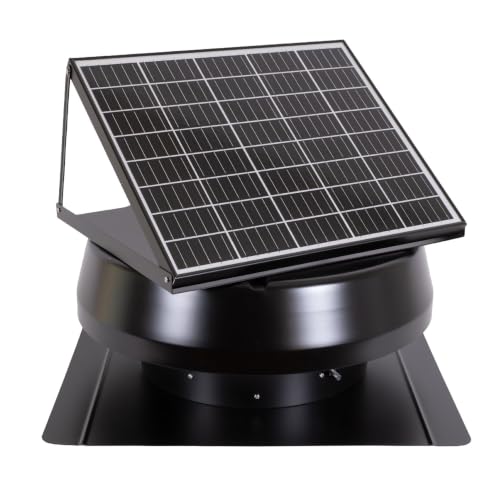
Best for tech-forward homes that want precise climate control. This 14″ fan operates with a 40W solar panel and integrated smart thermostat control (50°F–122°F). It has an IP68 motor and a long warranty, with adjustable panel tilt for sun optimization and capacity up to 2900 sq ft cooling. It provides reliable daytime control and can work alongside traditional cooling systems to reduce energy use.
Who this is for: buyers seeking smart, reliable daytime control and broader coverage. Limitation: primarily power-efficient during daylight; night operation may rely on the auxiliary power source.
VEVOR 42W Solar Attic Fan

Best for users who want robust cooling and remote operation. This 42W unit uses an MPPT regulator to maximize sunlight and delivers up to 2800 CFM. It includes smart temperature and humidity control for year-round comfort, and can switch to AC power after sunset, enabling 24/7 cooling with a remote control for convenient adjustments from a distance.
Who this is for: those prioritizing high airflow and remote management. Limitation: more advanced features may require setup and understanding of the auto/remote modes.
VEVOR 35W Solar Attic Fan

Best for budget-conscious installations with solid airflow. The 35W system provides up to 2400 CFM with an MPPT controller and a built-in thermostat. It is designed for metal and masonry roofs and offers weatherproof operation. In practice, this is a good balance of price and performance for midsized attics, sheds, or garages.
Who this is for: buyers needing reliable daytime ventilation at a lower cost. Limitation: lower airflow than higher-watt options may be noticeable in very hot climates or large spaces.
Hon&Guan 40W Solar Attic Fan With AC Adapter

Best for constant ventilation across day and night. This model includes a smart MPPT controller and two operation modes, plus an AC adapter to ensure steady airflow when solar input dips. The dual-power setup helps maintain attic cooling regardless of sun exposure, making it a solid choice for areas with variable weather.
Who this is for: users seeking predictable airflow around the clock. Limitation: dependency on the adapter for mode II continuous operation if solar input is low.
Buying Guide: How to Choose a Solar Roof Vent With Thermostat
- Space and airflow needs: Calculate attic size and required CFM. larger spaces benefit from higher CFM and multiple control modes.
- Power source flexibility: Consider models with both solar and AC adapter options for daytime and nighttime use, especially in variable weather.
- Thermostat range and preset points: A thermostat with a practical range (e.g., 68°F–113°F) helps prevent overcooling and protects attic materials.
- MPPT versus simple DC control: MPPT controllers maximize solar efficiency, which matters in less-than-ideal sun exposure.
- Remote monitoring and control: Remote or smart features are useful for managing attic ventilation without climbing ladders.
- Weather resistance and durability: Look for IP ratings and corrosion-resistant housings for longevity in harsh conditions.
- Installation considerations: Check panel tilt adjustability and ease of mounting on common roof types (metal, asphalt, tile).
- Noise levels: Some fans run quietly; consider decibel levels if the attic is near living spaces.
Frequently Asked Questions
Do solar attic fans work well in cloudy weather?
They operate best in full sun, but many models include an AC adapter to maintain airflow when sunlight is limited.
Is a thermostat necessary for a solar attic fan?
Not strictly necessary, but a thermostat helps prevent excessive cooling and reduces energy use by turning the fan on only when needed.
What size attic should I ventilate with a 2000 CFM fan?
A 2000 CFM fan typically suits large attics up to about 2500 sq ft, depending on roof design and climate.
Can I install a solar attic fan myself?
Yes, many models are designed for DIY installation, but follow manufacturer guidelines and ensure safe roof work practices.
Do these fans require batteries?
Most do not require batteries; they run directly on solar power or via an AC adapter for continuous operation.
Are there safety features to watch for?
Look for weatherproof enclosures, IP ratings, and automatic shutoff on safety or smoke-detection cues if available.