For a cold interior wall, peel-and-stick foam wall coverings are the closest match among these options: the 5 mm thermal wallpaper suits smooth walls and simple installation, while the 6 mm IXPE covering is a thicker alternative. A reflective bubble sheet is better suited to a radiant-barrier application. The two quilted curtains are for drafty doorways, not wall-panel coverage. Compare the listed materials, formats, and installation methods before choosing.
| Product | Best For | Format |
|---|---|---|
| 5 mm Thermal Wallpaper | Smooth walls and peel-and-stick application | 20 x 197 in roll |
| 6 mm IXPE Wall Covering | Cold walls and a thicker foam layer | 50 x 280 cm covering |
| Reflective Bubble Sheet | Reflective insulation on a suitable flat surface | 23.6 in x 118 in sheet |
| RYB HOME Door Curtain, Option One | Drafty doorways | 48 x 96 in curtain |
| RYB HOME Door Curtain, Option Two | Drafty doorways needing a curtain barrier | 48 x 96 in curtain |
5 mm Self-Adhesive Thermal Wallpaper

This foam wallpaper roll is best for people who want to cover a smooth interior wall without applying separate glue. Its listed dimensions are 20 x 197 inches, and its 5 mm foam layer is intended to reduce heat conduction and help soften the effects of hot or cold walls. The product is also described as helping reduce noise transmission.
Choose this if you want a roll-format wall covering for a bedroom, living room, apartment, or basement. The peel-and-stick backing is designed for surfaces such as painted walls, tile, and wood panels. The manufacturer advises cleaning and drying the surface first, then pressing the edges firmly after application.
Limitation: The instructions specify smooth, clean surfaces; dusty or damp walls may compromise adhesion. This is a wall covering, not a rigid construction panel.
6 mm IXPE Insulated Wall Covering

This 6 mm IXPE foam covering is best for buyers comparing thicker peel-and-stick options for cold interior walls. The listed size is 50 x 280 cm. Its adhesive aluminum-foil backing is described as removable and easy to clean, and the product information says the material can be cut to size.
Choose this if you want a foam layer intended to help limit drafts and heat loss through an interior wall. The listing describes the insulation as helping retain warmth in winter and keep rooms cooler in summer. Its moisture-resistant and waterproof claims may be relevant in areas where occasional dampness is a concern, but they do not establish suitability for every wet or high-humidity application.
Limitation: The product data does not specify a wall-condition or surface-preparation range. Check the surface and application instructions before covering a large area.
MRRAPA Reflective Double-Bubble Insulation Sheet

This 6 mm double-bubble sheet is best for buyers who want a reflective insulation format rather than a decorative foam wallpaper. It measures about 23.6 x 118 inches and is made with reflective foil and bubble layers. The listing describes it as a radiant barrier and states that it reflects 95% of radiant energy.
The sheet is intended for uses including windows, walls, and attics. It can be cut, and the package includes 70 self-adhesive pads for mounting on flat surfaces. Choose this if you need a reflective layer and can plan the attachment method for the surface.
Limitation: The included adhesive pads are specified for flat places. The product listing’s fire-protection wording should not be treated as a substitute for checking local building requirements or the full installation instructions.
RYB HOME Quilted Thermal Door Curtain
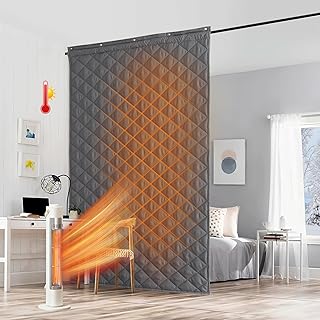
This cotton-and-polyester curtain is best for reducing cold drafts at an entryway, not for insulating a broad wall. The listed size is 48 x 96 inches. Its quilted construction is described as helping hold indoor heat and block drafts. It can be installed with Velcro, hooks, or a curtain rod, and the listing says those hardware options are included.
Choose this if the main problem is a chilly doorway and you want a flexible barrier that can be opened or moved aside. The listing suggests combining Velcro with hooks or a rod for additional stability because the curtain is thick and substantial.
Limitation: Measure the doorway before ordering; the listed dimensions may not fit every opening. It is a curtain, so it does not provide continuous coverage like wall cladding.
RYB HOME Quilted Curtain, Alternate Listing

This is another listing for a 48 x 96 inch RYB HOME thick quilted thermal door curtain. It is best for buyers looking for a doorway draft barrier with flexible mounting choices. The listed materials are cotton and polyester, and the installation options include Velcro, hooks, or a curtain rod, with hardware described as included.
Its role is different from the two adhesive wall coverings: it blocks a doorway rather than adding a layer across a wall. The product description says the quilted filling helps retain indoor heat and keep cold drafts out, making it a practical choice when the entryway is the source of discomfort.
Limitation: The supplied product information matches the other RYB HOME curtain listing in size and features. Compare the listing details and image to confirm which option suits your needs; neither is a wall panel.
Buying Guide: How To Choose Thermal Wall Coverings
Do you need wall coverage or a draft barrier?
Start by identifying where the discomfort comes from. For a cold-feeling interior wall, the 5 mm and 6 mm adhesive foam coverings are the most directly relevant choices. For a doorway that lets in drafts, a quilted curtain addresses the opening instead. A reflective bubble sheet is a different format intended to reflect radiant energy, so consider the surface and installation method before selecting it.
How should you compare thickness and material?
The two peel-and-stick coverings list foam thicknesses of 5 mm and 6 mm. The 6 mm option is thicker according to the supplied specifications, but thickness alone does not establish a specific energy-saving result. Compare material, dimensions, surface requirements, and the manufacturer’s installation instructions. The reflective sheet uses foil and bubble layers rather than a wallpaper-style foam covering.
What should you check before installing?
Confirm the product dimensions cover the intended area and determine how seams, corners, outlets, and edges will be handled. For the 5 mm roll, the listing calls for a clean, dry surface and firmly pressed edges. For the reflective sheet, the supplied pads are described as suitable for flat places. Follow each product’s directions and avoid assuming that adhesive will bond reliably to every wall finish.
Are these products a replacement for building insulation?
The listed items are surface coverings, a reflective sheet, and a door curtain. The product information does not provide enough detail to treat them as replacements for insulation installed within a wall assembly. For major temperature problems, moisture concerns, or renovation work, assess the wall and consult an appropriate building professional.
Frequently Asked Questions
Which listed product is most directly intended for cold walls?
The 6 mm IXPE self-adhesive wall covering is explicitly described for cold walls. The 5 mm thermal wallpaper is also intended to reduce heat conduction through walls.
Are these rigid thermal insulation panels?
No rigid panels are listed. The wall options are flexible peel-and-stick foam coverings, and the MRRAPA product is a reflective bubble sheet.
Can I use a thermal door curtain on a wall?
The RYB HOME products are described as door curtains. They are best considered for doorways, rather than as a wall-panel installation.
What surface preparation is specified for the 5 mm wallpaper?
The listing advises wiping away dust, letting the surface dry, and pressing the edges firmly after application.
Which option includes mounting materials?
The reflective sheet listing includes 70 self-adhesive pads. The curtain listings describe Velcro, hooks, and screws as included hardware options.