When you need effective window sealing, choose a spray foam designed for minimal expansion, water resistance, and easy application. This guide highlights five top options that deliver strong R-value per inch and reliable airtight seals. Best for DIY homeowners, contractors sealing new installations, and retrofit projects alike, these products help reduce drafts and energy waste. The comparison below focuses on suitability, installation ease, and practical limitations to help you pick the right foam for your windows and door frames.
| Product | Best For | Key Benefit | Limitations |
|---|---|---|---|
| TYTAN Professional Window & Door Foam Sealant | Residential/Commercial | Water resistance with high R-value per inch | May require careful application to avoid over-expansion |
| Loctite Tite Foam Gaps & Cracks | Gaps up to 1 inch | Durable, UV-resistant polymer foam | Limited to small gaps per can |
| Great Stuff Pro Window & Door 20 oz | Builders/Contractors | Low-expansion, seals without trimming | May require trimming in some tight spaces |
| Great Stuff Pro Window & Door Kit | Projects with multiple cans | Comes as a kit for larger jobs | Same expansion behavior as single can |
| Red Devil 0913 Spray Foam | Small gaps & cracks | Sands and paints after curing | Smaller package, limited coverage |
TYTAN Professional Window & Door Foam Sealant
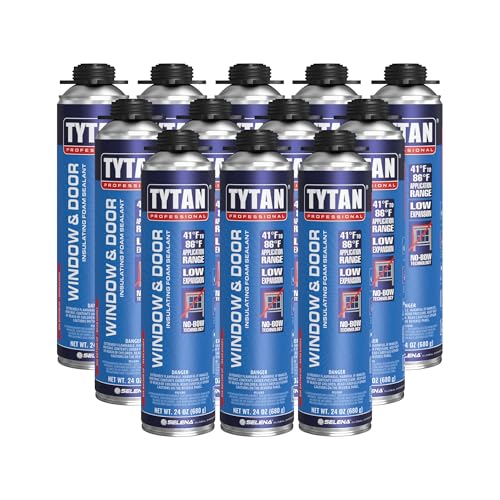
Brand: TYTAN PROFESSIONAL. This foam sealant emphasizes water resistance, high R-value per inch, and eco-friendly formulation without CFCs or HCFCs. It uses no-bow technology to prevent frame bowing and minimizes expansion for precise sealing around windows and doors. It is suitable for both residential and commercial applications where tight sealing and moisture resistance are priorities.
- Best for: Sealing window and door frames where water exposure is possible and energy efficiency matters.
- Why selected: High insulating value per inch and AAMA/UL-tested performance provide reliable results.
- Caution: Use with steady hands to avoid overfilling cavities; excess foam can require trimming in tight spaces.
Loctite Tite Foam Gaps & Cracks

Brand: Loctite. This 12 fl oz can expands to fill gaps up to 1 inch, offering premium durability with UV resistance. Its high-density foam creates a durable seal suitable for interior and exterior gaps around windows and doors.
- Best for: Gaps up to 1 inch and exterior applications where long-term durability is needed.
- Why selected: Strong, uniform cell structure helps resist weathering and maintains seal over time.
- Caution: Not ideal for larger structural gaps beyond 1 inch per can.
Great Stuff Pro Window & Door 20 oz

Brand: GREAT STUFF PRO. USA manufactured with a low-expansion formula that remains soft and flexible after curing. It seals without trimming and minimizes frame bowing when installed correctly, making it a practical choice for window and door sealing projects.
- Best for: Projects requiring minimal expansion to avoid distorting frames.
- Why selected: Soft, flexible cured foam reduces risk of warping and fits tight installation spaces.
- Caution: Some applications may still require trimming for a flush finish in exposed areas.
Great Stuff Pro Window & Door Kit

Brand: GREAT STUFF PRO. This kit provides a convenient option for larger sealing projects around windows and doors, featuring the same low-expansion, easy-to-use formula. It yields airtight, water-resistant seals suitable for long-term performance.
- Best for: Contractors or DIYers tackling multiple windows or doors in a single project.
- Why selected: Kit format simplifies procurement and application across larger jobs.
- Caution: Use in well-ventilated areas and follow can instructions for reducing odor exposure.
Red Devil 0913 Spray Foam

Brand: Red Devil. This option targets small holes, gaps, and cracks both inside and outside the home. It is sandable, paintable, and stainable after curing for finish flexibility in visible areas.
- Best for: Quick fixes on small cracks and gaps where finish readiness matters.
- Why selected: Finishing versatility with post-cure paintability makes it suitable for visible repairs.
- Caution: Limited coverage per can; ideal for smaller repair jobs rather than whole-window sealing.
Buying Guide
What matters most for window foam insulation?
Choose a foam with low expansion if keeping frame geometry intact is critical. Water resistance and higher R-value per inch improve long-term energy performance, while eco-friendly formulations are a plus for sustainability-minded projects.
How to pick by gap size and area?
For gaps up to 1 inch, a product like Loctite Tite Foam offers durable sealing. For larger retrofit projects, kit options from Great Stuff Pro can streamline handling across multiple windows and doors.
What about finish and painting?
Some foams, like Red Devil, are paintable and sandable for a cleaner appearance. If you need a finish-ready seal, consider products marketed for easy trim-free or paintable results.
Installation considerations
Follow can instructions for ventilation, safety gear, and cure times. Use curing-time guidance to avoid frame bowing and ensure proper adhesion around frames and sills.
Durability and weather exposure
Water resistance and UV stability contribute to long-term performance in exterior applications. UV-resistant formulations stay effective in sun-exposed areas, while water resistance helps in damp climates.
Practical tips for best results
- Apply in cool, dry conditions for consistent curing.
- Plan for controlled expansion to prevent overfill.
- Trim any excess foam after curing if required for a neat finish.
FAQ
- What is the best foam for door frames? Answer: A low-expansion foam designed for windows and doors generally performs best to avoid frame bowing and maintain alignment.
- Can spray foam be painted? Answer: Some foams are paintable after curing; check product specifications before finishing.
- Is spray foam suitable for exterior weather exposure? Answer: Yes, select a foam with water resistance and UV stability for exterior sealing.
- Do all foams require trimming? Answer: Many low-expansion foams don’t require trimming, but some may still need final shaping for a clean look.
- How much insulation value does foam provide per inch? Answer: Foam typically delivers higher R-value per inch than traditional sealants, contributing to tighter envelopes.
- Are there environmental considerations? Answer: Look for formulations free from CFCs/HCFCs and labeled as eco-friendly when possible.