Keep rooms warmer with heat-powered, non-electric stove fans. These devices circulate warm air produced by your wood stove, enhancing comfort and reducing fuel use. Below are five top picks, each with a thermometer for temperature monitoring and built to withstand high heat. The following contrasts cover design, noise, and durability to help you choose the best option for your setup.
| Product | Brand | Key Benefit |
|---|---|---|
| JossaColar Wood Stove Fan | JossaColar | Aluminum blade, heat-powered, thermometer included |
| Miaton Wood Stove Fan Heat Powered | Miaton | Thermoelectric, high heat tolerance, power outage friendly |
| BLFIRE Wood Stove Fan | BLFIRE | Dual motors for stronger airflow, built-in thermometer |
| GALAFIRE 4-Blades Heat Powered Fan | GALAFIRE | Compact, low-start temperature, magnetic thermometer |
| VODA Wood Stove Fan | VODA | Heat-powered, efficiency-focused air diffusion |
JossaColar Wood Stove Fan

JossaColar’s heat-powered stove fan operates without batteries, converting stove heat into airflow. It includes a magnetic thermometer for monitoring heat on the surface and downtown placement. The upgraded aluminum curved blades push heat more evenly across larger spaces. This model is described as suitable for wood stoves, log burners, and fireplaces. The product offers a 1-year warranty with a 2-year replacement option for quality issues, and a 30-day refund window for dissatisfaction.
Miaton Wood Stove Fan Heat Powered
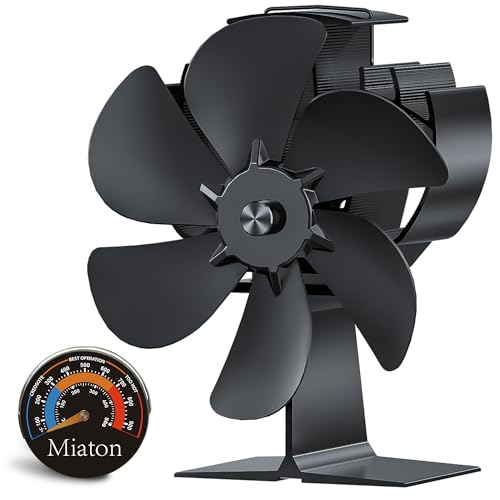
Miaton’s heat-powered fan converts heat to electricity to run without external power, performing well during power outages. It claims to improve wood burning efficiency by spreading heat quickly and reducing wood use. The unit features anodized aluminum for durability, resistance to heat and corrosion, and a metal handle for easy transport. A built-in safety mechanism reduces contact with the stove when temperatures rise above safe levels, while noise remains low at under 25 decibels.
BLFIRE Wood Stove Fan Heat Powered Dual Motor
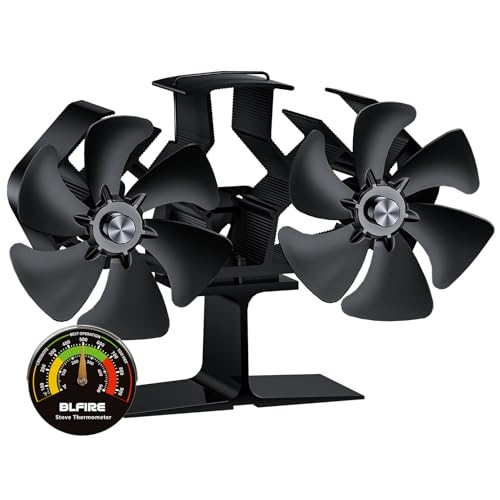
BLFIRE adds dual motors to boost warm air distribution by about 50% compared to single-motor designs. The fan operates quietly at ≤25 dB and includes a temperature-sensing module that lifts the base when temperatures get too high, preventing damage. It also functions with a built-in thermometer for continuous temperature monitoring, making it a practical option for larger rooms needing steady heat circulation.
GALAFIRE 4-Blades Heat Powered Wood Stove Fan
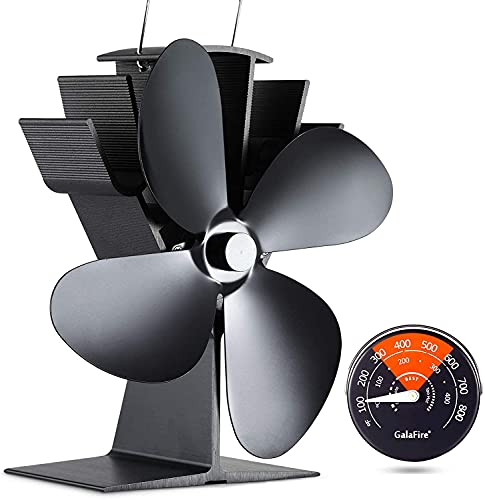
GALAFIRE offers a compact 4-blade design that starts at relatively low temperatures and includes a magnetic thermometer to monitor stove heat. The fan operates without electricity and is designed for compatibility with gas, pellet, log, and wood stoves. Its compact profile helps fit narrow spaces while maintaining effective air movement across rooms.
VODA Wood Stove Fan
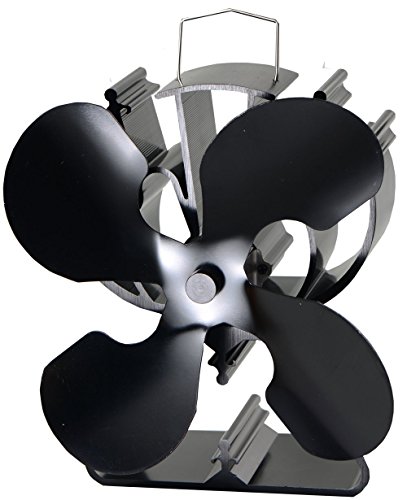
VODA emphasizes energy efficiency with a heat-powered design designed to diffuse warm air evenly. The unit aims to maximize room warmth while reducing wood consumption. It highlights improved room comfort and cost savings through better heat utilization, with a focus on reliable performance across varied stove temperatures.
Buying Guide
- Heat activation range: Look for a lower start temperature for quicker warm-air distribution, especially for mild to moderate room temperatures.
- Airflow and size: Dual-motor or multi-blade designs move more air and cover larger areas, while compact models suit smaller spaces. Consider your stove size and room layout.
- Thermometer and safety features: Built-in thermometers help you monitor stove heat. Overheat protection and base isolation reduce direct heat transfer and wear on the fan.
- Durability: Anodized aluminum blades resist heat, corrosion, and bending. A robust base and reliable mounting ensure long service life in hot environments.
- Noise level: Most non-electric fans operate quietly; a target under 25 dB is common for library-like quietness in living spaces.
- Maintenance and warranty: Check for warranty terms, easy replacement parts, and included accessories like thermometers or mounting aids.
- Versatility: Some models are suitable for multiple heat sources beyond wood stoves, such as buddy heaters or fireplaces with different fuel types.
Performance Perspectives
- Room efficiency: Heat-powered fans reduce the need for high stove output by circulating warm air evenly, contributing to faster room warm-up and more uniform temperatures.
- Power reliability: Thermoelectric or heat-to-electricity designs rely on stove heat rather than batteries, making them resilient during power outages.
- Quiet operation: Many models keep noise below audible thresholds, preserving comfort in living rooms, bedrooms, and study areas.
- Installation considerations: A magnetized or stable mounting surface simplifies setup, while compact frames fit tighter stoves and hearths.